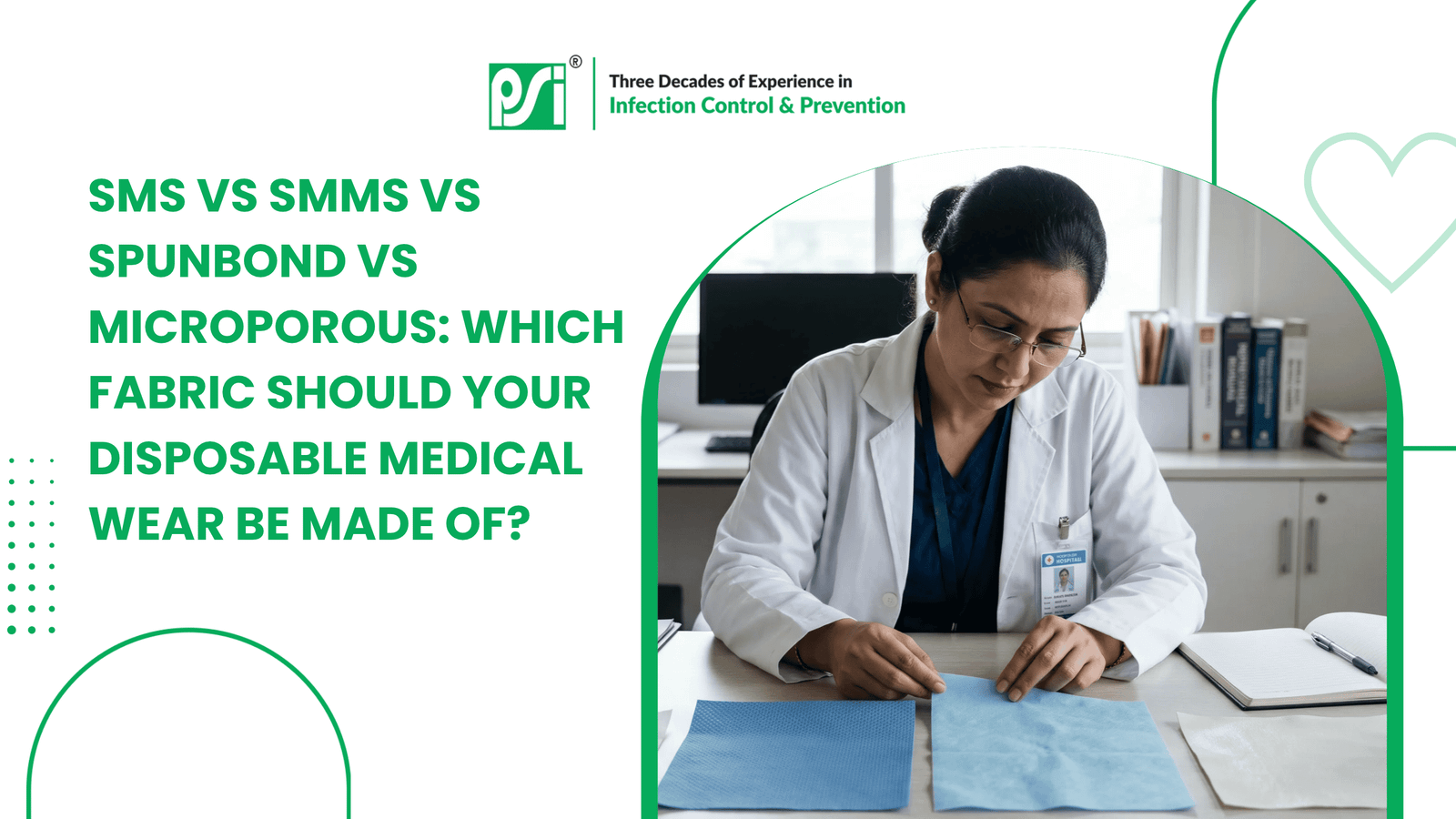
SMS vs SMMS vs Spunbond vs Microporous: Which Fabric Should Your Disposable Medical Wear Be Made Of?
Don’t two surgical gowns look almost identical? Both are blue, lightweight, and disposable.
But do they offer the same protection?
Not necessarily.
The difference often begins with the fabric.
Hospitals buy Disposable Medical Wear for operating theatres, isolation wards, laboratories, and everyday patient care.
However, different healthcare activities involve different levels of exposure to fluids and other hazards.
This makes fabric selection an important procurement decision.
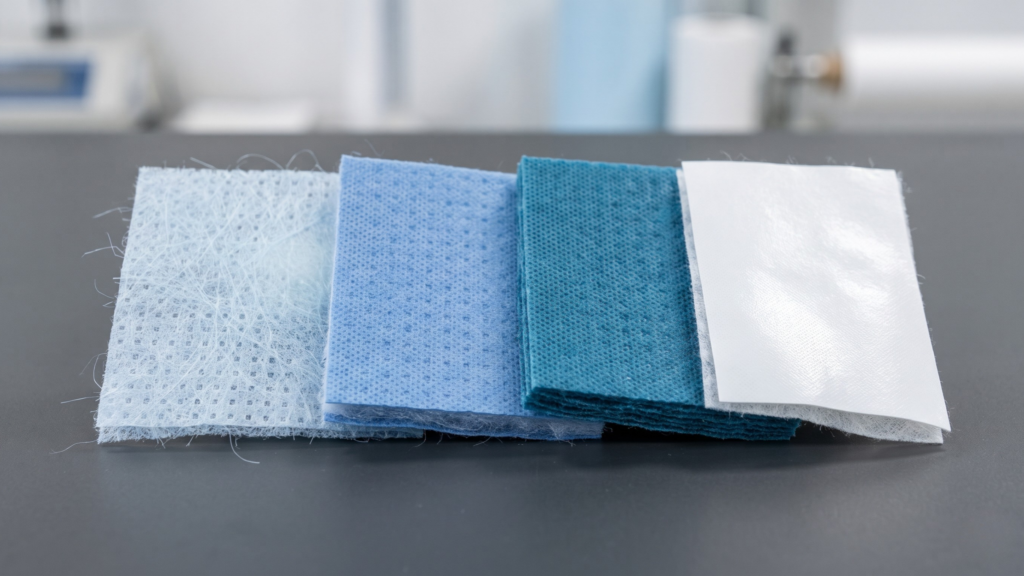
Four materials frequently appear in medical protective clothing specifications: SMS, SMMS, spunbond, and microporous fabrics.
Each has a different construction, which influences its comfort, durability, and potential barrier performance.
A lightweight examination gown may not need the same protection as a surgical gown used during a fluid-intensive procedure.
Choosing an unsuitable material can lead to discomfort, unnecessary spending, or inadequate protection.
However, fabric names alone cannot corroborate a garment’s safety.
Hospitals must also evaluate testing, design, seams, and intended use.
This guide explains how the four fabrics differ, where they are commonly used, and what healthcare buyers should check before ordering.
What Is Disposable Medical Wear?
Disposable Medical Wear includes single-use protective clothing designed for healthcare environments.
These products help lessen exposure to specified hazards and support infection-control practices.
Common examples include:
- Surgical gowns
- Isolation gowns
- Disposable aprons
- Protective coveralls
- Examination gowns
- Disposable caps
- Shoe covers
- Protective sleeves
Different garments serve different motives.
A surgical gown, for example, requires different performance considerations from a visitor gown.
The appropriate material depends on the task, exposure risk, and applicable standards.
Understanding the Four Main Medical Fabrics
1. Spunbond Nonwoven Fabric
Spunbond nonwoven fabric is produced by devising continuous polymer filaments into a bonded sheet.
Polypropylene is a common material.
Spunbond fabrics are generally lightweight, flexible, and relatively economical.
Typical advantages:
- Lightweight construction
- Flexible material
- Suitable for selected low-risk applications
- Cost-effective production
- Available in different weights
Potential limitations:
- Basic spunbond may offer limited liquid resistance.
- It may not suit higher-exposure clinical tasks.
- Performance varies with construction and treatment.
Common applications:
- Disposable caps
- Shoe covers
- Selected visitor gowns
- Low-risk safety apparel
A spunbond gown should not automatically be considered suitable for surgery or significant fluid exposure.
2. SMS Nonwoven Fabric
SMS nonwoven fabric stands for Spunbond–Meltblown–Spunbond.
It combines three layers.
The outer spunbond layers provide structural boost.
The inner meltblown layer contributes to the material’s barrier characteristics.
Typical advantages:
- Balanced strength and flexibility
- Potentially improved liquid resistance compared with basic spunbond
- Lightweight construction
- Suitable for selected medical gown applications
- Available in different performance grades
Potential limitations:
- Not every SMS fabric provides the same barrier protection.
- Performance depends on material specifications and construction.
- High fluid exposure may need additional protection.
Common applications:
- Isolation gowns
- Surgical gowns
- Procedure gowns
- Selected protective clothing
Hospitals should verify the tested performance of the finished garment.
3. SMMS Nonwoven Fabric
SMMS fabric for medical gowns utilises four layers.
Its structure is Spunbond–Meltblown–Meltblown–Spunbond.
The additional meltblown layer can influence filtration and barrier characteristics.
However, this does not automatically make every SMMS product superior to SMS.
Typical advantages:
- Multilayer construction
- Potential for enhanced barrier performance
- Flexible material options
- Suitable for selected protective garments
- Available in different specifications
Potential limitations:
- Performance differs by manufacturing process.
- Additional layers do not guarantee a specific protection level.
- Comfort depends on the complete fabric and garment design.
Common applications:
- Selected surgical gowns
- Isolation gowns
- Protective apparel
- Other medical garments requiring specified barrier performance
The accurate choice depends on tested product performance, not layer count alone.
4. Microporous Fabric
Microporous protective fabric commonly integrates a nonwoven base with a breathable film or coating.
The film is designed to resist certain liquid exposures while allowing some water vapour transmission.
However, performance varies significantly between products.
Typical advantages:
- Potential resistance to specified liquid splashes
- Useful for chosen protective applications
- Film-based barrier construction
- Available in different protective garment designs
Potential limitations:
- Breathability varies by product.
- Some garments can feel warmer during prolonged use.
- Chemical and biological protection claims require verification.
- Seams and closures could affect overall protection.
Common applications:
- Microporous protective coveralls
- Selected laboratory protective clothing
- Protective suits
- Other specified splash-protection applications
A microporous material is not automatically chemical-resistant or virus-proof.
Hospitals should check the precise tested protection claims.

SMS vs SMMS vs Spunbond vs Microporous: Key Differences
The simplest way to understand these materials is through their construction and intended applications.
Spunbond
Best considered for: Selected low-hazard clothing and accessories.
Its main advantage is lightweight, economical construction.
However, untreated spunbond may offer limited liquid-barrier performance.
SMS
Best considered for: Medical gowns requiring a balance of flexibility and tested barrier performance.
Its three-layer structure offers more design possibilities than basic spunbond.
SMMS
Best considered for: Selected protective garments where additional meltblown layers support the required specifications.
However, the extra layer does not automatically establish superior protection.
Microporous
Best considered for: Selected coveralls and protective clothing requiring verified resistance to specified liquid hazards.
The film-based structure can offer different protection characteristics from traditional nonwovens.
Important: None of these fabric names guarantees a particular protection level.
The end garment must meet the required performance criteria.
Why Fabric Selection Matters in Hospitals
The right medical gown material influences several practical factors.
1. Barrier Protection
The garment must provide suitable protection against expected hazards.
These may include liquid splashes or contact with potentially infectious materials.
2. Comfort
Healthcare workers may wear protective clothing for extended periods.
Poor comfort can make demanding tasks more laborous.
3. Durability
The material should withstand normal movements during its intended use.
Tearing or damaged seams can compromise protection.
4. Breathability
Some fabrics let more moisture vapour to pass through than others.
However, higher breathability does not automatically mean better protective performance.
5. Cost
Fabric selection affects manufacturing and purchasing costs.
Hospitals should collate clinically suitable products rather than selecting the cheapest material.
6. Waste Management
Disposable garments create waste after use.
Hospitals must follow applicable disposal requirements, especially when garments become contaminated.
Does Higher GSM Mean Better Protection?
GSM means grams per square metre.
It describes the weight of fabric over a defined area.
A 50 GSM material is heavier per square metre than a 35 GSM material.
However, weight does not establish barrier performance.
Two fabrics with the same GSM can perform differently because of:
- Fibre structure
- Layer arrangement
- Material density
- Surface treatments
- Film coatings
- Manufacturing quality
A heavier spunbond fabric may provide less liquid resistance than a lighter, properly engineered multilayer material yet.
Hospitals should request test reports rather than relying on GSM alone.
What Do Medical Gown Protection Standards Say?
International standards help hospitals compare protective garments using defined performance requirements.
ANSI/AAMI PB70
The ANSI/AAMI PB70 framework classifies healthcare protective apparel according to liquid-barrier performance.
Its four protection levels range from Level 1 to Level 4.
- Level 1: Minimal liquid-barrier protection
- Level 2: Low liquid-barrier protection
- Level 3: Moderate liquid-barrier protection
- Level 4: Higher protection against specified liquid and biological penetration challenges
The appropriate level depends on the clinical task.
A fabric’s name does not establish its AAMI level.
EN 13795
EN 13795 addresses performance requirements for surgical gowns and drapes in relevant European markets.
It considers characteristics such as microbial hygiene and barrier performance.
EN 14126
EN 14126 addresses protective clothing materials and seams against infective agents.
It is pertinent to certain protective clothing applications.
However, compliance must be verified for the exact product and its intended use.
A Surprising Research Finding About Isolation Gowns
A 2023 study published in the American Journal of Infection Control examines disposable isolation gowns.
Researchers test 22 gown models from six manufacturers.
Seven models fail at least one relevant liquid or viral penetration requirement for their claimed protection level.
Many failures occur around seams or tie attachment areas.
This finding highlights an important procurement lesson.
The fabric is only one part of protective clothing performance.
Garment construction, stitching, closures, and testing matter just as much.
Hospitals should therefore evaluate the finished product rather than relying only on fabric descriptions.
How to Choose the Right Fabric for Each Department
Different departments have different exposure perils.
Operating Theatres
Surgical gowns require appropriate barrier performance and sterile presentation where applicable.
SMS or SMMS constructions may be considered when the finished products meet clinical requirements.
Reinforced designs may be necessary for certain procedures.
Isolation Wards
Isolation gowns require suitable coverage and protection against expected exposure.
Hospitals should evaluate the complete garment, including seams and closures.
Laboratories
Laboratory clothing depends on the hazards involved.
Microporous coveralls may be suitable for some tasks, but chemical compatibility requires verification.
General Patient Care
Lower-risk activities may use simpler protective garments when appropriate.
However, the selected product must match institutional infection-control policies.
Housekeeping and Support Services
The correct protective clothing depends on cleaning chemicals, splash risks, and workplace procedures.
A single fabric is unlikely to suit every job.
How to Select Disposable Medical Wear: 7 Steps
Hospital procurement teams can use the following checklist.
Step 1: Identify the Intended Use
Determine whether the garment is for surgery, isolation, laboratory work, or general care.
Step 2: Evaluate Exposure Risks
Consider liquid contact, biological hazards, and other relevant workplace exposures.
Step 3: Choose the Required Protection Level
Identify applicable standards and clinical performance requirements.
Step 4: Review Fabric Specifications
Check the material type, GSM, construction, and barrier characteristics.
Step 5: Prove Test Documentation
Request relevant product-specific performance reports.
Step 6: Evaluate Garment Design
Inspect coverage, cuffs, seams, ties, and closures.
Step 7: Test Samples Before Bulk Purchasing
Assess fit, comfort, handling, and suitability with the clinical team.
Example: A Hospital Selects Different Fabrics
Consider a multispeciality hospital purchasing disposable protective clothing.
Initially, its procurement team considers one gown material for every department.
However, the infection-control team identifies different requirements.
The hospital evaluates separate possibilities.
- General patient care: Suitable lower-risk protective apparel
- Operating theatres: Sterile surgical gowns with verified barrier performance
- Isolation wards: Appropriate isolation gowns with tested coverage
- Laboratories: Protective clothing selected for specific hazards
The team requests samples and product-specific test reports.
It also reviews comfort, sizing, packaging, and supply reliability.
This illustrative example shows why hospitals benefit from matching garments to actual risks.
What Should Hospitals Ask a Medical Disposable Exporter?
An experienced Medical Disposable Exporter should provide clear product information.
Important questions comprise:
- Which fabric does the product use?
- What is the fabric’s GSM?
- What barrier-performance tests are available?
- Which standards does the finished garment meet?
- Is the product sterile or non-sterile?
- What sizes and designs are available?
- Are reinforced options available?
- What packaging configurations are offered?
- What are the minimum order quantities?
- Which regulatory documents apply to the destination market?
These questions help hospitals compare products on a consistent basis.
Why Comprehensive Medical Supplies Matter
Hospitals often buy several categories of disposable consumables.
Working with suppliers offering Comprehensive Medical Supplies may simplify procurement planning.
For example, a healthcare institution may need:
- Surgical gowns
- Surgical drapes
- Protective coveralls
- Disposable caps
- Shoe covers
- Procedure packs
- Dressing kits
- Other medical accessories
Consolidated purchasing can reduce the number of separate supplier relationships.
However, every product still requires appropriate quality and compliance checks.
A broad catalogue does not automatically guarantee clinical suitability.
How Plasti Surge Industries Supports Medical Wear Procurement
Plasti Surge Industries, known as PSI Dispo, manufactures medical disposables and healthcare consumables in India.
Its product portfolio includes:
- Disposable surgical gowns
- Wraparound surgical gowns
- Reinforced surgical gowns
- Protective apparel
- PPE kits
- Surgical drapes
- Procedure packs
- Disposable medical accessories
These products support hospitals, surgical centres, and other healthcare institutions.
Buyers can communicate with the PSI Dispo team to discuss available fabric options, garment specifications, packaging, and bulk requirements.
Hospitals should confirm the exact material construction and applicable performance documentation for each product.
Specific SMS, SMMS, spunbond, or microporous configurations should not be assumed available without confirmation.
Conclusion
Opting for the right fabric for medical protective clothing requires more than comparing material names.
Spunbond, SMS, SMMS, and microporous fabrics have different constructions and potential applications.
Spunbond may suit selected lower-risk products.
SMS and SMMS can support medical gown designs with different performance requirements.
Microporous materials may be appropriate for certain protective coveralls and splash-exposure applications.
However, none of these materials automatically assures a specific protection level.
Hospitals should evaluate the finished garment, relevant standards, barrier testing, comfort, and intended clinical use.
GSM and layer count provide useful information, but they cannot replace verified performance data.
Plasti Surge Industries manufactures surgical gowns, protective apparel, procedure packs, and other healthcare disposables.
Looking for suitable disposable medical wear for your healthcare facility?
Contact PSI Dispo to discuss product specifications, available materials, packaging, and institutional purchasing requirements here.