Importance of N95 Masks in High-Risk Medical Environments: A Doctor’s Perspective
What protects a doctor the most in a hazardous medical environment?
Many people believe in gloves, gowns, or shields.
But ask any frontline doctor, and they’ll give an uncomplicated answer; the N95 mask for medical use.
Doctors work in environments where every breath carries peril.
A single cough can liberate thousands of micro-droplets that float for hours.
According to WHO, millions of healthcare workers face respiratory exposure annually.
This makes respiratory protection one of the most significant safety priorities in any hospital.
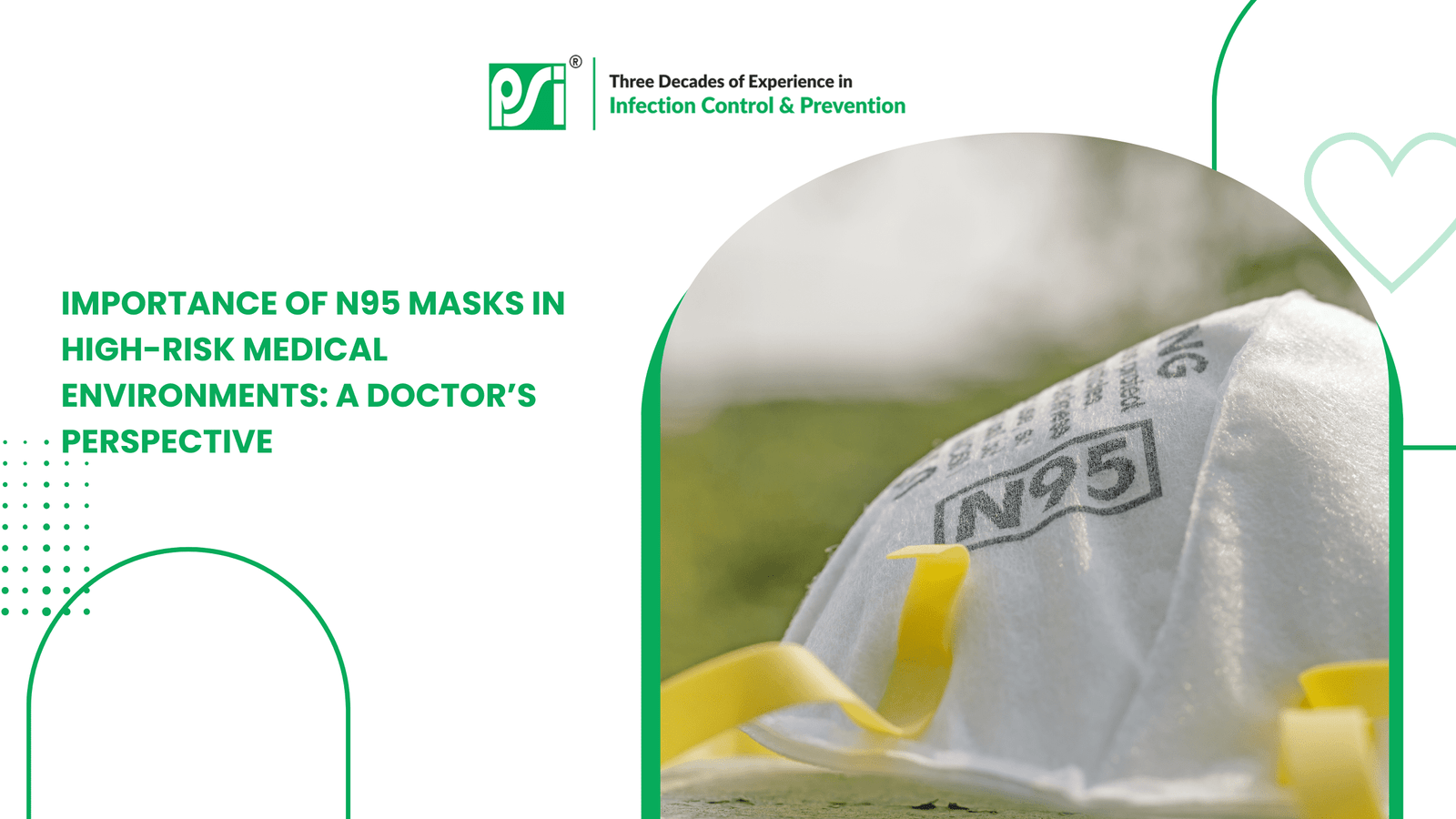
N95 masks play a critical role in reducing airborne infection risks.
They provide strong filtration, a secure seal, and secure protection during aerosol-generating procedures.
From ICUs to emergency rooms, these masks safeguard medical teams where exposure peril remains extremely high.
This blog explains:
- Why do doctors trust N95 masks in critical care (ICU & CCU) settings?
- What makes an N95 mask different?
- How certified masks avert cross-infection.
- What doctors look for when selecting a mask.
- Why trusted N95 mask manufacturers India assist in maintaining global hospital safety.
Let’s understand this protection through a doctor’s purview.
What Makes a High-Risk Medical Environment?
High-risk environments expose medical staff to infectious respiratory particles.
These zones often involve aerosol procedures and unpredictable patient conditions.
Common high-risk areas include:
- Intensive Care Units
- Operating Rooms
- Emergency Rooms
- Infectious Disease Wards
- Respiratory Clinics
- Isolation Units
Hazards can be:
- High patient turnover
- Unknown infection sources
- Aerosol-creating procedures
- Poor ventilation in older buildings
A general fact explains the danger:
One coughing patient can release over 3,000 droplets in a single second.
Why Doctors Trust the N95 Mask for Medical Use
Doctors spend many hours near infected patients.
They need a shield that works even during complex procedures.
N95 masks give:
- 95% filtration of airborne particles
- Impregnable protection during intubation and suction
- Stable sealing edges that stop leakage
- Greater performance than surgical or cloth masks
The tight seal and filtration make it ideal for medical protection.
This is why the N95 mask for medical protection remains a compulsory choice in high-risk care.
How N95 Masks Work: The Science Made Simple
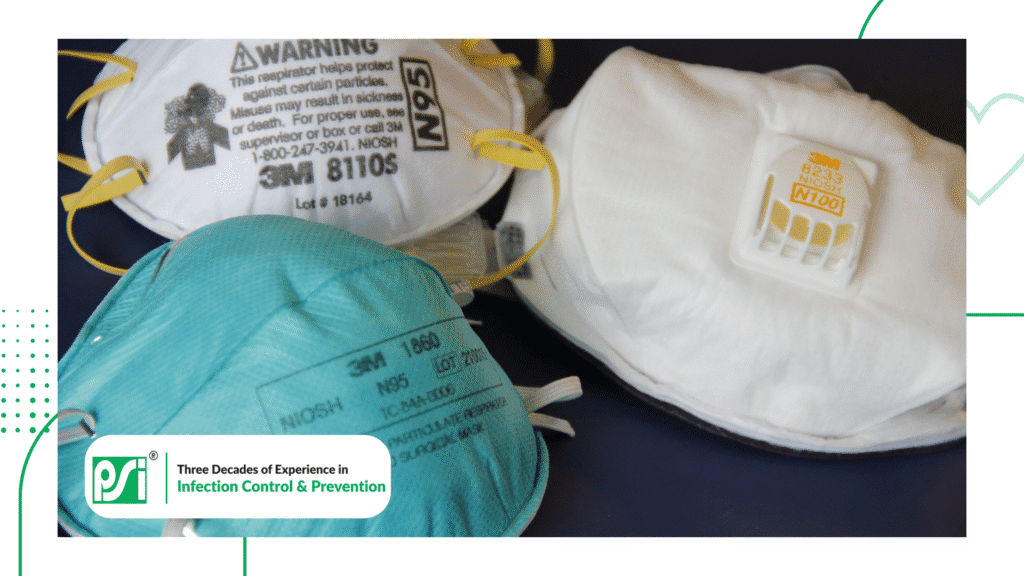
N95 masks use various layers of protective filtration.
They confine airborne particles using static charge and dense fibers.
Main components include:
- Multiple non-woven polypropylene layers
- Electrostatic filtration for tiny particles
- Adjustable nose clip for secure sealing
- Comfortable straps for long procedures
These features let doctors breathe safely during long shifts.
How N95 Masks Decrease Infection Risk
Medical procedures produce aerosols that transfer infection.
N95 masks shield doctors during:
- Ventilator management
- Nebuliser treatments
- Intubation
- Suction and airway cleansing
- Close patient examinations
Advantages include:
- Lesser staff infections
- Reduced cross-contamination
- Higher confidence in hazard-prone zones
- Safer treatment consequences
Mini case study:
A Gurugram hospital reduced staff respiratory infections by 40% after switching to certified N95 masks.
Certified vs. Uncertified Masks: Why It Matters
Doctors count only on certified respirators.
Uncertified masks may look similar but malfunction during real exposure.
Always check for:
- NIOSH, BIS, CE or ISO marks
- Manufacturer name and model
- Proper labeling and spelling
- Correct sealing and fit
Counterfeit masks can cut filtration by 65%, making them highly risky.
India as a Global Hub: Rise of N95 Mask Manufacturers
India has become one of the world’s strongest and most durable producers of N95 masks.
Today, N95 mask manufacturers India supply to hospitals globally.
Why India leads here:
- Improved manufacturing technology
- Solid regulatory compliance
- Accessible large-scale production
- Expanding global trust in Indian medical PPE
Plasti Surge Industries Pvt. Ltd. collaborates with certified manufacturers to supply reliable medical-grade masks worldwide.
What Doctors Search for in a Good N95 Mask
Doctors favour masks that provide:
- Sturdy filtration
- Safer sealing
- Long-hour comfort
- Dependable certification
- Dustless sterile packaging
- High breathability
- Heavy-duty straps
Hospitals evaluate these attributes before purchasing in bulk.
Why Hospitals Trust Psidispo
Psidispo supplies certified, medical-grade N95 masks trusted by hospitals worldwide.
Every mask meets global safety standards.
Our main goal is::
- Dependable quality
- Safe and secure packaging
- Economical bulk supply
- Consistent ease of access
We make sure hospitals get dependable protection on time, every time.
FAQ: N95 Masks in High-Risk Medical Environments
1. What is an N95 mask for medical use?
An N95 mask for medical use is a certified respirator that filters at least 95% of airborne particles, including viruses and bacteria. It provides a tight facial seal and is essential for protecting doctors during high-risk procedures.
2. Why is an N95 mask for medical protection critical in ICUs and emergency rooms?
An N95 mask for medical protection prevents inhalation of infectious aerosols released during coughing, intubation, and ventilation. It significantly reduces cross-infection risks in high-exposure zones like ICUs and ERs.
3. How do N95 mask manufacturers India ensure safety and quality?
N95 mask manufacturers India follow strict BIS, NIOSH, CE, and ISO standards to ensure high filtration efficiency, proper sealing, and consistent performance for hospital-grade medical protection.
4. How can doctors identify a genuine N95 mask for medical use?
A genuine N95 mask for medical use displays certification marks, manufacturer details, model numbers, and offers a snug fit with no air gaps. Proper labelling and secure straps are key authenticity indicators.
5. What makes an N95 mask better than a surgical mask?
An N95 mask provides superior medical protection by sealing tightly around the face and filtering 95% of airborne particles, while surgical masks offer loose fit and limited filtration.
Conclusion
N95 masks protect doctors where the air itself can carry jeopardy.
They decrease infection risks, improve staff safety, and support better patient care.
Reliable N95 masks for medical use remain vital in every high-risk hospital zone.
Opting for certified suppliers ensures consistent safety across departments.Partner with Psidispo for certified N95 masks that safeguard medical teams when it matters the most.
Your staff’s safety and security begins with the right mask and the right supplier.