Choosing the Right Medical Protective Gowns for Your Hospital Staff
Every hospital shares one mission: deliver safe, efficient, and quality care to patients, while keeping the staff protected.
Yet, many hospitals face a common problem: inappropriate or low-quality gowns for staff, leading to safety risks, workflow delays, and higher costs.
That’s where the right Medical Protective Gowns come into play. Selecting the correct gowns, whether hospital protective gowns, surgical isolation gowns, or disposable gowns for hospitals, is not just a matter of compliance. It can dramatically impact infection control, staff safety, and operational efficiency.
In this article, we’ll explore:
- What medical protective gowns are, and the different types in use today.
- The real challenges in gown selection.
- Key factors hospitals must check before placing gown orders.
- Why choosing the right gowns matters (for safety and efficiency).
- How a trusted manufacturer like PSI Dispo can simplify this process.
What Are Medical Protective Gowns?
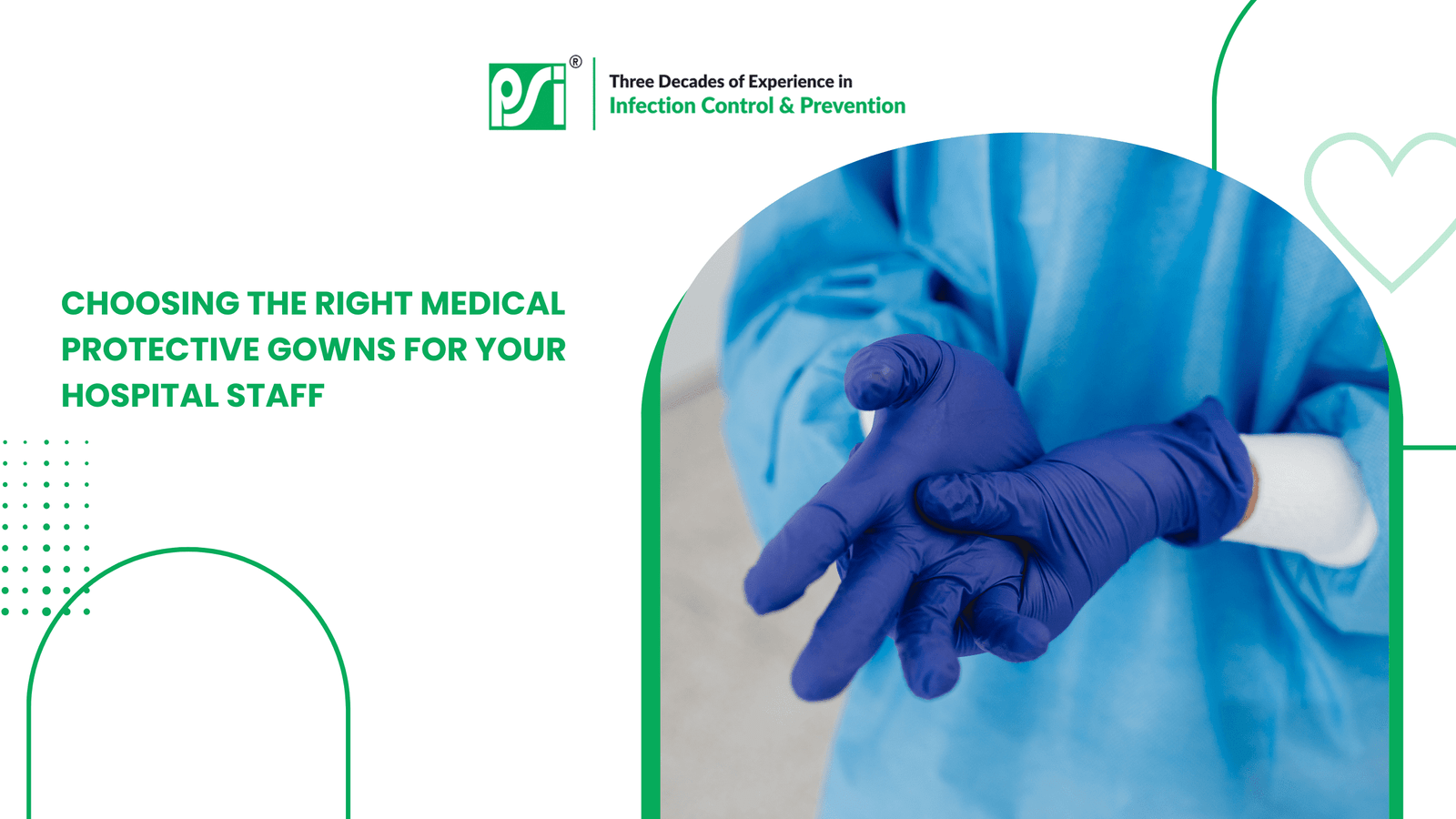
Medical protective gowns are specially designed garments that shield healthcare workers from contact with blood, body fluids, and other potentially infectious materials.
Types of Hospital Protective Gowns
Hospitals commonly use:
- Surgical isolation gowns — meant for medium to high-risk procedures where fluid and pathogen exposure is possible.
- Disposable gowns for hospitals — single-use gowns for general patient care, isolation wards, or low-risk procedures.
- Sometimes non-surgical procedural gowns — for non-invasive tasks, patient transport, or lower risk interactions.
Gowns can be sterile or non-sterile, depending on the use-case. For surgeries or invasive procedures, sterile gowns are a must. For general care or low-risk tasks, non-sterile disposable gowns are often enough.
The Real Challenges Hospitals Face With Gown Selection
Choosing the wrong gown can create more problems than it solves. Here’s how:
- Overbuying high-level gowns — paying more for surgical-level gowns even when not needed.
- Under-protection risks — cheap gowns with weak barrier properties expose staff to fluids and pathogens.
- Fit and comfort issues — ill-fitting gowns discourage staff compliance, especially during long shifts.
- Stockouts & supply issues — poor supply management can lead to gown shortages, putting staff at risk.
- Wasted resources — generic gowns regardless of procedure lead to overspending and waste.
For example, a hospital that repeatedly used basic gowns in high-risk zones reported increased contamination incidents, a warning sign about the cost of “saving” on gowns.
Key Factors to Consider When Choosing Hospital Protective Gowns
To get it right, hospitals must prioritize these criteria:
1. Protection Level & Barrier Performance
- Surgical isolation gowns designed for fluid resistance and pathogen barriers when there’s risk of splashes or body fluid contact.
- For routine tasks or non-invasive care, disposable gowns with adequate coverage may suffice.
2. Material & Quality of Fabric
- Non-woven materials or SMS/SMMS synthetic fabrics offer better barrier protection than simple cloth gowns.
- Gown should cover front torso, arms (to wrists), and tie securely to prevent exposure.
3. Sterility (When Required)
- Sterile gowns are required for surgeries and invasive procedures to maintain asepsis.
- For general care or isolation, sterile gowns may not be needed, lowering cost without compromising safety.
4. Comfort & Fit for Staff
- Lightweight, breathable gowns encourage staff compliance. For long shifts, comfort can be as important as protection. Studies report that discomfort reduces PPE compliance.
- Proper sizing prevents undue strain, enables ease of movement in OTs, ICUs, or general wards.
5. Cost Efficiency & Waste Management
- Right-level gowns avoid unnecessary cost.
- Disposable gowns reduce laundry/sterilization burden.
- Waste disposal must be managed, especially for single-use gowns.
Surgical Isolation vs. Disposable Gowns: What Works When?
Surgical Isolation Gowns – When You Need Maximum Protection
Use in:
- Operating theatres
- Invasive procedures
- High-risk zones with heavy fluid exposure or contamination risk
They ensure high-level barrier protection over the critical zones of the body (front, arms, torso).
Disposable Gowns for Hospitals – For General Care & Routine Use
Use in:
- Isolation wards
- Routine patient care, exams, transport
- When quick change and disposal is more practical than sterilization
Disposable gowns minimise cross-contamination risk and reduce laundry overhead, a big plus in busy hospitals.
In many cases, a mixed approach (using surgical gowns for high-risk procedures, and disposable gowns for everyday tasks) strikes the best balance between safety and cost.
How the Right Protective Gowns Improve Hospital Safety & Efficiency
When hospitals invest in suitable protective gowns, they benefit in multiple ways:
- Better infection control: Reduces risk of staff contamination and cross-infection. Proper gowns can dramatically lower exposure to pathogens.
- Efficiency & workflow: Staff spend less time sanitizing or sorting reusable gowns such as single-use gowns speed up turnarounds.
- Higher compliance: Comfortable, correctly sized gowns encourage staff to wear them properly throughout their shifts.
- Cost control: Buying gowns that match the level of risk avoids overspending and minimizes unnecessary waste.
- Lower operational burden: Less laundry, sterilization, and gown maintenance efforts needed.
Many hospitals switching to this tiered gown strategy report smoother operations, fewer PPE-related delays, and improved patient-staff safety.
Why Hospitals Trust PSI Dispo for Medical Protective Gowns
At PSI Dispo, we understand that hospital safety, staff comfort, and cost-efficiency go hand-in-hand. That’s why our gowns are:
- Made from high-quality, non-woven SMS/SMMS fabrics — delivering reliable fluid-barrier protection.
- Available as surgical isolation gowns and disposable gowns for hospitals, so you can choose based on your department’s need.
- Sterile (for OT use) as well as non-sterile (for general care), to offer flexibility.
- Designed with staff comfort and correct fit in mind — because ergonomics matter.
- Supplied on-time, in bulk — helping you avoid stockouts or supply delays.
- Produced with hygiene and international compliance standards — so you never have to compromise on safety.
Whether you run a busy surgical center, critical care ward, or general hospital, PSI Dispo’s gowns help protect your team, and your patients without unnecessary cost or complexity.
Final Thoughts
Choosing the right medical protective gowns may sound like a minor procurement decision. But in reality, it’s a critical safety, hygiene, and efficiency decision, one that affects patient outcomes, staff protection, and overall hospital operations.
By selecting gowns that match the risk, whether surgical isolation gowns for high-risk procedures or disposable gowns for routine care, hospitals can reduce infection risk, streamline workflows, and better protect their staff and patients.
At PSI Dispo, we’re dedicated to helping hospitals across India find that balance, delivering high-quality, reliable, and cost-effective protective gowns tailored to your needs. Partner with PSI Dispo today and give your hospital staff the protective gear they deserve.
FAQs: Medical Protective Gowns for Hospitals
Q 1. What are medical protective gowns and why are they important in hospitals?
Medical protective gowns are PPE garments designed to protect healthcare workers from blood, body fluids, and infectious materials. In hospitals, the right medical protective gowns help reduce cross-contamination, improve infection control, and ensure staff safety during both routine care and high-risk procedures.
Q 2. What is the difference between hospital protective gowns and surgical isolation gowns?
Hospital protective gowns are generally used for routine patient care and low-risk activities, while surgical isolation gowns are designed for medium to high-risk procedures with greater exposure to fluids and pathogens. Surgical isolation gowns provide higher barrier protection, especially for operating theatres and invasive procedures.
Q 3. When should hospitals use disposable gowns instead of reusable gowns?
Disposable gowns for hospitals are ideal for isolation wards, general patient care, and situations where quick changeovers are required. They reduce laundry and sterilization workload, minimize cross-contamination risks, and are cost-effective for high-volume, short-term use.
Q 4. How do hospitals choose the right medical protective gowns for different departments?
Hospitals should match gowns to the risk level of each department. High-risk areas like OTs and ICUs need surgical isolation gowns with strong fluid resistance, while general wards can use disposable hospital gowns. Factors such as barrier level, material quality, sterility, comfort, and cost efficiency should guide the selection.
Q 5. Are surgical isolation gowns always required to be sterile?
No. Surgical isolation gowns must be sterile for surgeries and invasive procedures. For non-invasive tasks or isolation care, non-sterile gowns are often sufficient and more cost-effective, without compromising safety.