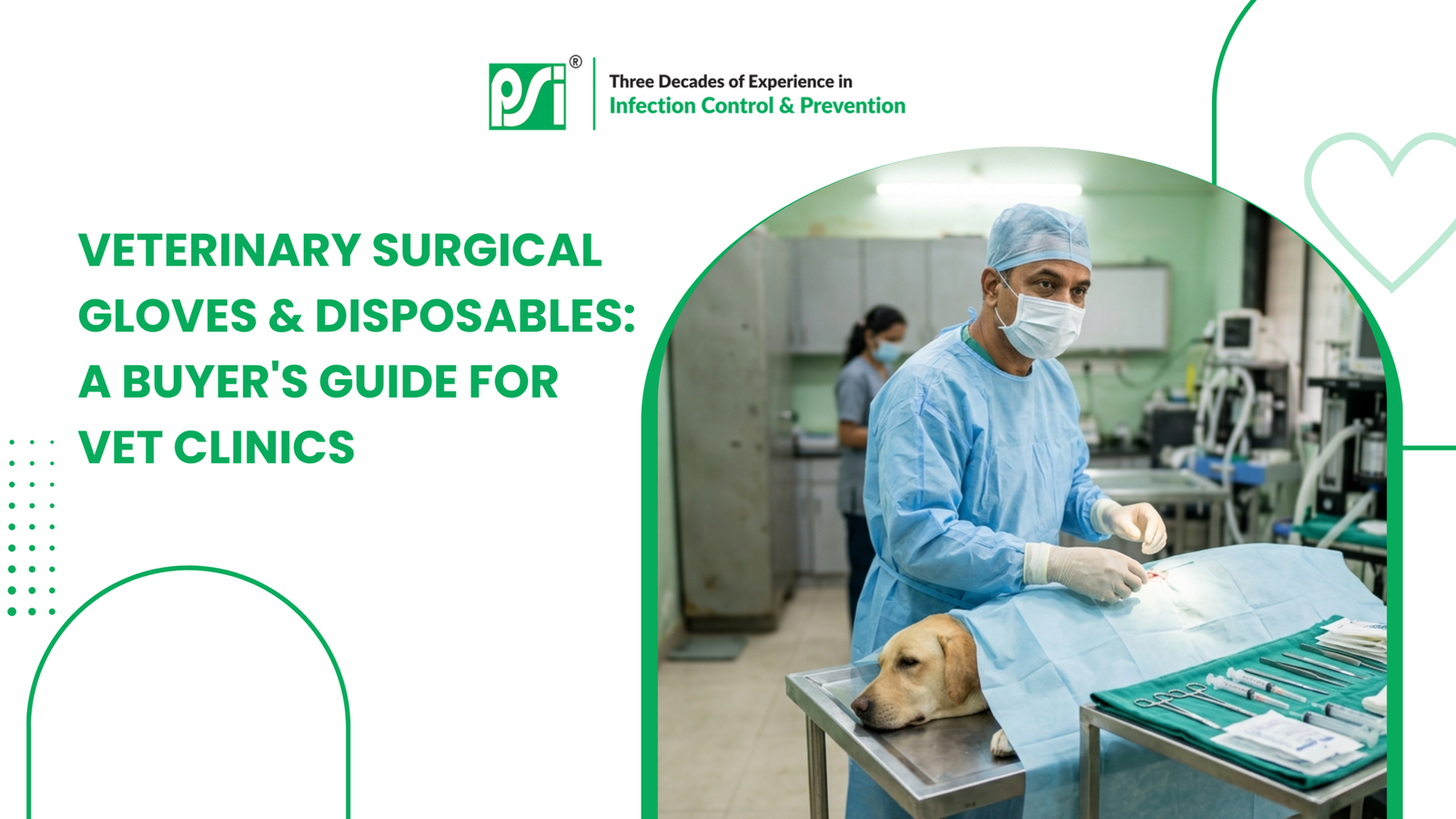
Veterinary Surgical Gloves & Disposables: A Buyer’s Guide for Vet Clinics
A small animal surgery and a bovine examination clearly do not need the same type of glove.
Yet veterinary clinics often purchase gloves and other disposables as broad product categories.
That can generate problems.
Veterinarians need different levels of protection, dexterity, coverage, and sterility depending on the procedure they perform.
Surgery requires suitable sterile gloves.
Routine examinations can require disposable examination gloves.
Large-animal procedures may require full arm veterinary gloves that provide protection well beyond the wrist.
Gloves are also only one part of veterinary infection control.
Clinics regularly purchase gowns, drapes, masks, covers, dressing materials, and other disposable supplies.
Choosing the right products can support hygiene while making everyday clinical work easier.
For procurement teams, this means looking beyond price per box.
Material, fit, intended use, sterility, durability, supply consistency, and documentation all matter.
This guide explains what veterinary clinics should consider when choosing surgical gloves and disposables.
Why Do Veterinary Clinics Need Different Gloves?
Veterinary professionals encounter different exposure hazards throughout a working day.
A vet may move between examinations, wound care, surgery, laboratory work, and large-animal procedures.
One glove cannot necessarily serve every application appropriately.
The main categories comprise:
- Sterile surgical gloves
- Examination gloves
- Full-arm veterinary gloves
- Procedure-specific protective gloves
- Heavy-duty protective gloves
Selection starts with the task.
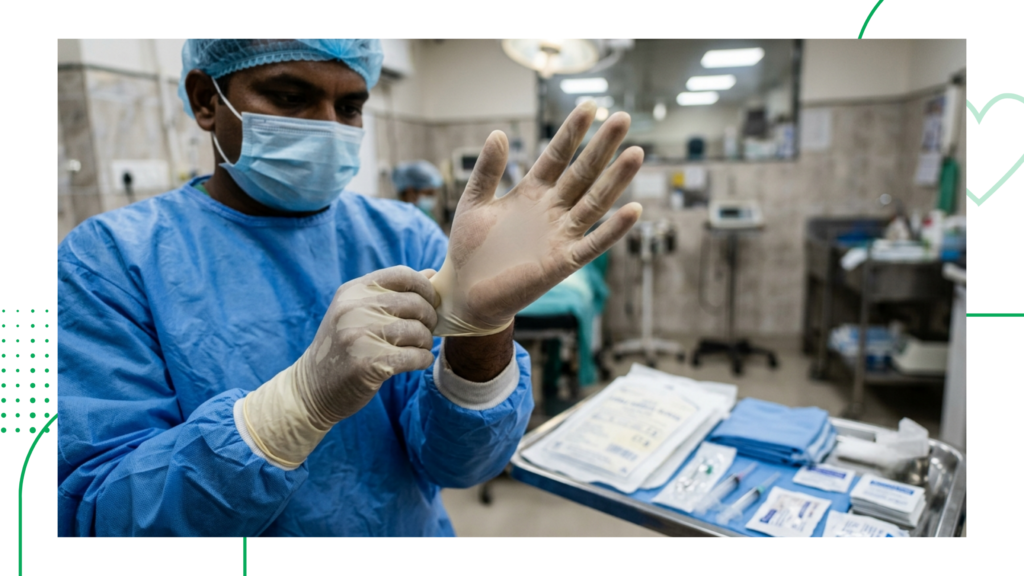
1. Surgical Gloves for Veterinary Operations
Veterinary surgery requires pertinent sterile technique.
Surgical gloves need to support both protection and precise hand movements.
Important purchasing considerations include:
- Sterility
- Fit
- Dexterity
- Tactile sensitivity
- Material
- Grip
- Cuff design
- Tear resistance
- Packaging integrity
- Size availability
A glove that feels uncomfortable can become distracting during a delicate procedure.
Fit therefore matters alongside safety and protection.
2. Examination Gloves for Routine Clinical Work
Not every veterinary procedure requires sterile surgical gloves.
Disposable examination gloves support many routine clinical activities where appropriate.
These can include:
- General examinations
- Sample handling
- Wound care
- Cleaning
- Handling contaminated materials
- Certain diagnostic procedures
Veterinary infection-control guidance recommends disposable gloves for many activities implying potentially infectious materials.
Gloves should be changed appropriately between patients and tasks.
Hand hygiene remains essential because gloves never replace proper hand cleaning.
3. Full Arm Veterinary Gloves for Large Animals
Large-animal veterinary care creates very different requirements.
Standard wrist-length gloves do not provide ample arm coverage for some procedures.
Full arm veterinary gloves extend protection towards the shoulder.
They are commonly associated with:
- Artificial insemination
- Rectal palpation
- Pregnancy examination
- Bovine procedures
- Equine procedures
- Animal reproductive work
- Selected cleaning applications
These gloves need to integrate extended coverage with tactile sensitivity.
PSI manufactures disposable veterinary or artificial insemination gloves specifically for these applications.
What Should Buyers Check in Full-Arm Gloves?
Length is an evident consideration, but it is not the only one.
Veterinary buyers should compare:
- Glove length
- Material
- Thickness
- Flexibility
- Tactile sensitivity
- Tear resistance
- Comfort
- Packaging
- Intended application
- Manufacturer consistency
PSI’s veterinary gloves use medical-grade polyethylene film and measure approximately 865–920 mm in length.
The listed thickness ranges from 15–25 microns.
This illustrates why buyers should contrast actual specifications instead of purchasing solely by product name.
4. Protective Apparel for Veterinary Clinics
Hands are not the only areas requiring protection.
Veterinary staff can encounter blood, body fluids, contaminated materials, splashes, hair, and other biological material.
Depending on the task, clinics may need:
- Disposable gowns
- Protective aprons
- Masks
- Caps
- Shoe or boot covers
- Sleeves
- Other protective apparel
The correct blend depends on the anticipated exposure.
More PPE is not automatically better.
Appropriate PPE is better.
5. Surgical Drapes and Procedure Supplies
Veterinary surgery also requires appropriate management of the surgical field.
Depending on clinic procedures, disposable supplies can include:
- Surgical drapes
- Table covers
- Towels
- Gowns
- Swabs
- Dressing materials
- Sterile accessories
Plasti Surge Industries manufactures surgical drapes, procedure packs, gowns, sterile accessories, and associated healthcare consumables.
Veterinary buyers can therefore consider the complete procedural requirement rather than sourcing every item independently.
6. Wound-Care Disposables
Wound management is another common veterinary activity.
Veterinary standard-precaution counsel recommends protective outerwear and gloves during wound debridement, treatment, and bandaging.
Clinics may regularly require:
- Dressing materials
- Gauze
- Swabs
- Gloves
- Protective apparel
- Waste-disposal products
The precise supplies depend on the animal, wound, treatment, and clinic protocol.
Why Infection Control Matters in Veterinary Clinics
Veterinary infection control safeguards more than animals.
It also protects veterinarians, technicians, support staff, animal owners, and visitors.
Some infectious diseases can move between animals and humans.
These are known as zoonotic diseases.
Veterinary standard precautions therefore address areas including:
- Hand hygiene
- Personal protective equipment
- Sharps safety
- Cleaning
- Disinfection
- Waste handling
- Isolation
- Wound care
Disposable products support these systems, but they do not replace good infection-control procedures.

How to Compare Veterinary Surgical Gloves
A good veterinary surgical gloves supplier should provide enough information for significant product comparison.
Material
Different glove materials provide different characteristics.
Consider allergies, flexibility, tactile sensitivity, strength, and intended use.
Fit
Veterinary surgery can require precise movements.
Poorly fitting gloves can interfere with dexterity.
Grip
Wet clinical environments make reliable grip particularly important.
Sterility
Verify whether gloves calculated for surgery are supplied sterile and appropriately packaged.
Size Range
Different users need different glove sizes.
A clinic should avoid forcing every employee into limited sizing options.
Packaging
Check packaging integrity, product identification, expiry information, and storage requirements.
Documentation
Request specifications and applicable quality or regulatory documentation.
What About Latex Allergies?
Latex sensitivity deserves consideration when clinics select gloves.
Latex-free alternatives are available for many applications.
Procurement teams should understand both employee and patient requirements before standardising products.
PSI also proffers latex-free disposable glove options within its broader product portfolio.
The intended use of each product still needs verification before purchasing.
A Simple Veterinary Clinic Buying Scenario
Consider a mixed veterinary practice treating both companion animals and livestock.
Buying one disposable glove for everything appears cheaper and simpler.
In practice, the clinic needs different solutions.
The surgical team requires suitable sterile surgical gloves.
Standard examinations require appropriate examination gloves.
Large-animal reproductive procedures require shoulder-length gloves.
Cleaning and contaminated-material handling create additional PPE requirements.
The clinic therefore creates a simple procurement matrix based on procedure type.
This makes purchasing more organised and helps staff access the right product when needed.
A Veterinary Disposables Procurement Checklist
Before opting for vet clinic disposables India suppliers, buyers can evaluate:
- Intended clinical use
- Product material
- Sterility where required
- Size options
- Barrier requirements
- Product dimensions
- Packaging
- Shelf life
- Storage requirements
- Quality documentation
- Batch consistency
- Manufacturer capacity
- Minimum quantities
- Delivery reliability
- Customisation options
Price belongs on the list.
It should not be the entire list.
Why Manufacturer Reliability Matters
Veterinary consumables are repetitive and monotonous purchases.
A clinic can use gloves, gowns, dressings, and protective products every working day.
Inconsistent supply can therefore create operational problems.
When choosing an animal surgery gloves manufacturer or disposable supplier, consider:
- Manufacturing experience
- Quality systems
- Product consistency
- Testing
- Documentation
- Production capacity
- Product range
- Customisation
- Delivery capability
A reliable manufacturer supports both quality and continuity.
Where Plasti Surge Industries Fits
Plasti Surge Industries manufactures medical disposables and healthcare consumables in India.
PSI’s product range includes veterinary or artificial insemination gloves planned for large-animal applications.
These shoulder-length polyethylene gloves support procedures including artificial insemination, rectal palpation, and veterinary examinations.
PSI also manufactures products across broader healthcare categories, including:
- Surgical gowns
- Surgical drapes
- Procedure packs
- Protective apparel
- Sterile surgical accessories
- Dressing kits
- Disposable gloves
- Compostable gloves
This wider portfolio can help veterinary institutions discuss multiple disposable requirements with one manufacturer.
Buyers should request specifications for each product according to its intended veterinary application.
Conclusion
Choosing veterinary gloves starts with comprehending the procedure.
Surgery, routine examinations, wound care, and large-animal procedures create very different requirements.
Sterile surgical gloves support surgical procedures, while examination gloves suit many routine clinical activities.
Full arm veterinary gloves provide extended coverage for procedures such as artificial insemination and rectal palpation.
Clinics should also consider gowns, drapes, dressing supplies, protective apparel, and other disposables as part of their infection-control system.
Plasti Surge Industries manufactures veterinary gloves alongside a broad portfolio of medical and surgical disposables.
Veterinary clinics, hospitals, colleges, livestock organisations, and distributors can contact PSI Dispo to discuss product specifications, voluminous quantities, and veterinary disposable requirements.