ETO vs Gamma Sterilization: How Sterile Surgical Packs Are Actually Made
That fastened surgical pack looks simple when a nurse opens it in an operating theatre.
What happens before it reaches the hospital is considerably more complex.
Sterile packs need suitable components, controlled assembly, protective packaging, validated sterilisation, testing, storage, and traceability.
Two sterilisation methods commonly discussed in medical-device manufacturing are ethylene oxide, or EtO, and gamma radiation.
Understanding ETO vs gamma sterilization helps hospital procurement teams ask better questions about the products they purchase.
EtO uses a sterilising gas under controlled conditions.
Gamma sterilisation uses ionising radiation to achieve the required microbial reduction.
Neither method is automatically upper-level.
Material compatibility, product design, packaging, processing conditions, regulatory requirements, and validated performance all influence the decision.
For hospitals, the most important question is not simply, “Which method does the manufacturer use?”
It is, “Is the sterilisation process appropriate, validated, controlled, and documented for this particular product?”
This guide explains how sterile surgical pack manufacturing works and what buyers should verify.
What Is a Sterile Surgical Pack?
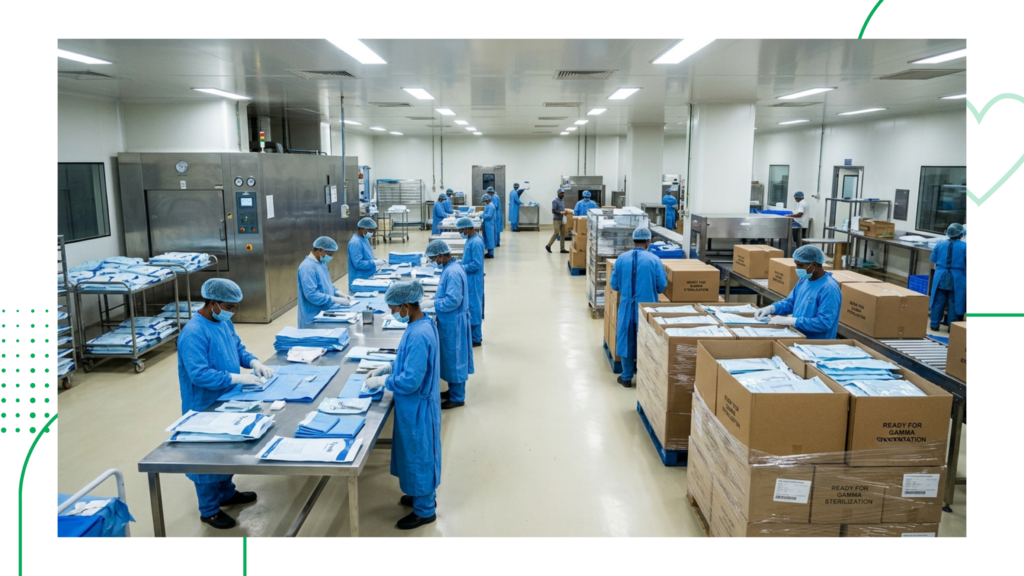
A surgical pack merges products required for a particular clinical or surgical procedure.
Depending on its intended use, a pack can contain:
- Surgical drapes
- Surgical gowns
- Towels
- Swabs
- Equipment covers
- Dressing materials
- Accessories
- Procedure-specific components
The contents differentiate significantly between procedures.
A general surgery pack does not necessarily contain the same products as an ophthalmic, orthopaedic, gynaecological, or cardiac procedure pack.
The pack is assembled, packaged, and processed according to its intended and purposeful requirements.
How Are Sterile Surgical Packs Actually Made?
The process begins long before sterilisation.
A clarified medical device sterilization process can look like this:
Step 1: Define the Pack
The manufacturer establishes the products and quantities required within the pack.
For customised packs, these specifications can mirror a healthcare facility’s requirements.
Step 2: Source and Inspect Components
Components need to meet their defined specifications.
Quality checks can cover areas such as:
- Material
- Dimensions
- Quantity
- Cleanliness
- Performance
- Packaging
- Product identification
The exact controls count on the component.
Step 3: Assemble the Pack
Products are organised according to the approved pack configuration.
Assembly procedures need to lessen unnecessary contamination and maintain controlled manufacturing conditions.
Step 4: Package the Product
Packaging performs a crucial role.
It must allow the selected sterilisation process to work while protecting the product afterwards.
The packaging system also needs to maintain integrity through:
- Processing
- Handling
- Transportation
- Storage
- Opening

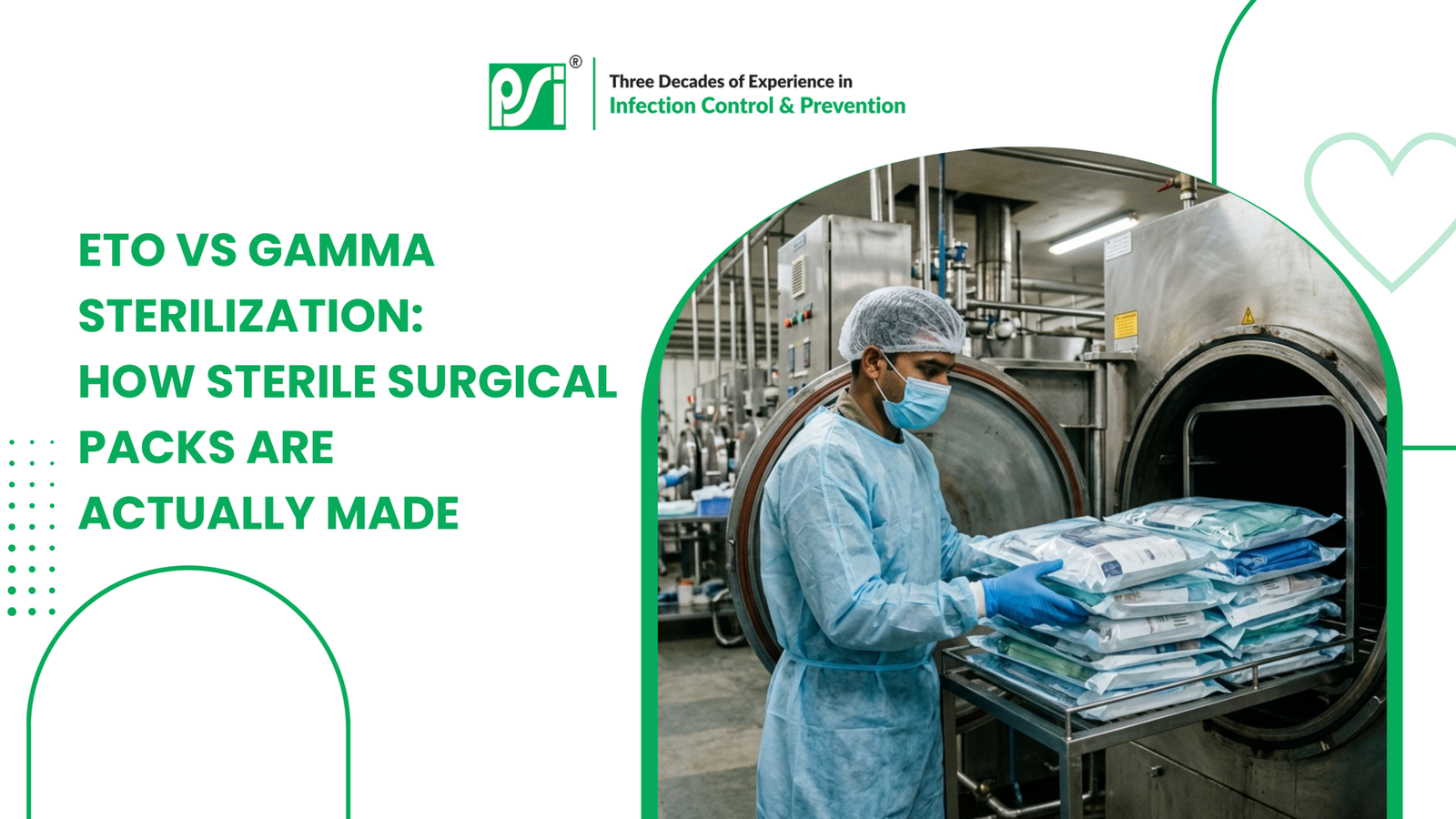
Step 5: Sterilise the Pack
The packaged product undergoes its validated sterilisation process.
This is where EtO or gamma radiation can enter the manufacturing journey.
Step 6: Release and Store the Product
Sterilisation does not mean products instantly move to hospitals without controls.
Manufacturers follow defined release procedures.
Products then require suitable storage and distribution conditions.
What Is EtO Sterilisation?
Ethylene oxide is a gas used to sterilise many medical devices.
The FDA describes EtO as an established sterilisation method for medical devices.
One major advantage is its ability to sterilise certain products that cannot endure high-temperature sterilisation.
EtO can penetrate packaging and reach difficult areas within appropriately designed products.
The process typically controls variables such as:
- EtO concentration
- Temperature
- Humidity
- Exposure time
- Pressure
- Load configuration
These parameters require validation and pattern control.
Why Is Aeration Important After EtO?
EtO requires an important additional consideration: residual gas.
After exposure, products undergo aeration to allow EtO and related residuals to lessen to acceptable levels.
This stage cannot simply be skipped to accelerate production.
Manufacturers need validated processes addressing residual requirements for applicable products.
For hospitals, this creates a useful procurement question:
How does the manufacturer control and verify the EtO sterilisation process and applicable residual requirements?
What Is Gamma Sterilisation?
Gamma sterilisation uses ionising radiation.
The radiation passes through packaged products and impedes microorganisms.
Unlike EtO, gamma sterilisation does not depend on a sterilising gas entering the package.
The process can be effective for compatible products and materials.
Radiation sterilisation requires careful control of the dose delivered to the product.
Manufacturers need to establish and validate the sterilisation dose according to applicable requirements.
Does Gamma Radiation Make Products Radioactive?
No.
This is a general misconception.
Medical products processed using gamma sterilisation do not become radioactive simply because they undergo gamma irradiation.
Gamma radiation passes through the product during processing.
The product does not become a radioactive source afterwards.
ETO vs Gamma Sterilization: Key Differences
Here is a simple comparison.
| Factor | EtO Sterilisation | Gamma Sterilisation |
| Method | Sterilising gas | Ionising radiation |
| Temperature | Relatively low | No high-temperature steam cycle |
| Penetration | Gas penetrates suitable packaging | Radiation penetrates packaged products |
| Residual Concern | EtO residuals require control | No EtO gas residual |
| Post-Processing | Aeration can be required | No EtO aeration |
| Material Impact | Compatibility requires evaluation | Radiation compatibility requires evaluation |
| Key Standard | ISO 11135 | ISO 11137 series |
The important point is compatibility.
A method that works well for one device may be inappropriate for another.
Is Gamma Sterilisation Faster?
The actual irradiation stage can be efficient and does not require EtO aeration.
However, procurement teams should circumvent comparing sterilisation methods only by cycle time.
The complete manufacturing timeline includes:
- Product preparation
- Packaging
- Transportation
- Processing
- Quality controls
- Product release
- Distribution
Operational efficiency depends on the complete validated supply chain.
Which Method Provides Better Sterility?
This question can be deceptive.
A validated sterilisation process aims to achieve a defined sterility assurance requirement.
The method alone does not make one properly validated sterile product “more sterile” than another.
What matters is whether the process:
- Suits the product
- Is properly validated
- Remains controlled
- Meets applicable requirements
- Maintains product performance
- Protects packaging integrity
Hospitals should focus on evidence rather than assumptions about the technology.
Why Material Compatibility Matters
Sterilisation can affect medical-device materials.
This is one of the most important differences buyers rarely see.
Radiation can modify some polymers.
Potential effects can include changes in:
- Colour
- Strength
- Flexibility
- Brittleness
- Chemical characteristics
EtO also requires appropriate material and packaging compatibility.
Manufacturers therefore evaluate the entire product rather than choosing a sterilisation method based on convenience.
Packaging Is Part of the Sterility System
A successful sterilisation cycle is only part of the story.
The product must remain protected afterwards.
Sterile barrier packaging helps maintain sterility until the point of use, subject to specified storage and handling conditions.
Manufacturers therefore need to check:
- Seal strength
- Package integrity
- Material compatibility
- Sterilant penetration where applicable
- Transportation
- Shelf life
- Aseptic opening
A damaged sterile package can compromise the product regardless of how well it is sterilised.
What Standards Apply to EtO and Gamma?
International standards provide frameworks for validating and controlling these processes.
EtO: ISO 11135
ISO 11135 covers the development, validation, and routine control of ethylene oxide sterilisation processes for medical devices.
As of 2026, ISO 11135:2014 remains published while a new edition progresses through ISO’s edit process.
Radiation: ISO 11137
The ISO 11137 series covers radiation sterilisation of healthcare products.
ISO 11137-1:2025 addresses development, validation, and routine control of radiation sterilisation processes.
The framework shields gamma radiation as well as other specified radiation technologies.
Hospitals should also consider applicable national regulatory requirements and product-specific standards.
What Should Hospitals Verify Before Buying Sterile Packs?
Knowing whether a pack uses EtO or gamma is useful.
But it is not enough.
Procurement teams should ask:
- Which sterilisation method applies?
- Why is that method suitable for the product?
- Is the sterilisation process validated?
- Which standards apply?
- What sterilisation documentation is available?
- How is packaging integrity controlled?
- What is the stated shelf life?
- How is batch traceability maintained?
- What storage conditions apply?
- How are product changes assessed?
For EtO-sterilised products, buyers can also ask about residual controls.
For gamma-sterilised products, ask about radiation dose validation and material compatibility.
A Simple Hospital Procurement Example
Visualize a hospital comparing two sterile procedure packs.
Pack A uses EtO.
Pack B uses gamma sterilisation.
Choosing Pack B simply because gamma sounds more advanced would be a poor procurement decision.
Choosing Pack A simply because EtO is familiar would be equally weak.
Instead, the hospital compares:
- Intended use
- Pack contents
- Product performance
- Sterilisation validation
- Material compatibility
- Packaging integrity
- Shelf life
- Traceability
- Documentation
- Supplier reliability
- Cost
The hospital then selects the product that best satisfies its clinical and procurement requirements.
That is the value of understanding sterilisation. (sterilization standards hospitals)
Custom Procedure Packs Add Another Challenge
Customisation can refine operating theatre efficiency.
However, adding or changing components can affect the overall product configuration.
A manufacturer needs appropriate controls when making changes to a sterile pack.
Hospitals requesting customised procedure packs should therefore clearly communicate:
- Required components
- Quantities
- Sizes
- Materials
- Intended procedure
- Sterility requirements
- Packaging preferences
The eventual configuration needs to work as a complete product system.
Where Plasti Surge Industries Fits
Plasti Surge Industries provides a broad range of medical disposables and sterile surgical solutions.
Its portfolio includes surgical gowns, surgical drapes, sterile accessories, procedure packs, dressing kits, and customised healthcare kits.
PSI offers procedure packs across multiple surgical specialities.
For institutional buyers, the most important step is discussing the exact configuration and sterilisation specifications of the product being considered.
Hospitals can request relevant product information, sterilisation details, packaging specifications, quantities, and documentation before procurement.
Conclusion
The ETO vs gamma sterilization discourse does not have one universal winner.
Both methods can play important roles in medical-device manufacturing when appropriately selected, validated, and controlled.
EtO uses a low-temperature gaseous procedure but requires careful residual control and aeration.
Gamma uses ionising radiation and avoids EtO residues, but product materials need to tolerate the radiation process.
For hospitals, sterilisation technology is only one part of the purchasing decision.
Packaging integrity, validation, traceability, shelf life, product performance, and supplier quality matter just as much.
Plasti Surge Industries provides surgical disposables, procedure packs, sterile accessories, and customised healthcare solutions.
Contact PSI Dispo to find out about surgical pack configurations, sterilisation specifications, product documentation, and bulk institutional requirements.
https://www.iso.org/standard/90088.html?utm_source=chatgpt.com