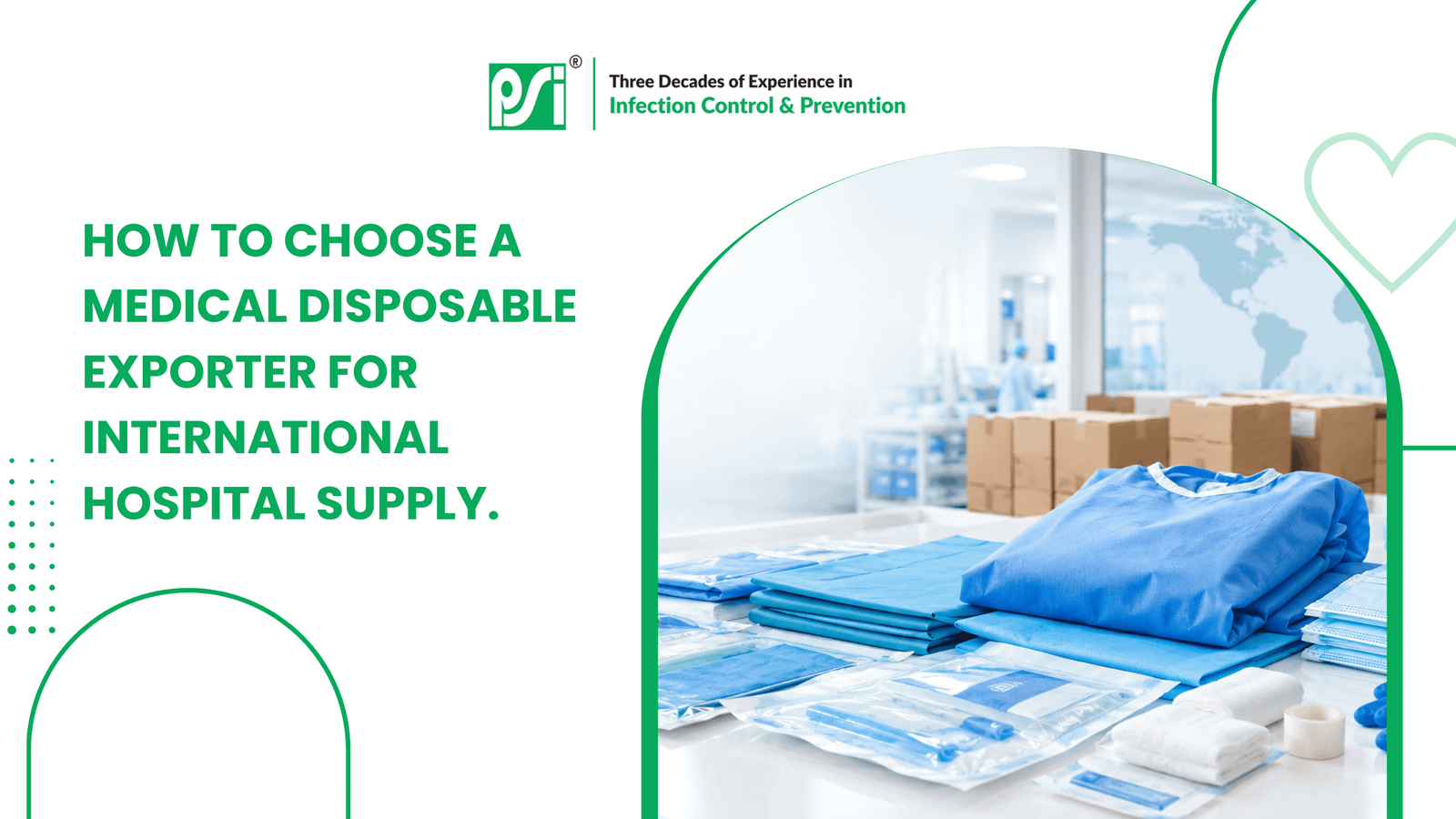
How to Choose a Medical Disposable Exporter for International Hospital Supply
What happens when a hospital receives thousands of medical disposables, only to discover that the products lack essential documentation?
The shipment may face customs delays, procurement complications, or rejection.
For international hospitals, selecting the right Medical Disposable Exporter is about much more than finding competitive prices.
Hospitals need products that meet clinical requirements, comply with local regulations, and arrive consistently.
From Disposable Surgical Instruments to gowns, drapes, and protective equipment, every product warrants careful evaluation.
A supplier may offer an impressive catalogue, but that alone does not guarantee dependable international supply.
Buyers must also consider manufacturing quality, certifications, product specifications, packaging, and logistics.
Reliable communication becomes equally important when procurement involves different countries, currencies, and regulatory systems.
The right exporter understands these challenges and provides clear information throughout the purchasing process.
This guide explains how international hospitals, distributors, and healthcare procurement teams can evaluate medical disposable exporters.
It also highlights common purchasing mistakes, essential verification steps, and the benefits of working with an established manufacturer.
What Does a Medical Disposable Exporter Do?
A medical disposable exporter supplies single-use healthcare products to buyers in global markets.
These products support infection control, clinical procedures, patient care, and hospital operations.
Common categories include:
- Disposable surgical gowns
- Surgical drapes and procedure packs
- Protective apparel
- Sterile surgical accessories
- Dressing kits
- Disposable Surgical Instruments
- Disposable Surgical Tools
- Diagnostic and healthcare kits
The exact product range depends on the manufacturer or exporter.
Some suppliers specialise in individual products, while others offer various categories for institutional procurement.
Why Choosing the Right Exporter Matters
Medical disposables play an important role in everyday healthcare delivery.
A hospital needs dependable supplies to maintain clinical workflows and infection-control practices.
Poor supplier selection can create problems such as:
- Inconsistent product quality
- Incorrect specifications
- Missing regulatory documentation
- Damaged packaging
- Delayed deliveries
- Unpredictable stock availability
- Additional procurement costs
A dependable exporter helps buyers manage these risks through documented processes and consistent communication.
8 Factors to Consider When Choosing a Medical Disposable Exporter
1. Verify Manufacturing Experience and Capabilities
Start by understanding who manufactures the products.
Some exporters operate their own manufacturing facilities.
Others source products from multiple manufacturers.
Neither arrangement automatically guarantees quality.
However, buyers should understand the real manufacturing and supply chain.
Ask suppliers:
- Do you manufacture the products directly?
- Where are the products manufactured?
- What quality controls apply?
- Can you support bulk orders?
- Are customised products available?
- How do you maintain batch consistency?
Clear answers make supplier evaluation easier.
2. Check Quality Certifications and Documentation
Medical disposable manufacturers may operate under internationally recognised quality-management standards.
ISO 13485 is an important example for medical-device quality management systems.
However, certification does not automatically mean every product meets every country’s regulatory requirements.
Buyers should request relevant documentation, including:
- Quality-management certificates
- Manufacturing licences, where applicable
- Product specifications
- Test reports
- Sterilisation information
- Product-specific regulatory documentation
- Shelf-life information
Always do due diligence on whether the documents apply to the exact products being purchased.
3. Understand International Regulatory Requirements
Medical-device regulations vary between countries.
For example:
- United States: Applicable FDA requirements can include registration, device listing, and premarket authorisation.
- European Union: Applicable medical devices must comply with the EU Medical Device Regulation and relevant CE-marking requirements.
- India: Medical devices are regulated under the applicable CDSCO framework.
- Other markets: National health authorities may require separate registrations, licences, or approvals.
An exporter should understand the documentation needed for the destination market.
Importers should independently verify applicable regulatory requirements before purchasing.
4. Evaluate Product Quality and Specifications
A product name does not provide enough information for procurement.
Two disposable surgical gowns may look similar but offer different barrier performance.
The same applies to Disposable Medical Wear such as aprons, protective gowns, masks, and other apparel.
Compare specifications including:
- Material composition
- Dimensions
- Thickness or GSM, where relevant
- Barrier performance
- Sterility
- Shelf life
- Packaging
- Intended use
For Disposable Surgical Tools, buyers should also review the relevant performance, material, and sterility requirements.
Always request product-specific information.
5. Check Sterilisation and Packaging Standards
Sterile products require additional attention.
Manufacturers utilise validated sterilisation processes appropriate to the product.
Common methods include ethylene oxide and radiation sterilisation.
Buyers should verify:
- Sterilisation method
- Applicable standards
- Process validation
- Packaging integrity
- Expiry information
- Storage conditions
- Batch traceability
Sterile packaging must protect the product throughout appropriate transportation, handling, and storage.
A damaged sterile barrier can compromise the product before usage.
6. Assess Production Capacity and Supply Reliability
International hospital procurement often involves recurring orders.
A supplier may perform well with small quantities but struggle with larger commitments.
Before signing a supply agreement, evaluate:
- Production capacity
- Minimum order quantities
- Standard lead times
- Raw-material availability
- Packaging capacity
- Inventory planning
- Delivery schedules
- Order flexibility
Supply consistency becomes especially salient for hospital chains and distributors serving multiple facilities.
7. Review Export Packaging and Logistics
International shipping adds complexity to medical procurement.
Products may pass through several handling and storage stages before reaching the hospital.
Exporters should provide appropriate packaging and shipping documentation.
Buyers can ask about:
- Export cartons
- Product labelling
- Commercial invoices
- Packing lists
- Country-of-origin documentation
- Shipping methods
- Freight arrangements
- Incoterms
- Shipment tracking
Clear responsibilities help reduce confusion between the exporter, importer, and logistics provider.
8. Compare Total Procurement Value
The lowest unit price does not always represent the best purchasing decision.
International buyers should evaluate the total landed cost.
This can include:
- Product price
- Freight
- Insurance
- Customs duties
- Taxes
- Regulatory expenses
- Warehousing
- Handling
- Potential wastage
A slightly higher product quotation may offer better value when quality, documentation, and delivery reliability are stronger.
Benefits of Working With an Established Medical Disposable Manufacturer
An experienced manufacturer can provide several procurement advantages.
Broader Product Selection
Hospitals can source multiple consumable categories through fewer supplier relationships.
Better Product Consistency
Defined manufacturing and quality processes support repeatable product specifications.
Customisation
Manufacturers may adapt specialised surgical packs, packaging, and institutional requirements.
Simplified Procurement
Consolidating compatible product requirements can reduce administrative coordination.
Long-Term Supply Planning
Ongoing supplier relationships can support predictable purchasing and inventory management.
These advantages depend on the manufacturer’s actual capabilities and the terms of the supply agreement.
Disposable Surgical Instruments vs Disposable Medical Wear
These categories serve different clinical purposes.
| Product Category | Examples | Main Buying Consideration |
| Disposable Surgical Instruments | Single-use procedure instruments | Intended use, performance, sterility |
| Disposable Medical Wear | Gowns, aprons, protective apparel | Barrier protection, fit, comfort |
| Surgical drapes | Procedure-specific drapes | Coverage, barrier performance |
| Procedure packs | Preconfigured surgical consumables | Contents, sterility, consistency |
| Dressing kits | Wound-care supplies | Contents, packaging, intended use |
Hospitals should avoid evaluating every disposable using the same purchasing criteria.
Each category has different performance and regulatory considerations.
Example: How a Hospital Can Compare Two Exporters
Consider an international hospital group sourcing disposable surgical gowns and procedure packs.
Supplier A offers a lower quotation but provides limited technical documentation.
Supplier B offers detailed specifications, relevant documentation, and clear production and delivery commitments.
The hospital generates a comparison checklist.
The procurement team evaluates:
- Product suitability
- Regulatory documentation
- Quality-management systems
- Sterilisation requirements
- Packaging
- Production capacity
- Delivery timelines
- Total landed cost
The hospital then selects the supplier that best meets its clinical and commercial requirements.
This illustrative scenario demonstrates why price alone should not determine international procurement decisions.
Questions to Ask Before Finalising an Exporter
Before placing a bulk order, find out:
- Can you share your product catalogue?
- Which products do you manufacture directly?
- What certifications and licences apply?
- Can you provide samples?
- Are products suitable for our destination market?
- What are your minimum order quantities?
- Can you provide customised procedure packs?
- What are your standard lead times?
- How do you manage product complaints?
- What export documents can you provide?
These questions help buyers identify potential problems before committing to large orders.
Common Mistakes International Buyers Should Avoid
Even experienced procurement teams can overlook important details.
Common mistakes include:
- Selecting suppliers based only on price
- Assuming ISO certification equals product approval
- Ignoring destination-country regulations
- Failing to review product samples
- Overlooking packaging requirements
- Accepting unclear delivery commitments
- Ignoring batch traceability
- Not confirming sterility where required
A structured evaluation process helps reduce these risks.
Why Consider PSI Dispo for Medical Disposable Supply?
Plasti Surge Industries, known as PSI Dispo, manufactures medical disposables and healthcare consumables in India.
Established in 1989, PSI offers products across multiple clinical and institutional categories.
Its portfolio includes:
- Disposable surgical gowns
- Surgical drapes
- Procedure packs
- Protective apparel
- Sterile surgical accessories
- Surgical devices
- Dressing kits
- Diagnostic kits
- Customised healthcare kits
PSI also offers procedure-specific solutions for surgical specialities, including orthopaedics, gynaecology, and general surgery.
This product range makes PSI relevant to hospitals and distributors seeking multiple categories of healthcare consumables.
International buyers can contact PSI to discuss product specifications, bulk quantities, customisation, documentation, and export enquiries.
Buyers should confirm product availability and destination-market eligibility for each requested item.
FAQs
What is a Medical Disposable Exporter?
A Medical Disposable Exporter supplies single-use healthcare products to hospitals, distributors, and other buyers across international markets.
How do I verify a medical disposable exporter?
Check the manufacturer’s identity, certifications, product documentation, regulatory status, quality controls, and supply capabilities.
What certifications should medical disposable manufacturers have?
Requirements differ by product and destination.
ISO 13485 is a recognised medical-device quality-management standard, but additional regulatory requirements may apply.
Are Disposable Surgical Instruments always sterile?
No.
Buyers must verify the intended use, sterility status, packaging, and applicable requirements for each product.
Can hospitals import Disposable Medical Wear in bulk?
Yes, subject to applicable import regulations, product requirements, supplier capability, and purchasing conditions.
What is the difference between disposable surgical tools and reusable instruments?
Disposable Surgical Tools are intended for single use, while reusable instruments require appropriate reprocessing between uses.
Can medical disposable exporters supply customised surgical packs?
Some manufacturers offer customised procedure packs.
Buyers should confirm the available configurations, minimum quantities, sterility requirements, and production capabilities.
Why is packaging important for international medical supplies?
Packaging protects products during transportation and storage.
Sterile products also require packaging that maintains the sterile barrier until appropriate use.
Conclusion
Opting the right Medical Disposable Exporter requires more than comparing catalogues and prices.
International hospitals need suppliers that understand product quality, documentation, regulatory requirements, packaging, and delivery reliability.
Every product category requires careful evaluation.
Disposable Surgical Instruments need appropriate performance and sterility verification.
Disposable Medical Wear requires suitable barrier protection, fit, and material specifications.
Likewise, Disposable Surgical Tools and procedure packs need product-specific quality and regulatory checks.
A structured supplier evaluation helps hospitals reduce procurement risks and build more dependable supply relationships.
PSI Dispo manufactures a broad range of medical disposables, surgical gowns, drapes, procedure packs, and customised healthcare solutions.
Looking for a dependable medical disposable manufacturing partner?
Contact PSI Dispo to discuss your product requirements, bulk orders, customisation options, and international supply enquiries.