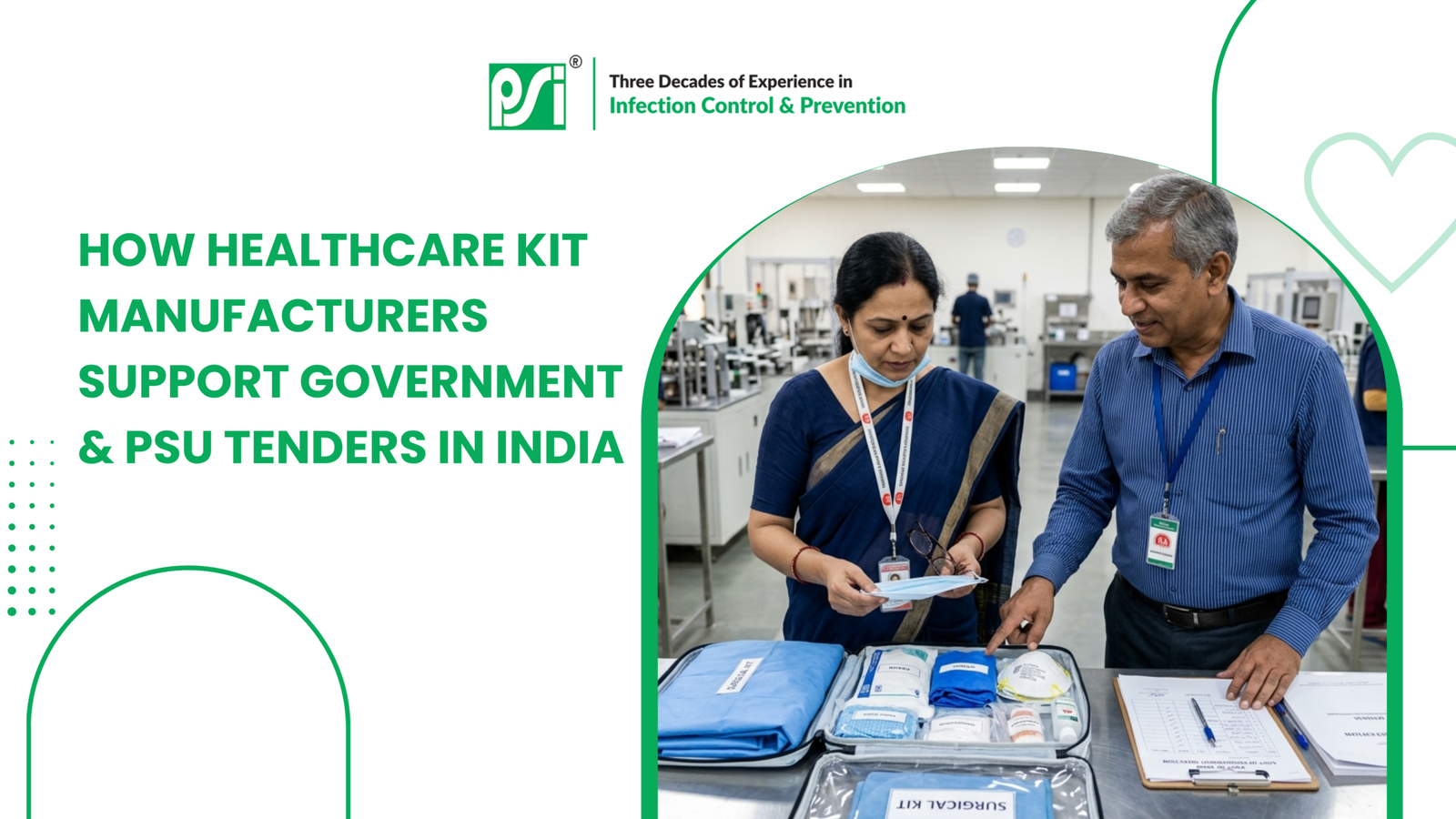
How Healthcare Kit Manufacturers Support Government & PSU Tenders in India
Supplying 500 healthcare kits to one hospital is one provocation.
Supplying thousands of correctly configured kits across government facilities creates a completely different procurement challenge.
Government and PSU healthcare tenders can involve strict specifications, documentation, timelines, quantities, packaging, inspection, and delivery requirements.
A healthcare kits government tender India opportunity therefore requires more than simply having the products available.
Manufacturers need systems that can translate tender specifications into consistent, ready-to-distribute healthcare kits.
They may also need to contain different programmes.
A maternal health initiative needs different products from a rural diagnostic programme, emergency response project, or surgical procurement contract.
For government buyers, consistency becomes essential.
Every kit should contain the specified products, quantities, packaging, labelling, and documentation required under the tender.
This is where an experienced healthcare kit manufacturer can add significant value.
This guide explains how manufacturers support government and PSU procurement, what buyers should evaluate, and why customisation and supply capability matter.
What Are Government Healthcare Kits?
Government healthcare kits amalgamate selected medical products into a defined package for a particular programme or clinical purpose.
The contents depend entirely on the tender specification.
Examples can comprise kits for:
- Maternal and child care
- Rural healthcare
- Diagnostics
- Disease screening
- Emergency response
- First aid
- Family planning
- Wound care
- Surgical procedures
- Infection control
- Public-health programmes
A good kit provides the required products in an organised format suitable for its intended use.
Why Are Healthcare Kits Useful in Public Health?
Government healthcare programmes often operate across large and geographically various populations.
Individual facilities may have different infrastructure and procurement capabilities.
Pre-configured kits can simplify distribution.
Instead of sourcing several products separately, authorities can obtain defined combinations under a single requirement.
Depending on the programme, this can support:
- Standardisation
- Easier distribution
- Simplified inventory
- Better product availability
- Faster deployment
- Consistent specifications
- Easier field use
These advantages become particularly relevant in rural and remote healthcare programmes.
How Government Procurement Works in India
Central Government procurement operates within India’s public procurement framework.
The General Financial Rules, or GFR, initiate important procurement requirements.
The Government e-Marketplace, commonly called GeM, also plays a major role.
Common-use goods and services available on GeM generally require procurement through the platform by Central Government Ministries and Departments.
Government buyers can use mechanisms including:
- Direct purchasing where applicable
- Online bidding
- Competitive procurement
- Reverse auctions
- Tender processes
Other government bodies and PSUs can also have their own applicable procurement procedures.
Suppliers therefore need to study every tender individually.
8 Ways Healthcare Kit Manufacturers Support Tenders
1. Matching Exact Technical Specifications
Government tenders usually define what the buyer requires.
A manufacturer cannot simply replace those requirements with its standard catalogue products.
Specifications can cover:
- Product type
- Material
- Dimensions
- Quantity
- Sterility
- Packaging
- Labelling
- Performance requirements
- Applicable standards
A competent government hospital kit supplier needs to understand and manufacture against these specifications.
2. Creating Customised Healthcare Kits
Government programmes rarely fit one universal kit.
A rural health programme may require a different configuration from an urban hospital.
Custom manufacturing lets the supplier create kits around the tender’s bill of quantities.
For example, a programme may require:
- One protective gown
- Multiple disposable items
- Dressing materials
- Diagnostic supplies
- Hygiene products
- Printed instructions
- Programme-specific packaging
The manufacturer assembles these products into the specified configuration.
3. Supporting Large Procurement Volumes
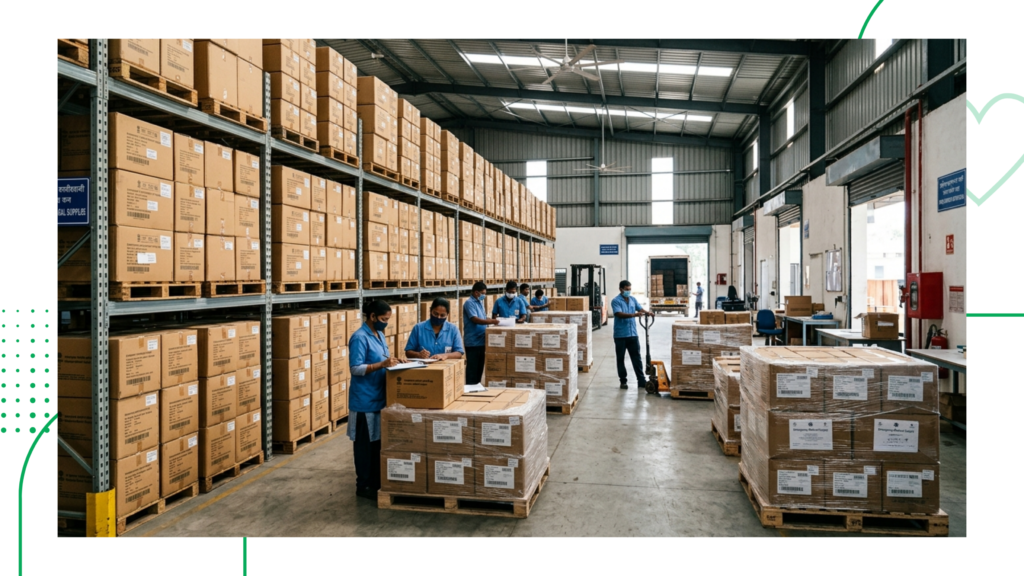
Volume changes everything.
Producing 100 kits is different from regularly producing tens of thousands.
Government buyers should assess whether manufacturers have adequate:
- Production capacity
- Raw-material planning
- Workforce
- Quality-control systems
- Packaging capacity
- Warehousing
- Logistics coordination
- Supply continuity
A low bid becomes meaningless if the supplier cannot fulfil the order reliably.
4. Maintaining Batch Consistency
A large government programme anticipates consistency.
Kit number 10 should match kit number 10,000 according to the approved specification.
Manufacturers therefore need appropriate controls for:
- Incoming materials
- Component quantities
- Product dimensions
- Assembly
- Packaging
- Labelling
- Batch identification
- Final inspection
Consistency is especially important when products reach facilities across multiple districts or states.
5. Providing Required Documentation
Tender participation can involve substantial documentation.
Exact requirements vary between procurements.
They may include relevant:
- Business registrations
- Manufacturing licences
- Quality certificates
- Product specifications
- Test reports
- Tax documents
- Experience documents
- Financial information
- Declarations
- Bid forms
Manufacturers should provide only valid and applicable documentation.
Buyers should verify documents rather than depending on logos or marketing claims.
6. Supporting Tender-Specific Packaging
Packaging can be part of the technical specification.
Government healthcare programmes may require particular:
- Kit dimensions
- Product arrangement
- Outer packaging
- Labels
- Identification
- Batch information
- Instructions
- Programme details
Custom packaging also assists healthcare workers quickly identify the correct kit in field environments.
7. Managing Delivery Requirements
Government supply contracts can require deliveries across multiple locations.
This creates a logistics challenge.
A reliable PSU medical supply partner should understand requirements around:
- Delivery schedules
- Destination quantities
- Batch dispatches
- Packaging for transportation
- Documentation
- Tracking
- Receipt requirements
Tender success does not get terminated when manufacturing finishes.
Successful fulfilment ends when compliant products reach the required destinations.
8. Maintaining Traceability
Traceability becomes particularly important for healthcare supplies.
Manufacturers need systems appropriate to the products they furnish.
Depending on the product, information can include:
- Batch number
- Manufacturing date
- Expiry date
- Product identification
- Sterilisation information
- Packaging records
- Dispatch details
Traceability supports quality management throughout the supply chain.
Why Rural Healthcare Kits Need Special Attention
A rural health kit manufacturer needs to think beyond the factory.
Products may travel considerable distances before reaching their end users.
Some facilities operate with limited storage or infrastructure.
Kit design can therefore consider:
- Portability
- Strong packaging
- Simple identification
- Organised components
- Appropriate shelf life
- Storage requirements
- Ease of distribution
- Field usability
The goal is to make essential supplies practical at the point of use.
Example: A Maternal Healthcare Programme
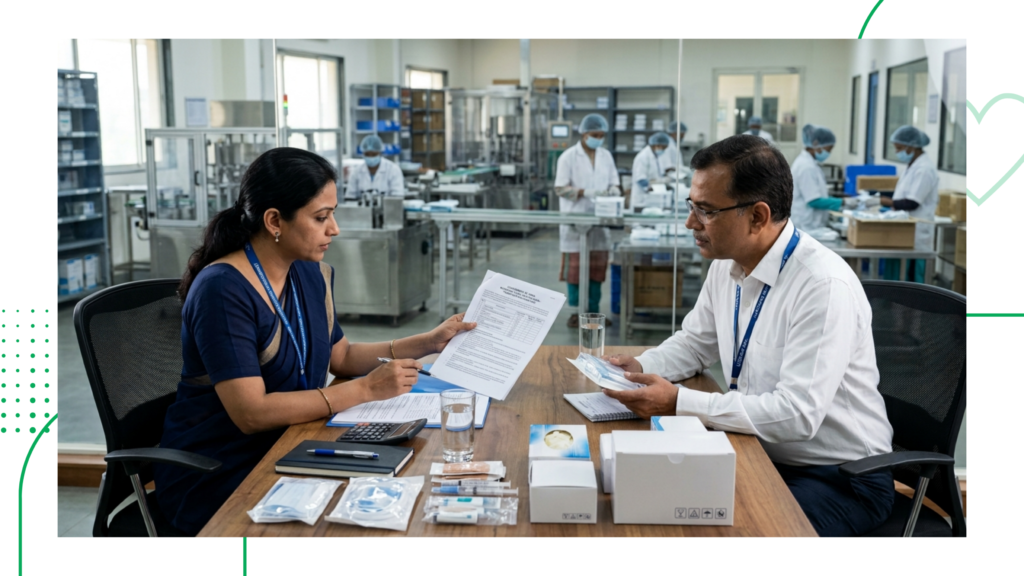
Imagine a public-health authority purchasing maternal and child-care kits for multiple districts.
The tender specifies the contents, quantities, packaging, quality requirements, and delivery schedule.
A manufacturer first converts these requirements into an approved kit configuration.
Procurement and production teams then plan every component.
Quality teams verify incoming materials.
Assembly teams pack the specified quantities.
Labels and outer packaging follow tender requirements.
Completed batches undergo applicable inspections before dispatch.
Logistics teams then distribute quantities according to the contract agenda.
This example shows why government healthcare supply requires coordination across multiple functions.
The Importance of Mother and Child Care Kits
Maternal and child health programmes are a good example of how healthcare kits support public-health delivery.
Kits can bring several critical items into one organised package.
Depending on programme specifications, they can include products supporting:
- Maternal hygiene
- Newborn care
- Baby hygiene
- Postpartum needs
- Clothing
- Towels
- Sanitary products
- Other essential supplies
Plasti Surge Industries provides Mother & Child Care Kits alongside customised healthcare solutions.
The precise configuration can depend on institutional requirements.
Customisation Can Reduce Procurement Complexity
Government tenders can involve dozens of individual components.
Sourcing every item independently generates additional coordination.
A customised kit manufacturer can integrate specified products into one supply solution.
This can simplify:
- Component sourcing
- Quality checks
- Packaging
- Kit assembly
- Inventory
- Distribution
However, customisation must follow the tender.
Suppliers should never substitute components without the required approval.
What Should Government and PSU Buyers Evaluate?
Price is important in public procurement.
But technical compliance comes first.
Buyers assessing a government hospital kit supplier should consider:
- Technical compliance
- Manufacturing capability
- Relevant licences
- Quality systems
- Product documentation
- Previous supply capability
- Customisation
- Production capacity
- Packaging capability
- Traceability
- Delivery capacity
- Commercial compliance
Every procurement has its own eligibility and evaluation conditions.
Buyers and suppliers should therefore rely on the actual tender document.
Common Tender Errors Suppliers Should Avoid
Government tenders can be unforgiving about documentation and specifications.
Common mistakes include:
- Missing documents
- Incorrect product specifications
- Expired certificates
- Unclear technical submissions
- Incorrect quantities
- Packaging deviations
- Missed deadlines
- Unrealistic delivery commitments
- Ignoring tender amendments
- Assuming previous tender requirements still apply
Reading every clause carefully can avert avoidable disqualification.
Why GeM Matters
GeM provides an end-to-end digital procurement environment for government purchasing.
Its seller journey includes registration, catalogue management, bid participation, order fulfilment, and related processes.
For suppliers, this means digital readiness becomes important.
Product information needs to remain accurate.
Bid documents need careful preparation.
Orders need timely fulfilment.
Manufacturers seeking government business should therefore treat tender management as a structured operational function.
How Plasti Surge Industries Supports Healthcare Kit Requirements
Plasti Surge Industries manufactures healthcare consumables and medical disposables in India.
PSI has operated in healthcare consumables since 1989 and provides a broad product portfolio.
Its healthcare solutions include:
- Customised healthcare kits
- Customised surgical kits
- Mother and child-care kits
- Diagnostic kits
- Dressing kits
- Surgical gowns
- Surgical drapes
- Procedure packs
- Protective apparel
- Spill-management kits
PSI states that its customised kits can reinforce maternal care, emergency services, disease-specific interventions, and other medical contexts.
Its kits can also be designed for portability and use in field or remote environments.
This makes customisation particularly relevant when institutional buyers require programme-specific configurations.
Government and PSU buyers should discuss the exact tender specifications, quantities, documentation, packaging, and delivery requirements before procurement.
Conclusion
Government healthcare procurement is about much more than supplying products at scale.
Successful tenders require technical compliance, consistent manufacturing, documentation, packaging, traceability, capacity, and dependable delivery.
A capable and effective government hospital kit supplier also understands that every programme can have different requirements.
Customised healthcare kits can support maternal care, rural healthcare, diagnostics, emergency programmes, and other public-health initiatives.
The key solution is manufacturing exactly what the procurement specification requires.
Plasti Surge Industries manufactures healthcare kits and medical disposables for institutional requirements.
Government bodies, PSUs, hospitals, procurement agencies, and programme partners can contact PSI Dispo to discuss tender specifications, customised kit configurations, bulk quantities, packaging, and supply requirements.