Are Smart Hospitals Moving Toward Customized Surgical Procedure Kits?
What if an operating theatre could prepare for surgery with fewer supply searches, fewer unnecessary items, and better organisation?
That is one of the opportunities customized surgical procedure kits offer modern hospitals.
Smart hospitals are often associated with artificial intelligence, connected medical devices, and digital patient records.
However, smarter healthcare also means upgrading everyday clinical processes.
Operating theatre preparation is one area where small changes can make a meaningful difference.
Traditional preparation often involves collecting surgical gowns, drapes, dressings, and accessories from multiple storage locations.
This approach can create additional handling, inconsistent setups, and unused supplies.
Custom surgical packs proffer an alternative by combining selected products into one procedure-specific package.
They can simplify preparation while helping hospitals standardise frequently performed procedures.
They also support broader discussions about inventory management, waste reduction, and infection-control practices.
But does every hospital need customized kits?
Not necessarily.
The value depends on surgical volume, procedure requirements, pack contents, and procurement planning.
This article explores why hospitals consider customized surgical kits, their practical benefits, and how to introduce them effectively.
What Are Customized Surgical Procedure Kits?
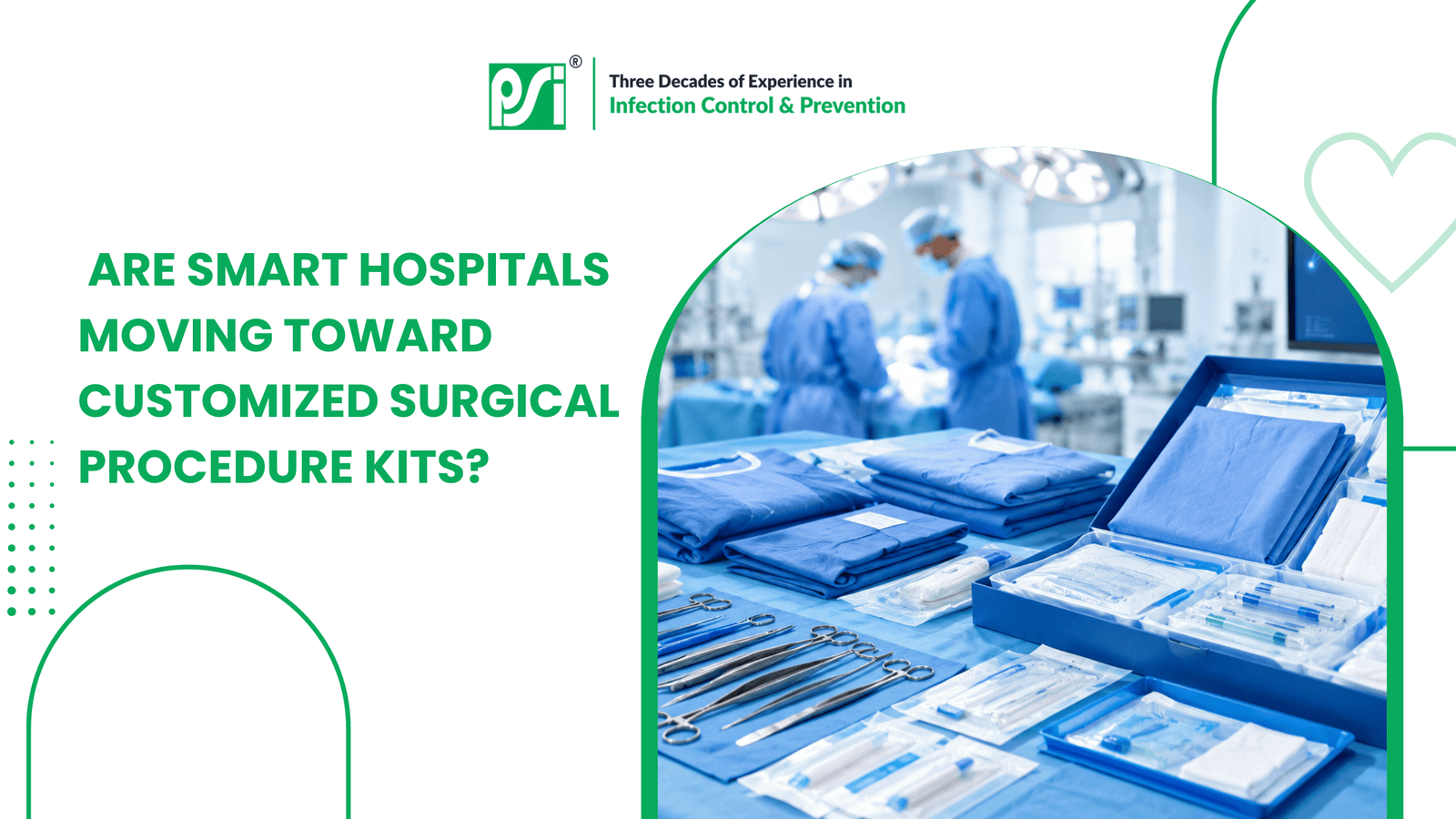
Customized surgical procedure kits are preconfigured collections of medical consumables designed for particular surgical procedures.
Each kit contains selected products according to the hospital’s clinical requirements.
Depending on the procedure, a kit may include:
- Sterile surgical gowns
- Surgical drapes
- Dressing materials
- Swabs
- Towels
- Equipment covers
- Procedure-specific accessories
The exact contents vary between surgical specialities.
For example, an orthopaedic procedure needs a different configuration from an ophthalmic procedure.
Customisation allows hospitals to select the products and quantities that suit their workflows.
Why Are Smart Hospitals Considering Custom Surgical Packs?
Smart healthcare is not limited to digital technology.
It also involves making hospital operations more organised, predictable, and efficient.
Custom surgical packs fit this approach by simplifying supply preparation.
Instead of gathering every item separately, staff access a defined collection of consumables.
This can boost:
- Standardised preparation
- Simpler inventory management
- Reduced unnecessary handling
- More predictable supply requirements
- Better waste monitoring
- Easier procurement planning
These benefits depend on appropriate kit design and regular review.
6 Benefits of Customized Surgical Procedure Kits
1. Simplified Operating Theatre Preparation
Surgical teams need the correct supplies available before procedures begin.
Collecting individual products can involve multiple storage locations and packaging steps.
Customized kits combine frequently used consumables into one configuration.
This can simplify preparation and reduce repetitive supply-gathering tasks.
Staff still need to verify kit contents and prepare any additional equipment.
2. Better Standardisation Across Procedures
Different teams may prepare similar procedures using slightly different supply combinations.
This can create inventory complexity.
Standardised kits provide a consistent starting point.
Hospitals can develop separate configurations for:
- General surgery
- Orthopaedics
- Gynaecology
- Ophthalmology
- Urology
- Cardiology
- Other specialities
Clinical teams can then scrutinize these configurations as requirements change.
3. Reduced Unnecessary Product Waste
Unused surgical consumables can create avoidable waste.
This becomes particularly important when items are opened but never used.
Well-designed custom surgical packs can reduce unnecessary components.
However, poorly designed packs can also create waste.
The objective is not simply to combine more products.
It is to include the right products.
4. Easier Inventory Management
Hospitals need accurate information about surgical supply consumption.
Procedure-specific kits can simplify inventory planning.
For example, procurement teams can estimate demand using:
- Procedure volumes
- Average kit consumption
- Department requirements
- Stock availability
- Supplier lead times
This boosts more structured purchasing decisions.
5. More Organised Infection-Control Practices
Infection prevention depends on several clinical practices working together.
These include hand hygiene, aseptic technique, environmental cleaning, and appropriate sterile supplies.
Customized sterile packs can support organised preparation by reducing the number of separately handled packages.
However, packs do not independently prevent surgical-site infections.
Proper sterilisation, packaging integrity, storage, and aseptic handling remain essential.
6. Better Procurement Coordination
Hospitals often buy multiple consumables from different suppliers.
Custom kits can consolidate selected items into one procurement requirement.
This may simplify ordering, stock management, and supplier coordination.
However, buyers should compare complete kit costs against individual product purchasing.
Customisation must provide practical value, not simply additional packaging.
What Does Research Say About Customized Surgical Packs?
Published research provides useful evidence about the value of reducing unnecessary surgical supplies.
A 2022 study in The American Journal of Surgery evaluates unused items in surgical packs.
Researchers evolve revised packs containing fewer unnecessary products.
The study projects approximately $45,719 in annual savings and 2,437 pounds of annual waste reduction.
These figures relate to the specific hospital and procedures studied.
They are not guaranteed savings for every hospital.
However, they demonstrate how reviewing pack contents can support financial and environmental improvements.
Why Surgical Drapes Matter in Customized Kits
Surgical drapes are important components of many surgical procedure packs.
They help establish and maintain appropriate barriers around the surgical field.
Different procedures require different draping configurations.
Hospitals should evaluate:
- Material
- Barrier performance
- Dimensions
- Fluid resistance
- Sterility
- Coverage
- Packaging
- Ease of application
Including appropriate drapes within customized kits can simplify procedure preparation.
The drape specification must still match the clinical requirements.
How Customized Kits Support Smarter Hospital Inventory
Consider a hospital performing several hundred procedures every month.
Each speciality requires different consumables.
Without organised procurement, staff may need to govern numerous individual products.
A customized kit system groups selected supplies according to procedure type.
Inventory teams can monitor kit consumption alongside surgical schedules.
This creates opportunities for more predictable stock planning.
It can also help identify products that teams regularly leave unused.
Hospitals can then review their kit configurations.
What About Spill Management in Hospital Environments?
Operating theatre readiness involves more than surgical supplies.
Spill management in hospital environments is another important part of infection control and workplace safety.
Hospitals need appropriate procedures and materials for responding to blood, body-fluid, and chemical spills.
Depending on the hazard, spill-management supplies may include:
- Protective apparel
- Absorbent materials
- Collection materials
- Suitable cleaning agents
- Waste-disposal products
- Procedure instructions
These products generally serve a different purpose from sterile surgical packs.
They should not automatically become part of every procedure kit.
However, smart hospitals consider both surgical preparation and spill-response readiness within broader supply planning.
PSI Dispo manufactures biological and chemical spill-management kits alongside its surgical consumables.
How Hospitals Can Introduce Customized Surgical Kits
Hospitals can follow a structured approach.
Step 1: Identify High-Volume Procedures
Begin with procedures that use predictable consumable combinations.
Step 2: Review Existing Supplies
Identify frequently used, unnecessary, and missing items.
Step 3: Consult Clinical Teams
Include surgeons, nurses, infection-control personnel, and procurement staff.
Step 4: Develop Kit Specifications
Define exact products, quantities, dimensions, and sterility requirements.
Step 5: Evaluate Manufacturers
Review product quality, documentation, customisation capability, and supply reliability.
Step 6: Conduct a Trial
Introduce sample kits for appropriate procedures.
Collect feedback about usability and missing components.
Step 7: Monitor Results
Track preparation time, unused products, costs, and staff feedback.
Step 8: Ameliorate the Configuration
Review the kit regularly as procedures and clinical preferences change.
Example: A Smarter Surgical Preparation Process
Consider a multi-speciality hospital reviewing its operating theatre supplies.
The hospital notices that teams regularly open certain products without using them.
Some procedures also require staff to collect additional items separately.
The procurement team works with clinical staff to review frequently performed procedures.
Together, they develop revised procedure-specific kit configurations.
The new kits contain essential consumables while removing unnecessary items.
The hospital evaluates preparation workflows, supply consumption, and user feedback during a trial.
This illustrative scenario shows how customisation can support more organised surgical preparation.
What Should Hospitals Look for in a Kit Manufacturer?
A suitable manufacturer should understand both product quality and customisation.
Important evaluation factors include:
- Product specifications
- Manufacturing capability
- Sterility requirements
- Relevant quality documentation
- Component consistency
- Packaging integrity
- Batch traceability
- Customisation options
- Bulk supply capability
- Delivery reliability
Hospitals should also request samples where appropriate.
The goal is to find a manufacturer that supports the hospital’s actual clinical requirements.
How PSI Dispo Supports Customized Surgical Requirements
Plasti Surge Industries, known as PSI Dispo, manufactures healthcare consumables and medical disposables in India.
Its portfolio includes customized surgical procedure packs for several clinical specialities.
These include:
- General surgery
- Orthopaedics
- Gynaecology
- Ophthalmology
- Urology
- Cardiology
- Neurology
PSI also manufactures surgical gowns, surgical drapes, sterile accessories, dressing kits, and protective apparel.
Its broader portfolio comprises of biological and chemical spill-management kits.
Hospitals can discuss procedure-specific configurations, product specifications, packaging, and bulk institutional requirements with PSI.
The exact kit contents and applicable documentation should be confirmed before procurement.
Conclusion
Smart hospitals focus on improving both clinical care and the systems supporting it.
Customized surgical procedure kits offer a practical opportunity to simplify operating theatre preparation.
They can support standardisation, inventory planning, and more efficient use of consumables.
However, the real benefit comes from thoughtful kit design.
Hospitals need to understand their procedure requirements, evaluate unused supplies, and work closely with clinical teams.
Appropriate surgical drapes, gowns, dressings, and accessories should form part of each relevant configuration.
Broader safety requirements, including spill-response readiness, remain important but require separate planning.
PSI Dispo manufactures customized procedure packs, surgical consumables, protective apparel, and spill-management solutions.
Looking to simplify surgical preparation at your hospital?
Contact PSI Dispo to discuss customized surgical packs, procedure-specific requirements, bulk orders, and suitable healthcare consumable solutions.