What Should a Hospital Postnatal Care Kit Contain? Checklist for Normal Delivery vs C-Section Mothers in India
What Should a Hospital Postnatal Care Kit Contain? Checklist for Normal Delivery vs C-Section Mothers in India
A new mother leaves the delivery room with a baby in her arms and a completely new recovery journey ahead.
But does every mother need the same postnatal supplies?
Not quite.
A mother recovering from a normal vaginal delivery may need additional perineal hygiene and comfort products.
A mother recovering from a C-section may require suitable incision-care supplies and clothing that averts pressure on her wound.
Both need essentials for hygiene, comfort, breastfeeding, and newborn care.
This is where well-designed Postnatal Care Kits become useful.
Hospitals can organise commonly needed supplies into convenient packages instead of asking families to arrange everything separately.
However, one standard kit may not meet every mother’s needs.
A thoughtful and reflective maternity care kit should reflect the delivery method, clinical requirements, and expected hospital stay.
For Indian hospitals, affordability, hygiene, packaging, and product availability also influence kit selection.
This guide explains what postnatal kits should contain, how normal delivery and C-section kits differ, and how hospitals can customise them.
It also explores practical ways to reduce unnecessary packaging and select suitable products for mothers and newborns.
What Are Postnatal Care Kits?
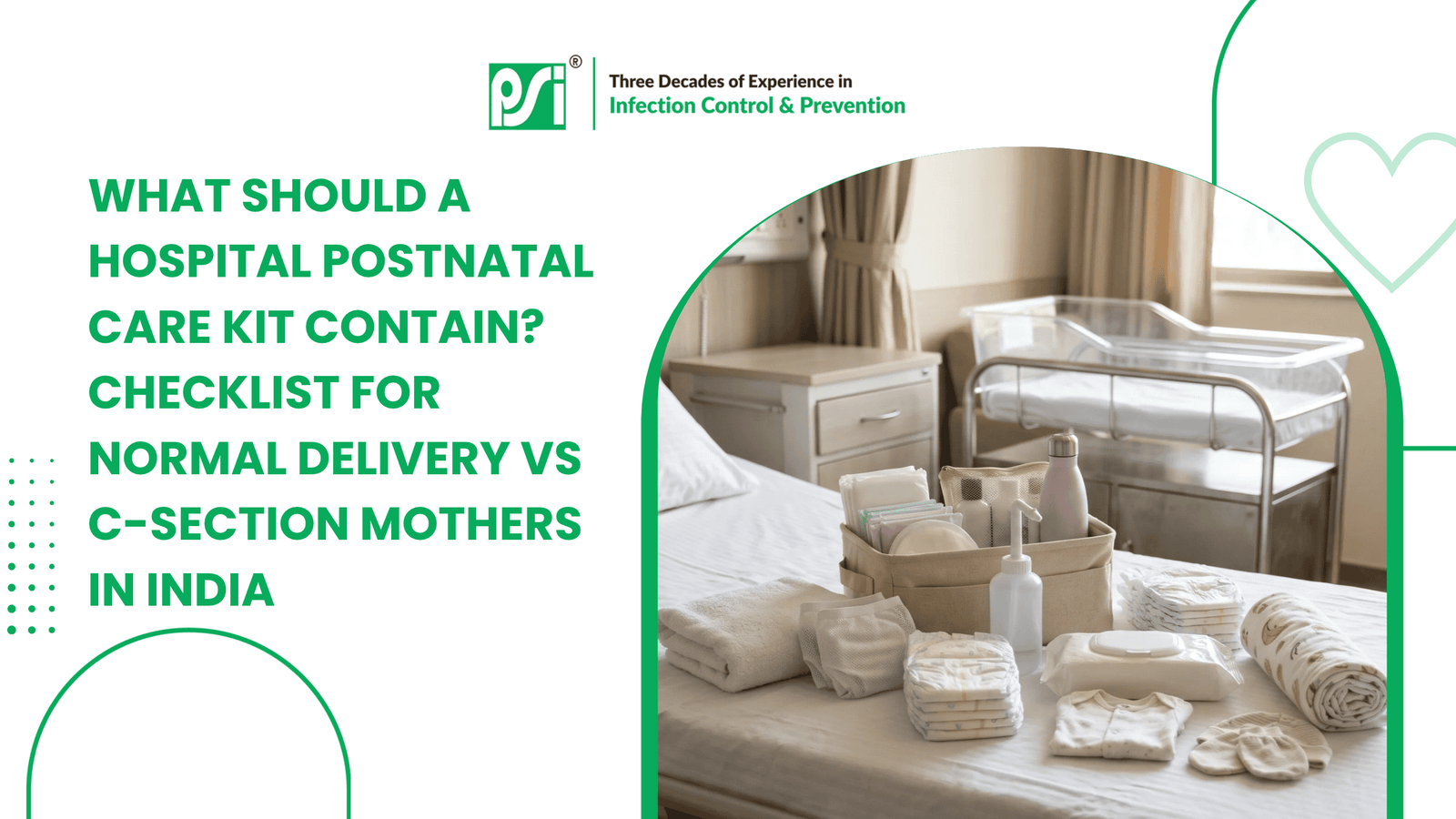
Postnatal Care Kits are collections of essential supplies designed to support mothers after childbirth.
They can include hygiene products, personal care items, breastfeeding accessories, and selected newborn essentials.
Hospitals may provide them during admission, after delivery, or before discharge.
A postpartum care kit usually pivots on the mother’s recovery and everyday comfort.
A mother and baby care kit may also contain suitable newborn supplies.
The exact contents depend on hospital policies and individual needs.
Importantly, a patient kit does not replace medical treatment or professional postnatal care.
Why Do Hospitals Need Different Postnatal Kits?
Childbirth affects every mother differently.
Recovery requirements depend on the delivery method, medical condition, and individual circumstances.
For example:
- Vaginal delivery may involve perineal soreness or stitches.
- C-section delivery involves recovery from abdominal surgery.
- Both delivery methods involve postpartum bleeding.
- Breastfeeding support may be needed after either delivery.
- Additional supplies may be necessary when complications occur.
Hospitals should therefore consider separate kit configurations.
This aids provide appropriate supplies without including unnecessary products.
Essential Postnatal Kit Checklist for Every Mother
Regardless of delivery method, several supplies can support everyday postnatal comfort.
1. Maternity Pads
Postpartum bleeding, also called lochia, occurs after both vaginal and C-section deliveries.
Suitable maternity pads help mothers manage this bleeding effortlesslly.
Hospitals should consider:
- Absorbency
- Skin compatibility
- Appropriate size
- Individual packaging
- Ease of disposal
Maternity pads are not substitutes for medical assessment when bleeding becomes unusually heavy.
2. Disposable or Comfortable Underwear
Soft, comfortable underwear can make recovery easier.
Some mothers prefer disposable options during the initial hospital stay.
The chosen product should provide appropriate coverage without causing unnecessary discomfort.
3. Personal Hygiene Supplies
Basic hygiene items can support daily comfort.
These may include:
- Mild cleansing products
- Soft towels
- Tissues
- Hand hygiene supplies
- Suitable disposal bags
Hospitals should avoid including products that irritate sensitive skin.
4. Breastfeeding Essentials
Breastfeeding support is important after both delivery methods.
A kit may include:
- Breast pads
- Soft nursing cloths
- Comfortable nursing accessories
- Breastfeeding information
However, products alone cannot replace professional breastfeeding guidance.
5. Newborn Essentials
Hospitals may include selected baby-care products.
Examples include:
- Newborn nappies
- Soft baby clothing
- Receiving blankets
- Baby towels
- Suitable hygiene supplies
Newborn products should be pertinent for the baby’s age and condition.
Normal Delivery Recovery Kit: What Should It Contain?
A normal delivery recovery kit focuses on postpartum hygiene and comfort.
Additional supplies may support mothers experiencing perineal soreness or healing.
Recommended Checklist
- Absorbent maternity pads
- Comfortable or disposable underwear
- Perineal cleansing bottle, where appropriate
- Soft towels
- Suitable hygiene products
- Breast pads
- Disposal bags
- Postnatal care information
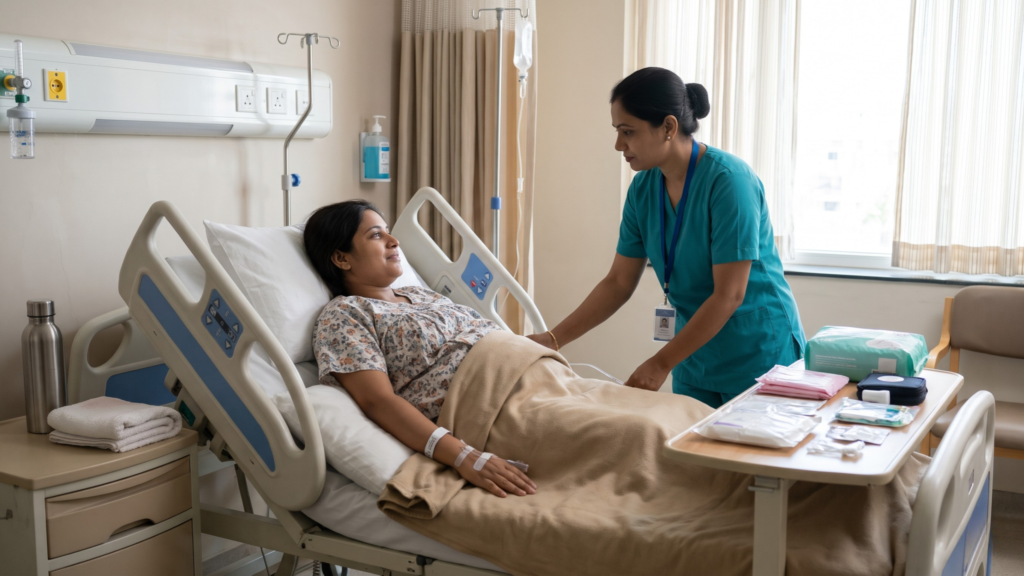
Why Perineal Care Matters
Some mothers experience soreness, swelling, or stitches after vaginal delivery.
Appropriate hygiene can support comfort and recovery.
Hospitals should provide clear instructions about cleaning and recognising complications.
Products such as cold packs may be considered when clinically appropriate.
However, their use should follow professional guidance.
What Should Hospitals Avoid?
Not every popular postpartum product belongs in a standard kit.
Avoid automatically including:
- Unprescribed topical medicines
- Strongly fragranced cleansing products
- Unnecessary antiseptics
- Products without clear instructions
- Items unsuitable for sensitive skin
A smaller, clinically appropriate kit can be more useful than an oversized package.
C-Section Recovery Kit: What Should It Contain?
A C-section recovery kit should mirror the needs of mothers recovering from abdominal surgery.
The focus is comfort, hygiene, and appropriate wound-care support.
Recommended Checklist
- Maternity pads
- High-waisted comfortable underwear
- Soft, loose clothing
- Suitable personal hygiene products
- Breast pads
- Soft nursing cloths
- Disposable waste bags
- Written incision-care instructions
Additional Clinical Supplies
Healthcare teams may require separate wound-care materials.
Depending on the treatment plan, these can include:
- Sterile gauze
- Appropriate wound dressings
- Medical adhesive products
- Suitable protective materials
These supplies belong in the clinical-care inventory unless specifically prescribed for home use.
Hospitals should not automatically include antiseptics, antibiotics, or dressing-change materials in every take-home kit.
Why Clothing Matters After a C-Section
Tight waistbands can place uncomfortable pressure near the incision.
Soft, high-waisted clothing can help avoid unnecessary friction.
Hospitals can consider this when selecting recovery garments.
Normal Delivery vs C-Section: The Main Differences
Both kits share several essentials.
However, their additional components should reflect various recovery needs.
Normal Delivery Kit Priorities
- Perineal hygiene
- Comfortable underwear
- Maternity pads
- Suitable cleansing accessories
- Breastfeeding support
C-Section Kit Priorities
- Incision-friendly clothing
- Comfortable high-waisted underwear
- Maternity pads
- Appropriate wound-care guidance
- Breastfeeding support
The hospital’s clinical team should approve the final contents.
What Does the WHO Recommend for Postnatal Care?
The World Health Organization highlights appropriate care for mothers and newborns during the first six weeks after childbirth.
Its recommendations include regular postnatal assessments, breastfeeding support, hygiene guidance, and monitoring for complications.
WHO recommends at least four postnatal care contacts, including care within the first 24 hours after facility-based childbirth.
Additional contacts are recommended around 48–72 hours, 7–14 days, and six weeks.
These recommendations highlight an important point.
A postnatal kit supports daily needs, but it cannot replace medical follow-up.
Hospitals should also provide guidance about warning signs requiring urgent and crucial assessment.
These include heavy bleeding, fever, severe pain, breathing difficulties, or signs of wound infection.
How Postnatal Care Kits Improve Hospital Workflow
Well-organised kits can support maternity departments in several ways.
1. Streamline Supply Preparation
Staff can access commonly required supplies without collecting every item separately.
2. Support Consistency
Hospitals can establish approved kit configurations for different delivery methods.
3. Refine Inventory Planning
Procurement teams can track kit consumption alongside delivery volumes.
4. Reduce Unnecessary Handling
Preconfigured supplies can simplify distribution to maternity wards.
5. Support Patient Convenience
Families receive essential products without searching for every item individually.
6. Help Control Waste
Hospitals can eliminate products that patients rarely use.
7. Support Discharge Preparation
Suitable take-home supplies can complement written postnatal care instructions.
These advantages depend on appropriate kit design and hospital procedures.

Can Hospitals Include Eco-Friendly Products?
Sustainability is becoming an important consideration in healthcare procurement.
Hospitals may explore Eco-Friendly Compostable Products for suitable non-clinical applications.
Examples could include definite packaging materials or other verified compostable items.
However, the term compostable requires evidence.
Hospitals should check:
- Material composition
- Applicable compostability standards
- Disposal requirements
- Product safety
- Availability of suitable waste-processing facilities
Not every product labelled biodegradable is compostable.
Likewise, a compostable product may not break down under the usual hospital waste conditions.
What About Medical Waste?
Products contaminated with blood or other potentially infectious materials require appropriate waste handling.
In India, hospitals must follow applicable biomedical waste-management requirements.
Compostable claims do not quash these obligations.
Sustainability should never compromise hygiene, safety, or clinical suitability.
How to Choose a Postnatal Care Kit Manufacturer
Hospital procurement teams should evaluate more than the price of a kit.
Step 1: Define Kit Categories
Decide whether the hospital needs separate normal delivery and C-section configurations.
Step 2: Identify Essential Products
Confer with maternity nurses, obstetricians, and infection-control staff.
Step 3: Review Material Quality
Check product specifications, skin compatibility, and intended use.
Step 4: Evaluate Packaging
Consider hygiene, ease of access, labelling, and storage.
Step 5: Review Customisation Options
Ask whether quantities and components can be adjusted.
Step 6: Check Supply Reliability
Evaluate lead times, manufacturing capacity, and bulk-order arrangements.
Step 7: Review Sustainability Claims
Request reliable evidence for recyclable, biodegradable, or compostable materials.
Step 8: Conduct a Trial
Collect feedback from staff and mothers before finalising the configuration.
Example: A Maternity Hospital Creates Two Recovery Kits
Consider a maternity hospital managing both vaginal and C-section deliveries.
Initially, every mother receives the same standard recovery kit.
However, nurses notice that some products stay unused.
Other mothers require additional supplies that are not included.
The hospital reviews the contents with its obstetric and nursing teams.
It then develops two configurations.
The normal delivery kit includes appropriate perineal hygiene and comfort supplies.
The C-section kit includes suitable clothing and incision-care information.
Both retain common maternity and breastfeeding essentials.
The hospital assesses patient feedback and product usage.
This illustrative example shows how customisation can reduce unnecessary supplies and improve convenience.
How Plasti Surge Industries Supports Maternity Care Requirements
Plasti Surge Industries, known as PSI Dispo, manufactures medical disposables and healthcare consumables in India.
Its product portfolio includes mother and child care kits, customised healthcare kits, and protective medical consumables.
These capabilities are relevant to hospitals seeking organised maternity-care supply solutions.
PSI also manufactures surgical drapes, gowns, dressing kits, and other disposable healthcare products.
Hospitals can discuss product specifications, kit configurations, packaging, and institutional quantities with the company.
The obtainability of individual postnatal products should be confirmed before finalising a kit.
Hospitals should also verify any compostability or environmental claims for the exact materials supplied.
Conclusion
A well-designed postnatal kit supports comfort, hygiene, and organised care after childbirth.
However, every mother does not need the same products.
Normal delivery kits may include additional perineal hygiene supplies.
C-section kits should consider incision comfort, suitable clothing, and appropriate wound-care guidance.
Both configurations profit from maternity pads, personal hygiene products, breastfeeding accessories, and selected newborn essentials.
Hospitals should develop kit contents with clinical teams rather than relying on a generic product list.
Quality, packaging, affordability, and supply reliability also matter.
Where suitable, verified sustainable materials can buttress responsible procurement.
Plasti Surge Industries manufactures mother and child care kits, customised healthcare kits, and other medical disposables.
Looking for customised maternity-care supplies for your hospital?
Contact PSI Dispo to discuss available kit components, packaging options, bulk quantities, and institutional requirements here.