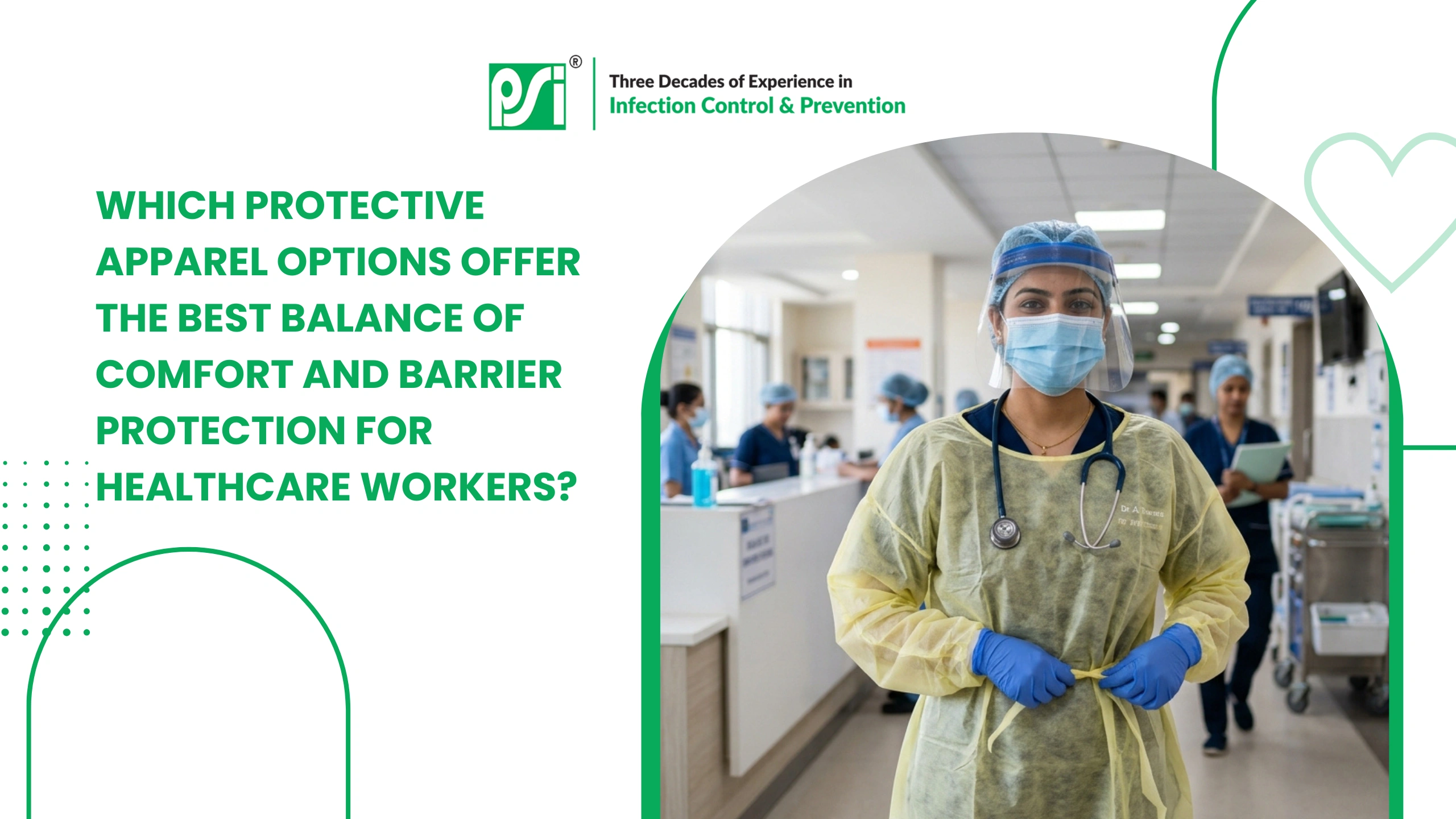
Which protective apparel options offer the best balance of comfort and barrier protection for healthcare workers?
Can healthcare workers stay properly protected without spending an entire shift feeling hot, restricted, and uncomfortable?
That question matters more than it sounds.
Healthcare professionals regularly bend, stretch, walk, lift equipment, and work closely with patients while wearing protective clothing.
If apparel restricts movement or creates excessive heat, working comfortably becomes difficult.
However, choosing lighter clothing without considering barrier performance can create another problem.
The goal is balance.
Good Medical Protective Apparel provides protection appropriate to the clinical risk while supporting mobility, fit, comfort, and practical everyday use.
Hospitals therefore need to look beyond simple descriptions such as “heavy-duty”, “water-resistant”, or “premium.”
They need to consider the procedure, expected exposure, garment material, barrier performance, fit, breathability, coverage, and applicable standards.
Different departments may also require different solutions.
This guide explains the main Safety Apparel for Healthcare options and helps buyers understand which features provide the best balance.
What Is Medical Protective Apparel?
Medical protective apparel creates a barrier between healthcare professionals and potential workplace exposure.
Depending on the application, it can include:
- Surgical gowns
- Isolation gowns
- Reinforced gowns
- Coveralls
- Aprons
- Head covers
- Shoe covers
- Sleeve protectors
- Procedure-specific protective clothing
Each product serves a different purpose.
Hospitals should therefore select apparel according to clinical risk rather than using one garment everywhere.
Why Comfort and Barrier Protection Must Work Together
Protection is essential, but healthcare workers also need to perform their jobs.
WHO recognises comfort and human factors as important characteristics when designing and selecting PPE.
Healthcare professionals may wear protective apparel for extended periods.
Poorly selected clothing can contribute to:
- Heat build-up
- Restricted movement
- Excessive sweating
- Poor fit
- Reduced dexterity
- Difficulty communicating
- User fatigue
The answer is not simply choosing thinner clothing.
Hospitals need appropriate protection with the least unnecessary burden on the wearer.
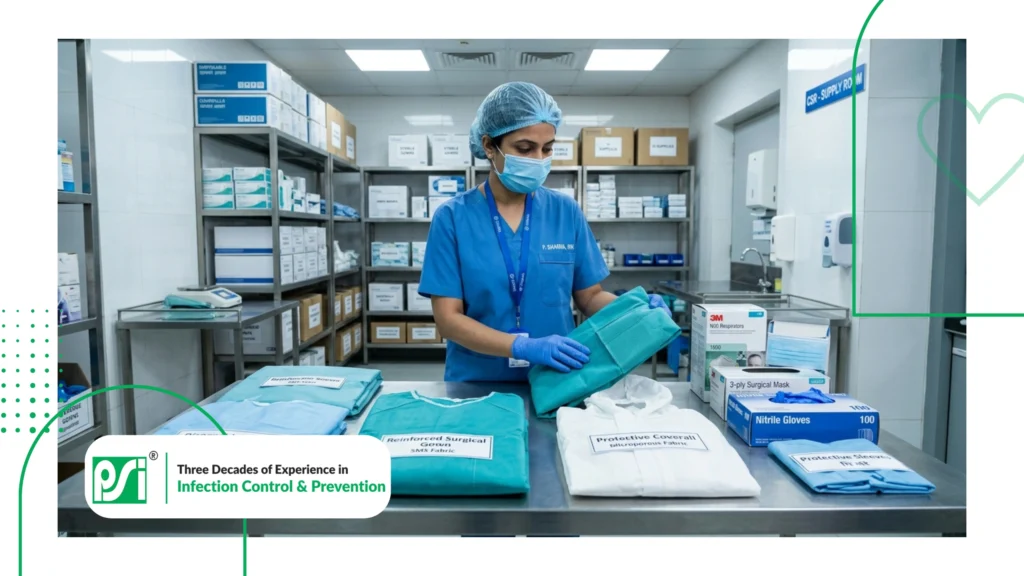
Which Protective Apparel Options Should Hospitals Consider?
1. Standard Disposable Surgical Gowns
Disposable surgical gowns provide convenient single-use protection for clinical and surgical applications.
Their main advantage is consistency.
Each new gown arrives ready for its intended use without requiring laundering between procedures.
Depending on its design, a disposable gown can offer:
- Lightweight construction
- Fluid resistance
- Comfortable movement
- Convenient disposal
- Consistent sizing
- Easy inventory management
Barrier performance varies between products.
Hospitals should always compare specifications rather than assuming every disposable gown provides equal protection.
2. Reinforced Surgical Gowns
Some procedures involve greater expected fluid exposure.
Reinforced gowns provide additional protection in critical areas.
These areas commonly include the front and sleeves, depending on product design.
This approach can offer an effective balance.
Instead of increasing material thickness everywhere, protection focuses on areas more likely to encounter fluids.
Reinforced designs may suit:
- Longer procedures
- Higher-fluid surgeries
- Orthopaedic procedures
- Cardiovascular procedures
- Selected operating theatre applications
PSI Dispo’s product portfolio includes surgical reinforced gowns and reinforced wraparound gowns.
3. Wraparound Gowns
Coverage matters as much as material.
Wraparound designs provide additional body coverage compared with some conventional gown designs.
They can be useful where the procedure requires broader protection.
However, buyers should still evaluate:
- Fit
- Fastening system
- Sleeve design
- Cuff comfort
- Movement
- Barrier performance
- Ease of removal
A gown needs to work practically throughout the procedure.
4. Coveralls
Coveralls provide more extensive body coverage.
They can be appropriate where the risk assessment requires greater overall protection.
However, increased coverage can also affect comfort.
Full protective clothing can trap body heat, particularly during long periods of physical activity.
Coveralls should therefore be selected according to actual exposure risk.
Maximum coverage is not automatically the correct choice for every hospital task.
5. Protective Aprons
Aprons provide another practical option for selected clinical activities.
They can protect the front of the body against anticipated splashes or contamination.
Their relatively simple design can make them convenient for appropriate lower-risk applications.
However, an apron does not provide the same coverage as a gown or coverall.
Hospitals must match the garment to the exposure.
7 Factors That Create the Best Balance
1. Start With Exposure Risk
First ask what the healthcare professional actually encounters.
Consider:
- Blood
- Body fluids
- Splashes
- Droplets
- Contaminated surfaces
- Infectious materials
Higher exposure requires appropriate barrier performance.
2. Look at Barrier Performance
Do not judge protection by appearance.
A thicker-looking gown is not automatically more protective.
Buyers should review relevant test results, product specifications, and applicable standards.
3. Consider Breathability
Breathability becomes particularly important during extended wear.
Materials that reduce unnecessary heat build-up can improve comfort.
However, breathability cannot come at the expense of required barrier protection.
The correct balance depends on the clinical application.
4. Check Fit and Sizing
A poorly fitting gown creates practical problems.
Too tight, and movement becomes restricted.
Too loose, and the garment can interfere with clinical tasks.
Hospitals should consider:
- Chest dimensions
- Gown length
- Sleeve length
- Cuff design
- Closure system
- Size availability
Healthcare professionals have different body types, so adequate sizing options matter.
5. Evaluate Freedom of Movement
Healthcare workers rarely remain still.
They reach across beds, position patients, move equipment, and perform detailed procedures.
Good Safety Apparel for Healthcare should support these movements without unnecessary restriction.
6. Consider Wear Time
A gown worn for a short procedure creates different comfort demands from protective clothing worn for extended periods.
Hospitals should include expected wear duration in their assessment.
7. Make Donning and Doffing Simple
Protective apparel needs to be easy to put on and remove correctly.
Complicated designs can create unnecessary handling.
Healthcare facilities should combine suitable product design with proper staff training.
A Simple Hospital Comparison
Consider two gowns that provide appropriate protection for a particular procedure.
Gown A offers adequate protection but feels heavy and restricts arm movement.
Gown B provides the required barrier performance while using a lighter, well-designed construction.
Healthcare workers find Gown B easier to wear during repetitive procedures.
In this situation, the second product provides a better practical balance.
The lesson is important.
The best protective apparel provides the protection required for the task without adding unnecessary physical burden.

How Hospitals Should Test Protective Apparel
Specifications provide important information.
User trials provide another layer.
Before making a large purchase, hospitals can ask clinical teams to evaluate shortlisted products.
Create a simple scoring system covering:
- Overall comfort
- Fit
- Arm movement
- Heat build-up
- Cuff comfort
- Fastening
- Ease of donning
- Ease of removal
- Perceived durability
- Overall usability
Procurement and infection-control teams can then evaluate this feedback alongside technical specifications.
Disposable vs Reusable Protective Apparel
Hospitals may also compare disposable and reusable options.
Reusable garments can reduce dependence on single-use products in suitable environments.
However, they require appropriate:
- Collection
- Washing
- Inspection
- Sterilisation when applicable
- Storage
- Quality monitoring
Disposable apparel removes these reprocessing requirements but creates additional waste.
The better choice depends on infrastructure, clinical requirements, environmental objectives, and total lifecycle costs.
What Should Hospitals Ask a Supplier?
Before purchasing protective apparel, ask:
- What clinical applications suit the garment?
- What material is used?
- What barrier performance does it provide?
- Which standards does it meet?
- What testing documentation is available?
- Which sizes are available?
- Is reinforced protection available?
- Is the product sterile or non-sterile?
- What is the shelf life?
- How should it be stored?
- What quantities can the manufacturer supply?
These questions create a more reliable comparison than price alone.
How PSI Dispo Supports Healthcare Protection
Plasti Surge Industries manufactures a broad range of medical disposables and healthcare solutions.
Its portfolio includes Medical Protective Apparel, disposable surgical gowns, reinforced gowns, PPE kits, sterile surgical accessories, and procedure-related products.
PSI also provides customised healthcare and surgical kits.
This gives healthcare organisations the opportunity to discuss products around specific procedures rather than adopting one universal solution.
For procurement teams, that means protection, comfort, configuration, quantities, and clinical requirements can form part of the same conversation.
Conclusion
Choosing Medical Protective Apparel requires more than finding the highest possible barrier specification.
Healthcare workers need protection that allows them to move, communicate, concentrate, and perform clinical tasks comfortably.
Hospitals should match apparel to actual exposure risks.
Barrier performance, material, breathability, fit, coverage, wear time, and usability all deserve consideration.
The strongest procurement decisions combine technical specifications with feedback from the people who actually wear the products.
Plasti Surge Industries provides protective apparel, surgical gowns, reinforced gown options, PPE kits, and other healthcare disposables.
Healthcare facilities can contact PSI Dispo to discuss protective apparel requirements, product specifications, institutional quantities, and suitable solutions for different clinical environments.