Biomedical Waste Bags & the 2026 BMW Rules Amendment: A Colour-Coding Compliance Guide for Hospitals
Does the 2026 amendment replace which biomedical waste bag your hospital needs to use?
The short answer is no.
The biomedical waste management rules 2026 amendment does not change the established biomedical waste bag colour-coding system used by hospitals in India. The Yellow, Red, White and Blue categories remain important for segregating specified healthcare waste at the point where it is generated. The 2026 amendment primarily updates the administrative framework by incorporating AYUSH representation, while hospitals should continue focusing on correct source segregation, suitable biomedical waste bags and containers, staff training and applicable compliance requirements.
India’s Bio-Medical Waste Management (Amendment) Rules, 2026 update parts of the administrative framework governing biomedical waste management.
However, they do not change the established BMW colour coding system used by healthcare facilities.
Hospitals still need to segregate biomedical waste correctly at the point where it originates.
That means understanding what belongs in Yellow, Red, White and Blue categories remains crucial for everyday compliance.
Using the wrong container can mix hazardous materials with recyclable or treatable waste.
That creates hazards for healthcare workers, waste handlers, patients and the environment.
Correct biomedical waste collection bags therefore play an important role in a hospital’s waste-management system.
This guide explains the 2026 amendment, current colour categories and practical steps hospitals can take to strengthen compliance.
It also explains what procurement teams should check when purchasing biomedical waste bags. Draft_Guidelines_for_Management_of_Health
What Are the Biomedical Waste Management Rules?
India’s Bio-Medical Waste Management Rules provide a structure for handling waste generated during healthcare activities.
They apply to healthcare facilities and other establishments that generate, collect, store, transport, treat or dispose of biomedical waste.
The system aims to reduce unsafe handling and ensure different waste streams receive appropriate treatment.
For hospitals, compliance starts before waste reaches the disposal facility.
It starts with correct segregation.
Healthcare teams need suitable containers and bags wherever biomedical waste originates.

What Changes Under the 2026 BMW Rules Amendment?
This is where hospitals need to circumvent a common misunderstanding.
The biomedical waste management rules 2026 amendment does not create a new set of waste colours.
The April 2026 amendment primarily incorporates AYUSH into the institutional framework.
It makes two specific changes:
- AYUSH is added alongside Departments of Health under Rule 11(1).
- State or Union Territory AYUSH representation is added to the relevant framework under Rule 12(6).
The amendment comes into force from its publication in the Official Gazette.
For hospital waste segregation, the established colour-coded system therefore remains highly relevant.
Understanding BMW Colour Coding
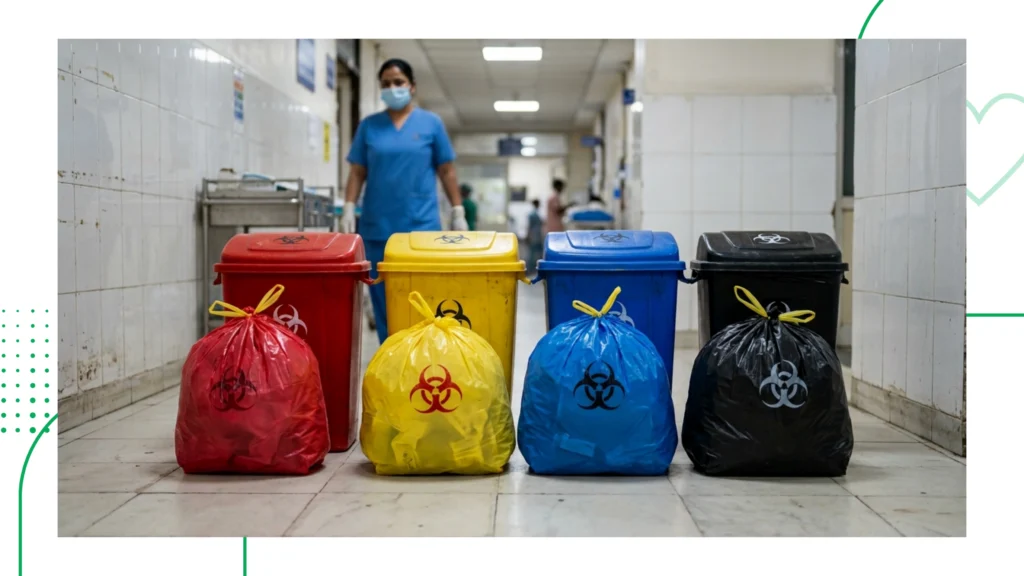
CPCB healthcare-waste guidance identifies four principal biomedical waste categories:
- Yellow
- Red
- White
- Blue
Each colour corresponds to specific waste streams and treatment requirements.
Staff should never choose a bag simply because it is conveniently available.
Yellow: Waste Requiring Specific Treatment or Disposal
The Yellow category covers several types of biomedical waste.
Examples include:
- Human anatomical waste
- Animal anatomical waste
- Soiled waste
- Certain discarded or expired medicines
- Certain chemical waste
- Contaminated linen and bedding
- Specified microbiology and laboratory waste
CPCB guidance specifies yellow-coloured non-chlorinated plastic bags for applicable Yellow-category waste.
The accurate disposal method depends on the type of waste within the category.
Red: Contaminated Recyclable Waste
Red is used for specified contaminated recyclable waste.
Examples can include contaminated recyclable plastic items generated during healthcare activities.
CPCB guidance specifies red-coloured non-chlorinated plastic bags or appropriate containers.
Correct segregation matters because this waste follows a different treatment pathway from Yellow-category waste.
Mixing the two can interfere with safe waste processing.
White: Waste Sharps
White is associated with waste sharps, including metals.
Examples include applicable:
- Needles
- Syringes with fixed needles
- Scalpels
- Blades
- Other contaminated sharps
Sharps require puncture-proof, leak-proof and tamper-proof containers rather than ordinary flexible waste bags.
This significance protects healthcare employees and waste handlers from needlestick and cutting injuries.
Blue: Glassware and Metallic Implants
Blue is used for specified glassware and metallic body implants.
This can comprise contaminated or discarded glass items covered by the rules.
These materials require suitable marked boxes or containers according to applicable requirements.
Again, colour is only one part of compliance.
The type and construction of the container also matter.
Why Colour-Coded Segregation Matters
Visualize a busy hospital ward where every waste container looks identical.
Staff must stop and interpret labels whenever they dispose of something.
Mistakes become easier.
Colour coding creates an immediate visual distinction between different waste streams.
This aids:
- Faster segregation
- Safer handling
- Easier staff training
- Better waste tracking
- Appropriate treatment
- Reduced cross-contamination
- Stronger hospital compliance
The system works only when the correct bag or container is available where waste originates.
What Should Hospitals Look for in Biomedical Waste Bags?
Buying the correct colour is only the beginning.
Procurement teams should evaluate whether biomedical waste collection bags meet relevant regulatory and operational requirements.
Consider these factors:
- Correct colour: Match products with the required waste stream.
- Material: Verify applicable material requirements and specifications.
- Strength: Bags need to withstand routine handling without unnecessary tearing.
- Size: Different departments can require different capacities.
- Labelling: Check applicable printing and identification requirements.
- Supplier consistency: Colour, dimensions and quality should remain reliable across orders.
- Customisation: Larger hospitals may require customised sizes or printing.
Procurement teams should always establish current regulatory specifications rather than relying only on product descriptions.
How Hospitals Can Improve CPCB Compliance
Strong CPCB compliance hospitals programmes require more than purchasing coloured bags.
Hospitals can create a simple operational system:
- Place appropriate containers at waste-generation points.
- Display clear segregation posters in wards.
- Train clinical and housekeeping teams.
- Never mix biomedical waste with general waste.
- Keep sharps in designated puncture-proof containers.
- Regularly inspect waste stations.
- Maintain required records.
- Review practices when regulations or CPCB guidance changes.
CPCB guidance specifically recommends segregation posters and adequate colour-coded containers at biomedical waste generation points.
A Simple Hospital Example
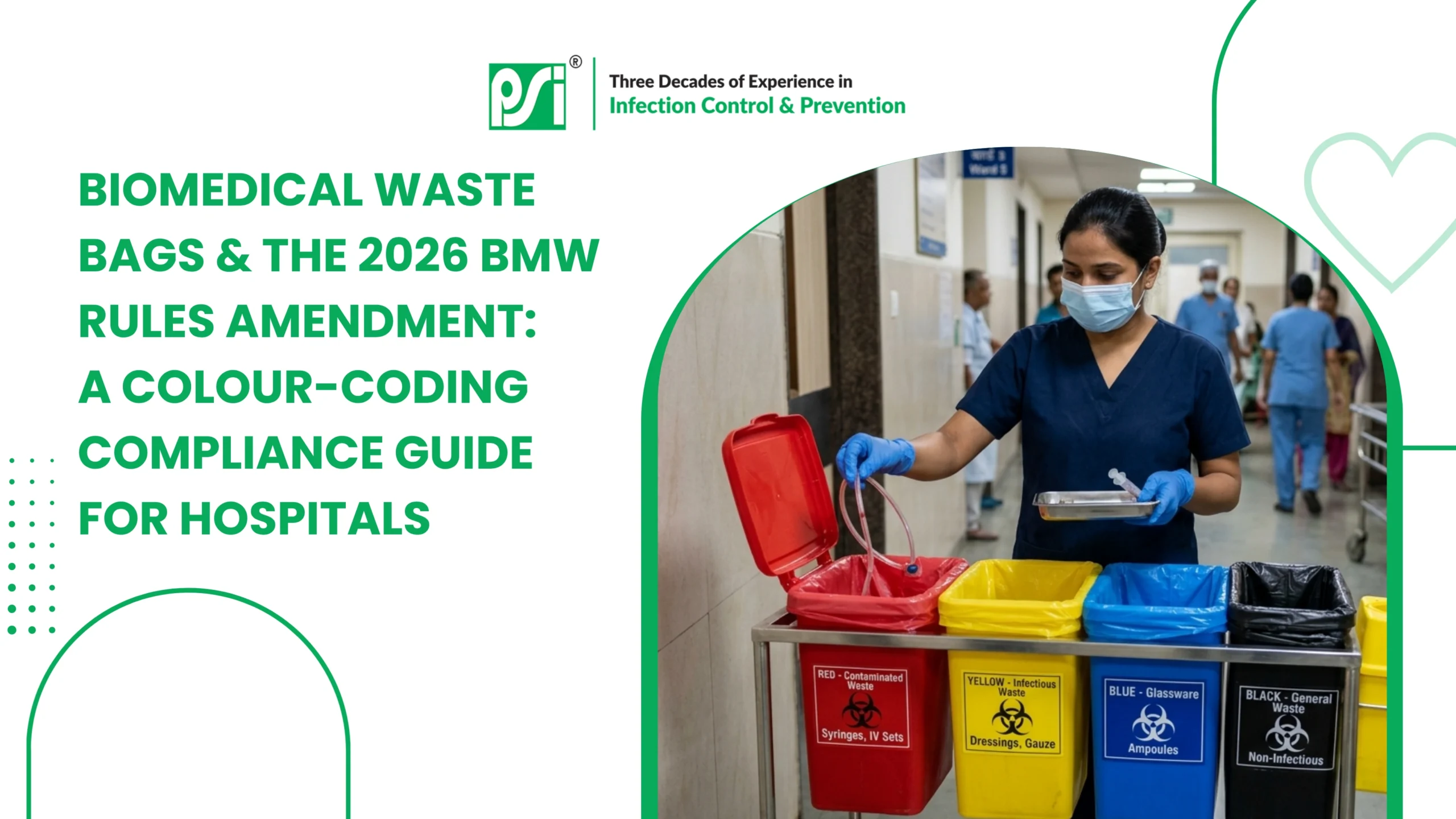
Consider a dressing procedure where contaminated gauze, recyclable plastic tubing and a used sharp need disposal.
Putting everything into one bag appears convenient.
However, the materials do not necessarily follow the same waste pathway.
The team instead segregates each item immediately into its appropriate colour-coded container.
This small action averts mixed waste further down the disposal chain.
That is why effective biomedical waste management starts at the bedside, laboratory, operating theatre or treatment room.
How PSI Supports Biomedical Waste Collection
Plasti Surge Industries proffers biomedical waste collection bags as part of its healthcare disposables portfolio.
PSI’s product literature lists biodegradable biomedical waste collection bags in multiple colours and sizes.
Customised sizing and printing are also available for bulk requirements.
This lets healthcare organisations discuss collection requirements according to their facility size, departments and operational needs.
Hospitals should still match every product with applicable regulatory specifications and their authorised biomedical waste-management procedures.
Conclusion
Biomedical waste management starts with one simple action: putting the right waste into the right container.
The biomedical waste management rules 2026 amendment does not introduce new Yellow, Red, White or Blue segregation categories.
Instead, it updates parts of the administrative framework by incorporating AYUSH representation.
Hospitals should continue centering on correct BMW colour coding, source segregation, staff training and suitable collection products.
Reliable bags and containers make these procedures easier to implement consistently across wards, laboratories and operating areas.
Plasti Surge Industries supplies biomedical waste collection solutions alongside its wider range of healthcare disposables.
Healthcare facilities and procurement teams can contact PSI Dispo to find out biomedical waste bag sizes, bulk quantities, custom printing and product requirements for their waste-management systems.