What Makes an N95 Mask Suitable for Medical Use?
Does every mask labelled N95 provide the protection healthcare professionals need?
Not necessarily.
Hospitals employ respiratory protective equipment to help protect healthcare workers from airborne hazards during specific clinical activities.
However, filtration efficiency alone does not determine whether a respirator is suitable for a particular medical setting.
A reliable N95 mask for medical use must meet relevant performance requirements and fit the wearer correctly.
Some clinical environments also require protection against blood and body-fluid splashes.
This creates an important distinction between standard N95 respirators and surgical N95 respirators.
Healthcare procurement teams must understand that difference before purchasing.
They also need to verify certifications, product markings, manufacturer information, and applicable regulations.
A poorly fitting respirator can compromise protection even when its filtration material performs well.
Similarly, an unverified certification claim provides less assurance about actual product performance.
This guide explains what makes N95 respirators suitable for healthcare, how to identify genuine products, and what hospitals should check before ordering.
It also highlights common purchasing mistakes and practical considerations for medical institutions.
What Is an N95 Respirator?
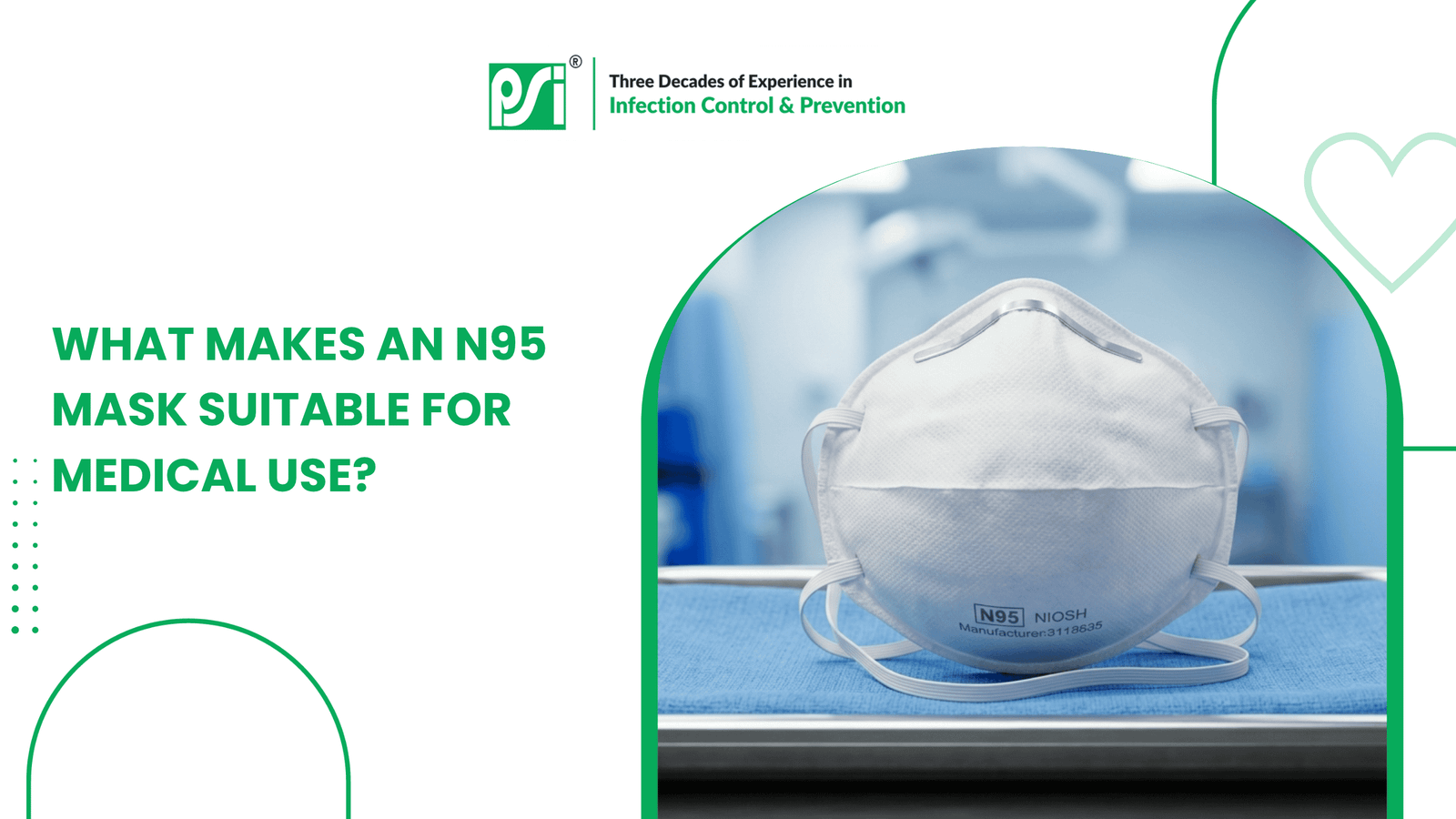
An N95 respirator is a respiratory protective device designed to filter airborne particles.
Under the United States NIOSH classification, N95 respirators filter at least 95% of airborne particles under specified test conditions.
The letter N indicates that the filter is not resistant to oil.
Unlike loose-fitting surgical masks, N95 respirators are designed to form a close seal around the face.
This seal helps lessen the amount of unfiltered air entering around the respirator.
However, the actual protection depends on proper fit, correct use, and suitable working conditions.
What Makes an N95 Mask Suitable for Medical Use?
A medical setting may expose healthcare professionals to airborne particles, infectious respiratory hazards, and bodily fluids.
The required protection depends on the clinical task and workplace risk assessment.
Seven factors deserve particular attention.
1. Verified NIOSH Approval
The National Institute for Occupational Safety and Health, or NIOSH, approves respirators under the applicable United States requirements.
A Certified N95 mask should have verifiable approval information.
For NIOSH-approved models, important markings include:
- NIOSH name or logo
- Approval holder’s name
- Model or part number
- Respirator protection designation
- Testing and certification approval number
NIOSH approval numbers commonly follow a format such as TC-84A-XXXX.
Buyers can verify approval through the official NIOSH Certified Equipment List.
A manufacturer’s claim alone does not signify certification.
2. Suitable Filtration Performance
N95 respirators must meet specified particulate filtration requirements.
NIOSH evaluates respirators under controlled testing conditions.
The minimum filtration efficiency is 95% for the relevant test aerosol.
However, this does not mean a respirator blocks exactly 95% of every airborne hazard under all conditions.
Protection also depends on the face seal and correct use.
Hospitals should request product-specific performance information rather than relying on general marketing descriptions.
3. Proper Fit and Facial Seal
A respirator cannot provide its intended protection without an appropriate seal.
Air can enter through gaps around the nose, cheeks, or chin.
Healthcare workers using tight-fitting respirators need appropriate fit testing under applicable workplace requirements.
Important considerations include:
- Correct respirator size
- Face shape compatibility
- Suitable head straps
- Adjustable nosepiece, where provided
- Proper positioning
- Seal integrity
- User training
A user seal check is also salient each time the respirator is worn.
However, a seal check does not replace formal fit testing.
4. Fluid Resistance for Surgical Applications
Not every N95 respirator provides protection against liquid splashes.
This distinction is especially important in surgical environments.
Surgical N95 respirators combine particulate respiratory protection with additional requirements relevant to medical use.
These can include:
- Fluid resistance
- Biocompatibility
- Flammability performance
- Appropriate regulatory compliance
For example, ASTM F1862 assesses resistance to penetration by synthetic blood.
Hospitals should verify the applicable fluid-resistance rating and documentation.
A standard industrial N95 should not automatically be treated as a surgical N95.
5. Appropriate Regulatory Compliance
Regulatory requirements vary between countries.
In the United States, NIOSH evaluates respiratory protection performance.
The FDA regulates surgical N95 respirators according to their intended medical use.
Other countries apply their own regulatory frameworks.
For example:
- United States: NIOSH approval and applicable FDA requirements
- European Union: Applicable PPE and medical-device requirements, depending on intended use
- India: Relevant national standards and regulatory requirements
- Other markets: Applicable national approval and import requirements
Hospitals should verify compliance for the exact model and destination market.
A CE mark or certification claim should never be accepted without checking its applicability.
6. Comfort and Breathability
Healthcare professionals may need respiratory protection during demanding clinical activities.
Comfort influences whether workers can wear respirators correctly throughout required periods.
Important features are:
- Appropriate fit
- Breathability
- Secure straps
- Skin-contact materials
- Suitable design
- Compatibility with other protective equipment
Comfort should never replace verified protection.
A comfortable respirator that does not seal properly is unsuitable for tasks requiring tight-fitting respiratory protection.
7. Packaging, Traceability, and Storage
Hospitals purchase respirators in substantial quantities.
Product identification and storage therefore matter.
Procurement teams should check:
- Manufacturer details
- Model number
- Batch or lot information
- Approval markings
- Packaging integrity
- Storage instructions
- Shelf-life information, where applicable
- User instructions
Proper documentation also supports inventory management and product traceability.
Damaged or improperly stored respirators may no longer provide their intended performance.
Standard N95 vs Surgical N95 vs Surgical Mask
These products serve different purposes.
| Feature | Standard N95 respirator | Surgical N95 respirator | Surgical mask |
| Airborne particle filtration | N95-level protection | N95-level protection | Does not provide equivalent respirator protection |
| Tight facial seal | Required for intended protection | Required for intended protection | Not designed for a tight seal |
| Fluid resistance | Not necessarily | Additional fluid-resistance requirements | Depends on product specification |
| NIOSH approval | Yes, for genuine NIOSH N95 models | Yes | Not generally applicable |
| Typical application | Respiratory protection | Respiratory and fluid-hazard protection | Droplet and splash barrier, source control |
Hospitals should choose products according to the actual clinical risk.
Why Medical-Grade N95 Masks Need Careful Evaluation
The term Medical-grade N95 masks appears frequently in healthcare product catalogues.
However, the phrase alone does not identify a specific international certification.
Buyers should determine whether the supplier means:
- A NIOSH-approved N95 respirator
- A surgical N95 respirator
- A respirator meeting another national standard
- A product with additional medical-use testing
These categories are not automatically interchangeable.
The manufacturer’s exact model, intended use, and documentation provide more reliable information.
When Do Healthcare Workers Need N95 Respirators?
Respiratory protection requirements depend on workplace hazards and applicable infection-control guidance.
Healthcare settings may need suitable respirators during:
- Care involving airborne infectious hazards
- Certain aerosol-generating procedures
- Activities requiring respiratory protection under institutional protocols
- Exposure to specified airborne contaminants
A suitable N95 mask for medical protection forms one part of a broader safety programme.
Other measures can include ventilation, appropriate isolation, hand hygiene, and additional protective equipment.
Respirators should never be treated as the only infection-prevention measure.
How to Verify an N95 Respirator Before Purchasing
Hospitals can follow a simple verification process.
Step 1: Identify the Clinical Requirement
Regulate whether the task requires respiratory protection alone or additional fluid resistance.
Step 2: Check the Manufacturer
Confirm the manufacturer’s identity and the exact product model.
Step 3: Verify Approval
For NIOSH-approved products, search the official Certified Equipment List.
Step 4: Review Product Specifications
Check filtration, fit design, materials, and intended use.
Step 5: Confirm Medical Requirements
For surgical applications, verify appropriate fluid-resistance and regulatory documentation.
Step 6: Evaluate Fit
Ensure suitable models and sizes are available for the intended users.
Step 7: Review Packaging
Check markings, batch information, storage requirements, and instructions.
Step 8: Assess Supply Reliability
Evaluate production capability, lead times, documentation, and institutional order requirements.
Example: A Hospital Reviews Its Respirator Procurement
Consider a hospital purchasing respiratory protective equipment for different departments.
The procurement team gets quotations from three suppliers.
All three advertise N95 filtration.
However, their documentation differs.
Supplier A provides a product brochure without verifiable approval information.
Supplier B provides a NIOSH approval number and model details.
Supplier C provides verifiable surgical N95 documentation, including applicable fluid-resistance information.
The hospital compares the products against each department’s clinical requirements.
It also evaluates fit, packaging, availability, and total procurement costs.
The hospital selects suitable models based on verified performance rather than marketing terminology.
This illustrative scenario demonstrates why procurement decisions require more than comparing prices.
Common Mistakes When Buying N95 Masks
Healthcare buyers should avoid several common mistakes.
These comprise:
- Assuming every N95 claim is genuine
- Confusing surgical masks with respirators
- Ignoring fit testing
- Overlooking fluid-resistance requirements
- Accepting unverified certificates
- Purchasing unsuitable sizes
- Ignoring packaging damage
- Failing to check regulatory requirements
- Selecting products based only on price
A structured procurement checklist helps reduce these risks.
How PSI Dispo Supports Healthcare Protective Equipment Requirements
Plasti Surge Industries, known as PSI Dispo, manufactures healthcare consumables and medical disposables in India.
Its protective apparel portfolio includes respiratory protective products alongside other healthcare safety supplies.
The company’s broader range includes:
- N95/FFP2 masks
- Surgical masks
- Surgical gowns
- Protective apparel
- PPE kits
- Disposable caps
- Shoe covers
- Surgical drapes
Hospitals can contact PSI Dispo to discuss available mask models, product specifications, bulk quantities, and institutional supply requirements.
Buyers should request documentation for the exact respirator model under consideration.
NIOSH approval, surgical suitability, and destination-market regulatory compliance must be independently verified where applicable.
Conclusion
Choosing the right N95 respirator is an important part of healthcare workplace safety.
Hospitals should evaluate more than filtration claims and product prices.
A suitable respirator requires verified performance, appropriate fit, correct use, and compliance with applicable requirements.
For surgical environments, additional fluid-resistance and medical-use considerations may apply.
Procurement teams should distinguish standard N95 respirators from surgical N95 products.
They should also verify certification numbers, product markings, manufacturer details, and supporting documentation.
A Certified N95 mask provides greater assurance when its approval and intended use are properly verified.
PSI Dispo offers respiratory protective products and other medical disposables for healthcare institutions.
Looking for respiratory protective equipment for your hospital or healthcare facility?