How Do Disposable Cling Drapes Improve Sterile Field Management During Procedures?
What if a surgical drape shifts during a procedure?
Even a small movement can disrupt the surgical team’s workflow and require attention to the sterile field.
Maintaining a properly organised sterile field is essential during surgical and other invasive procedures.
Surgical drapes help separate the prepared operative area from surrounding surfaces.
However, not every drape offers the same positioning, coverage, or barrier performance.
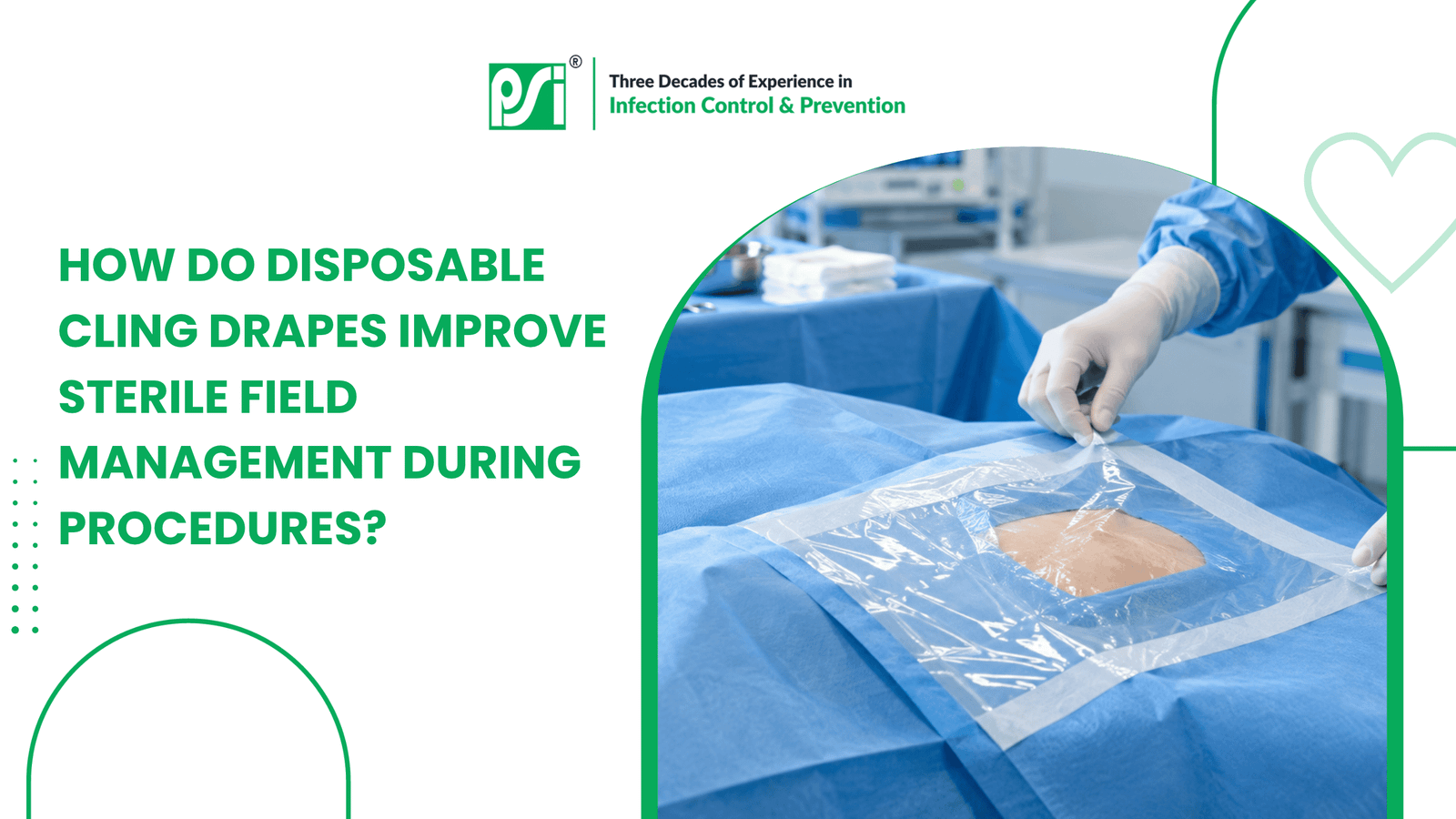
Disposable cling drapes are designed to conform to or remain positioned against appropriate surfaces, depending on their construction.
This makes them useful for certain procedures requiring controlled drape placement.
Like other Disposable Surgical Drapes, their effectiveness depends on material quality, intended use, and the right application.
Hospitals must also consider sterility, fluid resistance, packaging, and compatibility with clinical procedures.
Choosing the right drape can support more organised preparation and reduce unnecessary repositioning.
However, drapes never replace aseptic technique or other infection-control measures.
This guide explains how disposable cling drapes work, their practical benefits, and what hospitals should consider before purchasing them.
What Are Disposable Cling Drapes?
Disposable cling drapes are single-use draping products designed to conform to or remain positioned against designated surfaces.
Their construction and positioning mechanisms vary between products.
Some rely on material characteristics, while others incorporate specific attachment features.
They should not automatically be confused with adhesive incised drapes.
Cling drapes can boost procedures requiring controlled coverage and organised placement.
Their exact suitability depends on the manufacturer’s stated intended use.
Why Is Sterile Field Management Important?
A sterile field helps maintain aseptic conditions around a surgical procedure.
It has appropriately prepared surfaces, sterile instruments, and sterile supplies.
Surgical teams establish and maintain this field using established sterile techniques.
Important practices include:
- Correct surgical hand preparation
- Appropriate sterile gowns and gloves
- Proper patient preparation
- Sterile instrument handling
- Suitable surgical draping
- Controlled movement around the sterile field
- Prompt response to suspected contamination
Sterile Drapes for Surgery support these practices by providing appropriate coverage and barriers.
However, maintaining sterility remains a continuous responsibility throughout the procedure.
6 Ways Disposable Cling Drapes Support Sterile Field Management
1. More Controlled Draping
Drapes need to remain appropriately positioned throughout a procedure.
Unnecessary movement can disrupt preparation and require corrective action.
A suitable cling design can help maintain intended placement.
The result is a more organised surgical setup.
Actual positioning performance depends on the drape’s construction and application.
2. Better Coverage of Selected Areas
Different procedures need different draping arrangements.
A drape that conforms appropriately to a surface can support more consistent coverage.
This is useful when the clinical team needs controlled positioning around a designated area.
However, coverage requirements must match the procedure.
Hospitals should verify dimensions and intended applications before purchasing.
3. Fewer Unnecessary Adjustments
Repeatedly adjusting surgical drapes can disrupt workflow.
Appropriate positioning may reduce the need for unnecessary adjustments.
This can help clinical teams maintain a more predictable setup.
However, no drape should be assumed to remain fixed under every operating condition.
4. Support for Barrier Protection
Surgical drapes provide a physical barrier between selected areas of the surgical environment.
Their defensive performance depends on the material and construction.
Important characteristics include:
- Liquid resistance
- Barrier performance
- Material integrity
- Suitable coverage
- Appropriate seams or joins
- Compatibility with the procedure
Cling performance alone does not establish microbial or fluid-barrier performance.
Hospitals should request relevant product specifications.
5. Simpler Preparation
Draping forms an important part of operating theatre preparation.
Products that are easy to position can support efficient setup.
This is particularly useful when clinical teams perform similar procedures regularly.
Standardised draping methods can also make preparation more predictable.
The outcome is appropriate placement without unnecessary complexity.
6. Compatibility With Procedure Packs
Hospitals increasingly consider procedure-specific collections of surgical consumables.
These can include gowns, towels, covers, accessories, and drapes.
Suitable cling drapes may form part of customised procedure configurations.
This can simplify supply organisation.
However, the manufacturer must confirm whether the selected drape is congruent with the intended pack configuration.
Disposable Cling Drapes vs Adhesive Incise Drapes
These products should not automatically be treated as interchangeable
| Feature | Disposable cling drapes | Adhesive incise drapes |
| Main purpose | Coverage and positioning | Adhesion to prepared skin around the incision |
| Attachment | Depends on product design | Adhesive film |
| Incision through film | Not necessarily | Often part of intended use |
| Selection criteria | Coverage, barrier performance, positioning | Intended use, adhesion, skin compatibility |
| Infection prevention | No independent SSI-prevention claim | No proven routine SSI-prevention benefit |
The World Health Organization (WHO)advises against using plastic adhesive incise drapes specifically to prevent surgical-site infections.
This recommendation applies to adhesive incised drapes, not automatically to every product described as a cling drape.
What Do Clinical Guidelines Say About Surgical Drapes?
The World Health Organization recognises both sterile disposable nonwoven drapes and sterile reusable woven drapes for surgery.
Available evidence does not establish that disposable drapes consistently reduce surgical-site infections compared with reusable alternatives.
The WHO also highlights the importance of liquid-barrier performance.
Fluid penetration can compromise the protective function of surgical materials.
This reinforces an important purchasing principle.
Hospitals should opt for drape based on verified performance and clinical suitability rather than marketing claims alone.
Why Material Selection Matters
Two drapes can look similar while offering different performance characteristics.
Material construction influences how a drape behaves during use.
Hospitals should evaluate:
- Material composition
- Fluid resistance
- Strength
- Flexibility
- Surface conformity
- Lint generation
- Sterility
- Intended application
A suitable product equalizes protective performance with practical usability.
The exact requirements depend on the clinical procedure.
How Prepacked Surgical Drapes Simplify Preparation
Prepacked Surgical Drapes can reduce the need to collect individual draping products separately.
They may be supplied individually or within procedure-specific packs.
Potential advantages include:
- Organised supply preparation
- Consistent product configurations
- Simpler inventory planning
- Fewer separately handled packages
- Easier replenishment
- Predictable procedure requirements
Hospitals should verify whether each pack is sterile and appropriately labelled.
Prepacking does not automatically establish sterility.
Example: Improving Draping Preparation in a Surgical Unit
Consider a hospital reviewing its draping process for frequently performed procedures.
Clinical teams notice that certain drapes require repeated repositioning during preparation.
The hospital evaluates alternative products with suitable positioning characteristics.
The team collates dimensions, material performance, ease of application, and packaging.
Selected products undergo a practical evaluation during appropriate procedures.
Nurses and surgeons provide feedback on usability and coverage.
Procurement teams review costs and supply availability.
The hospital then selects a configuration that meets its clinical requirements.
This illustrative example demonstrates the value of evaluating drapes through practical use rather than product descriptions alone.
What Should Hospitals Check Before Buying Cling Drapes?
Choosing Hospital Use Drapes requires more than comparing dimensions and prices.
Procurement teams should ask:
- What is the intended clinical application?
- How does the drape maintain its position?
- Is the product supplied sterile?
- What barrier performance does it provide?
- What material does it use?
- Are multiple sizes available?
- Is the packaging suitable?
- What is the stated shelf life?
- Which standards apply?
- Can the supplier provide relevant documentation?
These questions help hospitals make more informed purchasing decisions.
Common Mistakes When Selecting Surgical Drapes
Hospitals should avoid several common procurement mistakes.
These include:
- Assuming all disposable drapes perform identically
- Selecting products based only on price
- Ignoring fluid-barrier requirements
- Confusing cling drapes with adhesive incise drapes
- Overlooking sterility requirements
- Purchasing unsuitable dimensions
- Ignoring packaging integrity
- Failing to evaluate clinical usability
The right drape should match the intended procedure and the hospital’s infection-control practices.
Disposable vs Reusable Surgical Drapes
Hospitals often compare disposable and reusable draping systems.
Both can be suitable when they meet the pertinent requirements.
Disposable drapes offer single-use convenience and avoid hospital laundering and reprocessing.
Reusable drapes require validated cleaning, inspection, and sterilisation processes.
Procurement decisions should consider:
- Barrier performance
- Clinical suitability
- Reprocessing requirements
- Total costs
- Supply reliability
- Waste generation
- Environmental impact
Neither category is automatically superior for every hospital.
How PSI Dispo Supports Surgical Draping Requirements
Plasti Surge Industries, known as PSI Dispo, manufactures medical disposables and healthcare consumables in India.
Its portfolio includes surgical drapes, sterile surgical accessories, surgical gowns, and procedure packs.
PSI provides draping solutions for different surgical applications.
Its product categories comprise of:
- Surgical drapes
- Procedure-specific draping products
- Surgical gowns
- Sterile accessories
- Customised procedure packs
- Protective apparel
Hospitals evaluating cling-style drapes should confirm the availability and specifications of the exact product with PSI.
Buyers can also discuss dimensions, materials, packaging, and institutional quantities.
Conclusion
Effective sterile field management depends on appropriate products and consistent clinical practices.
Disposable cling drapes can support organised coverage, controlled positioning, and simpler preparation during suitable procedures.
Their value comes from matching product characteristics with actual clinical requirements.
Hospitals should evaluate barrier performance, dimensions, sterility, material quality, and packaging before purchasing.
They should also distinguish cling drapes from adhesive incise drapes and circumvent unsupported infection-prevention claims.
Disposable Surgical Drapes, including suitable Prepacked Surgical Drapes, can support more predictable operating theatre preparation.
However, aseptic technique remains essential throughout every procedure.
PSI Dispo manufactures surgical drapes, gowns, sterile accessories, and procedure packs for healthcare applications.
Looking for suitable surgical draping solutions for your hospital?