How Do Procedure-Specific Wound Dressing Kits Improve Clinical Workflow?
How much time does a nurse spend collecting supplies before a regular wound dressing procedure?
Gauze, gloves, dressing pads, adhesive tape, and other essentials may sit in different storage locations.
Each item needs to be collected, checked, and prepared before wound care begins.
In busy hospitals, these small preparation tasks become part of a much larger workload.
This is where procedure-specific Wound Dressing Kits can make a difference.
Instead of collecting every item separately, healthcare professionals can access a preconfigured collection of wound-care supplies.
These kits help organise clinical preparation and support consistent workflows across frequently performed procedures.
They can also simplify inventory management and reduce unnecessary handling of individually packaged products.
However, not every wound requires the same materials.
A routine dressing change is different from post-surgical wound care or dialysis catheter-site management.
Choosing the correct kit configuration is therefore essential.
This article explores how procedure-specific dressing kits improve clinical workflows, their practical benefits, and how hospitals can select suitable solutions.
It also explains why kit contents, sterility, packaging, and clinical suitability matter.
What Are Procedure-Specific Wound Dressing Kits?
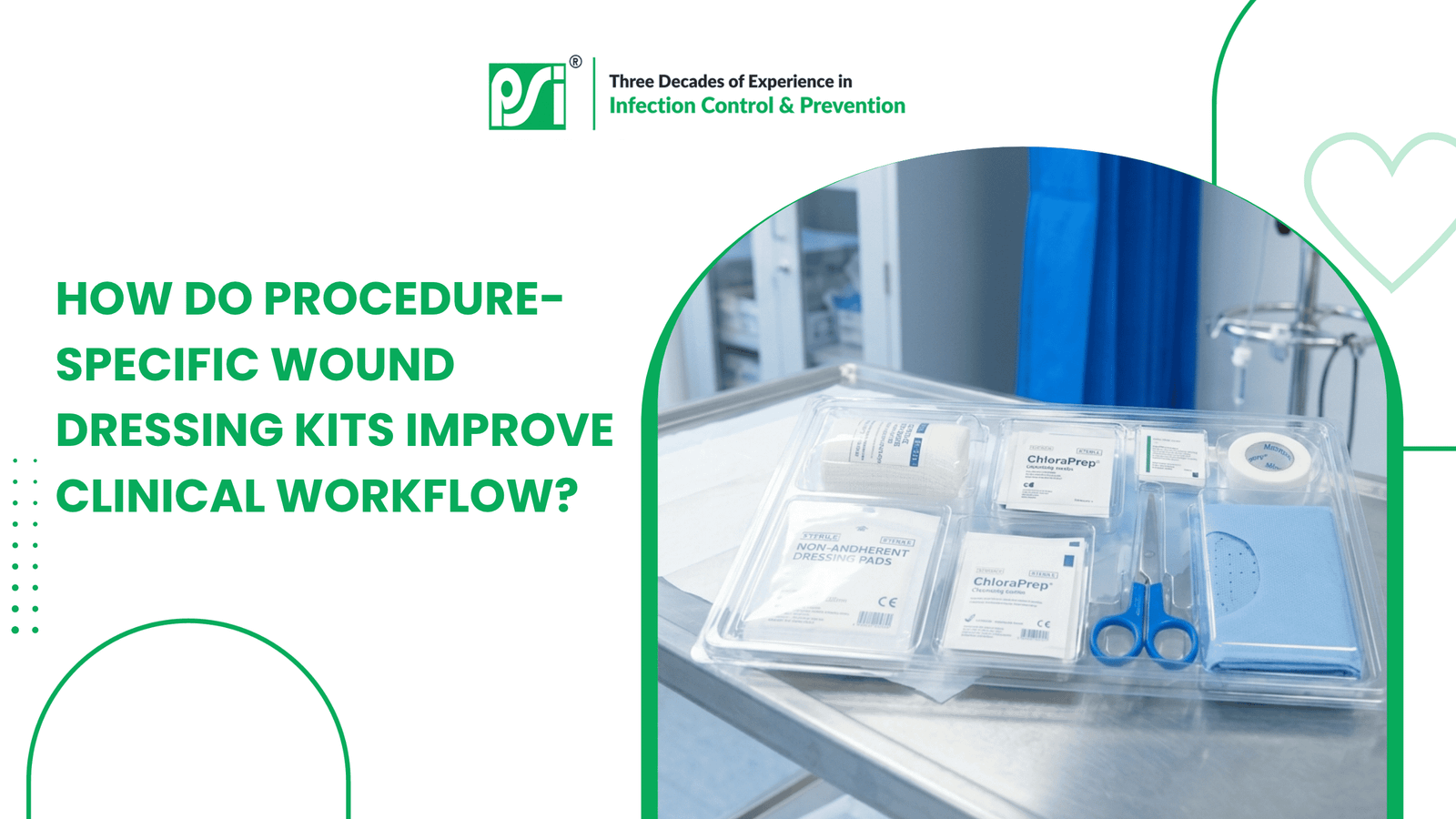
Procedure-specific wound dressing kits contain chosen medical consumables organised for a particular wound-care activity.
Unlike individually purchased supplies, these kits bring commonly required products together.
Depending on the intended application, Medical Dressing Kits may contain:
- Gauze swabs
- Dressing pads
- Gloves
- Forceps
- Adhesive tape
- Cotton products
- Dressing trays
- Protective drapes
- Waste-disposal materials
The exact contents vary between manufacturers and kit configurations.
Hospitals should always verify product specifications before purchasing.
Why Does Clinical Workflow Matter in Wound Care?
Wound care involves several connected activities.
Healthcare professionals evaluate the wound, prepare supplies, perform appropriate care, and document the procedure.
Poorly organised supplies can create unnecessary interruptions.
For example, a missing dressing pad may require staff to leave the preparation area.
A well-designed kit helps make required consumables easier to access.
This supports more predictable preparation.
However, the kit does not replace clinical assessment, hand hygiene, or appropriate aseptic technique.
7 Ways Procedure-Specific Dressing Kits Improve Clinical Workflow
1. Reduce Time Spent Collecting Supplies
Traditional dressing preparation can involve collecting multiple products individually.
This adds repetitive tasks to already busy clinical schedules.
Procedure-specific kits combine selected consumables into one organised package.
Nurses can access commonly required supplies without searching through several storage areas.
The actual time saved depends on the facility and procedure.
2. Support Consistent Dressing Preparation
Different healthcare professionals may organise dressing supplies differently.
Standardised kits provide a consistent starting point.
This can help hospitals establish more predictable preparation practices.
For example, Surgical Dressing Kits can contain components selected for appropriate surgical wound-care procedures.
Clinical teams still need to assess each wound and determine the appropriate treatment.
3. Reduce Unnecessary Handling
Every separately packaged product requires additional handling.
A suitable dressing kit can reduce the number of individual items collected and opened.
This helps simplify preparation.
The CDC emphasises appropriate handling and aseptic technique when working with sterile medical supplies.
Kits support organised preparation, but they do not independently avert infections.
4. Improve Inventory Management
Hospitals often manage large quantities of wound-care consumables.
Tracking every item separately can create additional administrative work.
Procedure-specific kits allow procurement teams to plan supplies around common clinical activities.
Inventory teams can monitor:
- Kits available
- Kits consumed
- Reorder quantities
- Department requirements
- Expiry dates
- Supplier lead times
This boosts more structured purchasing and stock management.
5. Help Reduce Unnecessary Product Waste
Unused medical consumables contribute to hospital waste.
Oversized kits can also contain products that clinicians rarely need.
Well-designed kits pivot on appropriate components and quantities.
Hospitals can review usage patterns to identify unnecessary items.
The goal is to provide sufficient supplies without overpacking.
6. Support Appropriate Sterile Preparation
Certain wound-care procedures require sterile supplies and appropriate aseptic technique.
Sterile Dressing Kits can provide selected sterile components within protective packaging.
Healthcare professionals must still verify:
- Packaging integrity
- Expiry information
- Sterility status
- Product suitability
- Storage conditions
A sterile kit supports preparation but does not guarantee infection prevention.
7. Simplify Procurement Across Departments
Hospitals may require dressing supplies for several clinical departments.
These include:
- Emergency care
- Surgical wards
- Outpatient clinics
- Dialysis units
- Intensive care
- General nursing wards
Procedure-specific kits can simplify procurement by grouping frequently required consumables.
However, different departments may require different configurations.
Types of Dressing Kits Used in Healthcare
Not every wound-care procedure requires the same kit.
Hospitals should select products according to their clinical needs.
| Kit type | Typical application | Main consideration |
| Small dressing kit | Minor wound care | Compact, appropriate contents |
| Large dressing kit | More extensive dressing needs | Component selection and quantities |
| Surgical dressing kit | Surgical or postoperative wound care | Clinical suitability and sterility |
| Dialysis dressing kit | Dialysis access-site care | Aseptic technique and suitable components |
| Custom dressing kit | Institution-specific procedures | Correct configuration |
The product name alone does not establish suitability.
Hospitals should compare the actual components and specifications.
Why Sterility Matters in Wound Dressing Procedures
Wound-care procedures require appropriate infection-prevention practices.
The required technique mainly depends on the wound, patient, procedure, and clinical environment.
For example, the CDC recommends hand hygiene and aseptic technique during intravascular catheter care.
It also recommends suitable sterile dressings for catheter sites.
This is particularly relevant when evaluating dialysis dressing kits.
Hospitals should not assume that every dressing kit is sterile.
Instead, they should verify the specific product’s sterility and intended use.
Example: A Hospital Standardises Dressing Supplies
Consider a hospital where nurses collect wound-care materials individually before each procedure.
Routine dressing changes require repeated visits to storage cabinets.
Different departments also maintain separate inventories of similar products.
The hospital decides to evaluate procedure-specific kits.
Clinical teams identify the supplies most frequently required for routine dressing changes.
Procurement staff then collate suitable kit configurations.
The hospital introduces a small trial in selected departments.
Nurses evaluate preparation time, missing components, and product usability.
Inventory teams monitor kit consumption and remaining individual supplies.
The hospital adjusts the configuration based on feedback.
This illustrative example shows how standardisation can support more organised clinical workflows.
How Hospitals Can Introduce Procedure-Specific Dressing Kits
A structured approach helps hospitals select suitable products.
Step 1: Identify Common Procedures
List the wound-care procedures performed most frequently.
Step 2: Review Current Supplies
Identify the products and quantities used for each procedure.
Step 3: Consult Clinical Teams
Include nurses, clinicians, infection-control staff, and procurement personnel.
Step 4: Define Kit Requirements
Specify components, dimensions, quantities, sterility, and packaging requirements.
Step 5: Evaluate Manufacturers
Compare product quality, documentation, configuration options, and supply capability.
Step 6: Conduct a Trial
Test suitable kits in selected clinical environments.
Step 7: Monitor Performance
Review preparation time, product usage, missing items, and overall costs.
Step 8: Improve Kit Configurations
Adjust contents when clinical requirements or usage patterns change.
What Should Hospitals Look for in a Dressing Kit Manufacturer?
Selecting the right manufacturer is important for consistent institutional supply.
Hospitals should evaluate:
- Product specifications
- Component quality
- Sterility requirements
- Packaging integrity
- Relevant certifications
- Manufacturing capacity
- Batch traceability
- Customisation options
- Supply reliability
- Bulk-order requirements
Procurement teams should also request samples when appropriate.
The best kit matches clinical requirements rather than simply offering the largest number of components.
How PSI Dispo Supports Wound Dressing Requirements
Plasti Surge Industries, known as PSI Dispo, manufactures healthcare consumables and medical disposables in India.
Established in 1989, the company provides products for hospitals, clinics, and institutional healthcare requirements.
Its dressing kit portfolio includes:
- Dressing Kit – Small
- Dressing Kit – Large
- Dialysis Dressing Kit
PSI’s small dressing kit includes dressing materials, swabs, and adhesive products for minor wound-care applications.
Its large dressing kit supports more extensive wound-care requirements.
The dialysis dressing kit includes products such as gauze, dressings, adhesive tape, and antiseptic wipes.
PSI also offers customised healthcare kits and other medical disposable solutions.
Hospitals can contact the company to discuss available configurations, specifications, packaging, and institutional quantities.
Conclusion
The most efficient wound care depends on both clinical expertise and organised preparation.
Procedure-specific Wound Dressing Kits help healthcare teams access selected supplies without collecting every product separately.
They can support consistent preparation, simpler inventory management, and reduced unnecessary handling.
However, kit design must reflect the actual clinical procedure.
Routine wound care, surgical dressing, and dialysis access-site management have different requirements.
Hospitals should evaluate components, sterility, packaging, and usability before selecting products.
The most effective Medical Dressing Kits provide appropriate supplies without creating unnecessary complexity.
PSI Dispo manufactures small, large, and dialysis dressing kits alongside other healthcare consumables.
Its product portfolio supports hospitals and clinics seeking organised wound-care supply solutions.
Looking for suitable dressing kits for your healthcare facility?