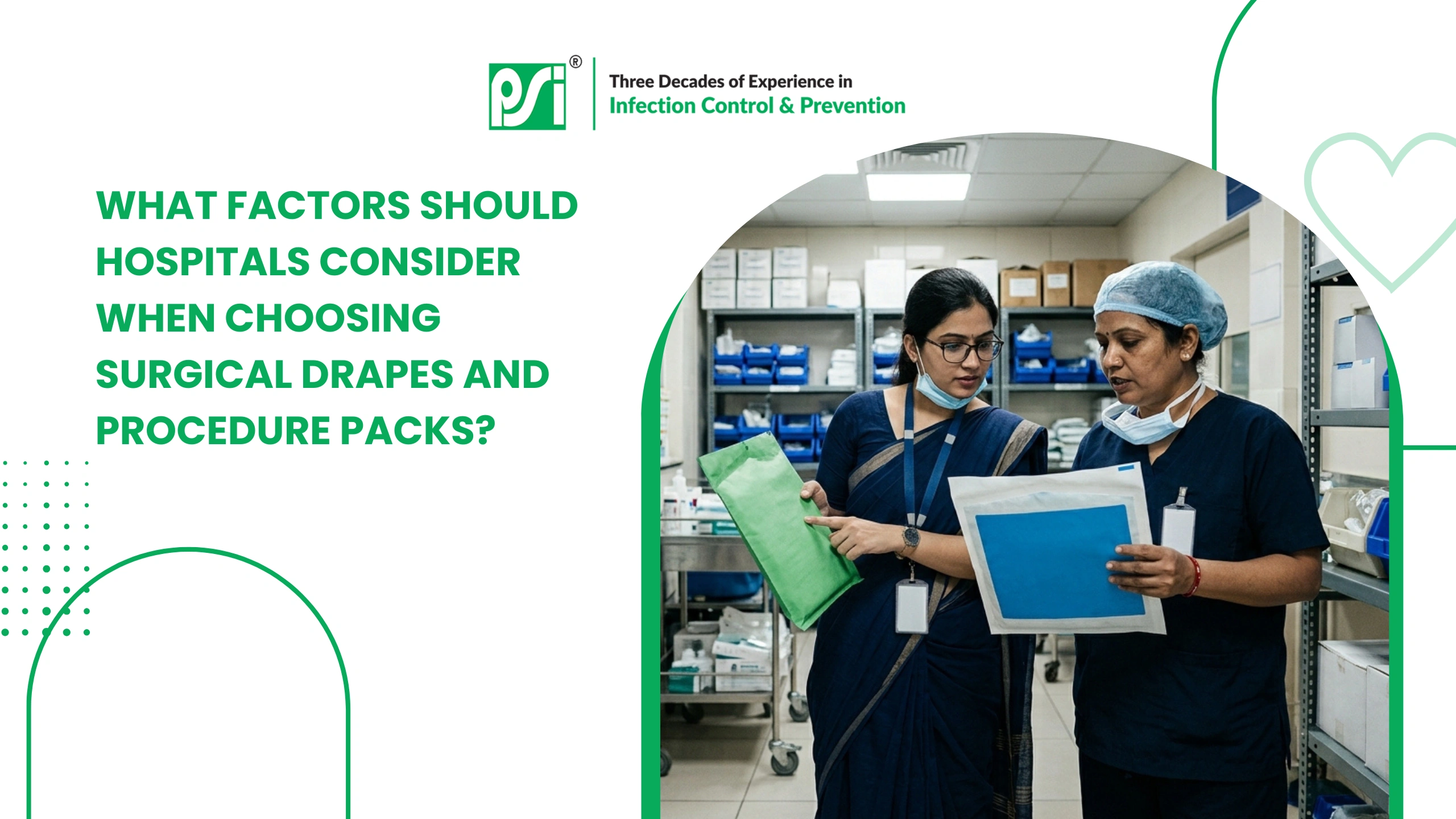
What factors should hospitals consider when choosing surgical drapes and procedure packs?
What isolates a good surgical drape or procedure pack from one that simply looks acceptable on a purchasing sheet?
For hospitals, the answer involves much more than price.
Surgical teams depend on sterile barriers to create and maintain an appropriate surgical field during procedures.
The correct Disposable Surgical Drapes must offer suitable barrier performance, coverage, strength, positioning, and ease of use.
Procedure packs add another consideration.
Every unnecessary component increases consumption, while every missing component can interrupt operating theatre preparation.
This makes product configuration an important purchasing decision.
Hospitals also need to consider sterility, packaging integrity, material quality, documentation, supplier reliability, and overall cost per procedure.
WHO recognises sterile surgical drapes as an important part of maintaining the sterile surgical environment.
For procurement teams, this means selecting products around actual clinical requirements rather than selecting the cheapest available option.
This guide explains the most important factors hospitals should compare when purchasing surgical drapes and procedure packs.
What Are Surgical Drapes and Procedure Packs?
Surgical drapes create a barrier around the surgical area.
They help separate the prepared operative field from surrounding areas during a procedure.
Sterile Drapes for Surgery come in different shapes, sizes, materials, and configurations.
Some are designed for general procedures.
Others are designed around specific surgical applications.
Procedure packs bring collective required products together within one prepared package.
Depending on the procedure, these packs may include:
- Surgical drapes
- Surgical gowns
- Towels
- Swabs
- Covers
- Accessories
- Procedure-specific components
The exact contents depend on clinical requirements.
Why Does Choosing the Right Surgical Drape Matter?
Surgical site infections remain the highest patient-safety concern worldwide.
WHO reports that surgical site infections affect patients across both developing and developed healthcare systems.
Maintaining appropriate sterile practices therefore remains essential.
Surgical drapes form one part of this wider infection-prevention strategy.
They do not prevent infections independently.
However, correctly selected and used sterile drapes support maintenance of the sterile surgical field.

8 Factors Hospitals Should Consider
1. Barrier Performance
Barrier protection should be one of the first considerations.
During surgery, drapes can encounter blood, irrigation fluids, and other liquids.
The chosen material needs performance appropriate for the anticipated exposure.
WHO notes that permeable materials can expose healthcare workers to body fluids and create risks for patients.
Hospitals should therefore evaluate barrier properties rather than selecting drapes solely by thickness or appearance.
2. Sterility
Products used where sterility is required need appropriate sterile processing and packaging.
When comparing Sterile Drapes for Surgery, look for:
- Sterilisation method
- Sterility assurance information
- Expiry date
- Packaging integrity
- Storage requirements
- Product documentation
- Applicable regulatory requirements
Sterility also depends on maintaining package integrity until the product is opened correctly.
3. Drape Size and Coverage
A drape should provide appropriate coverage for the intended procedure.
Too small, and maintaining the required sterile field becomes more difficult.
Too large, and hospitals may unnecessarily increase material consumption and cost.
Consider:
- Procedure type
- Surgical site
- Patient positioning
- Required fenestration
- Equipment positioning
- Fluid exposure
Procedure-specific sizing often furnishes better efficiency than one universal drape.
4. Material Quality
Not every disposable drape uses the same material construction.
Buyers should consider characteristics such as:
- Liquid resistance
- Tear resistance
- Lint generation
- Drapability
- Strength
- Comfort
- Ease of positioning
Material selection should reflect the anticipated clinical environment.
5. Ease of Application
A technically strong product still needs to work efficiently inside an operating theatre.
Prepacked Surgical Drapes can simplify preparation when correctly configured.
Consider whether the product:
- Opens easily
- Unfolds logically
- Positions quickly
- Provides adequate coverage
- Remains secure
- Supports aseptic handling
Small improvements in product design can make monotonous procedures easier for clinical teams.
6. Procedure Pack Configuration
More components do not automatically create a better pack.
The goal is to include what the surgical team actually requires.
Hospitals should assess commonly performed procedures and identify repeatedly used products.
A well-configured pack can potentially:
- Reduce preparation steps
- Simplify stock picking
- Reduce individual packaging
- Standardise supplies
- Reduce unnecessary components
- Support faster room preparation
This is where customised procedure packs become particularly useful.
7. Packaging Quality
Sterile products depend heavily on packaging.
Examine how the manufacturer protects products during storage, transport, and handling.
Good packaging should support:
- Product integrity
- Clear identification
- Traceability
- Appropriate storage
- Easy opening
- Aseptic presentation
Hospitals should also consider packaging volume when evaluating storage and waste requirements.
8. Manufacturer Reliability
Choosing the right Single-Use Drapes Manufacturer is as important as selecting the product.
Hospitals count on consistent quality across thousands of procedures.
Procurement teams should evaluate:
- Manufacturing capabilities
- Quality systems
- Relevant certifications
- Sterilisation controls
- Batch traceability
- Customisation capabilities
- Production capacity
- Supply consistency
- Documentation
- Export experience
A slightly cheaper product offers little value if supply or quality becomes inconsistent.
Prepacked Surgical Drapes vs Individual Products
Buying products individually provides flexibility.
However, staff must collect, organise, and open multiple products before procedures.
Prepacked solutions provide another approach.
Frequently required components arrive together in an organised configuration.
This can unravel preparation and standardisation.
The right choice depends on procedure volume, complexity, hospital workflow, and purchasing strategy.
Standard Packs vs Custom Procedure Packs
A standard procedure pack works well when its contents closely match clinical requirements.
But hospitals often develop their own procedure preferences.
Custom packs allow facilities to specify components around those requirements.
For example, a hospital may regularly open:
- One surgical drape
- Two gowns
- Several towels
- Equipment covers
- Swabs
- Other sterile accessories
Packaging these together may simplify preparation.
Customisation also prevents facilities from repeatedly purchasing unwanted components.

A Simple Procurement Comparison Checklist
Hospitals can score potential products across these categories:
- Clinical suitability
- Barrier performance
- Sterility
- Material quality
- Drape dimensions
- Procedure-specific design
- Pack contents
- Packaging integrity
- Ease of use
- Certifications
- Manufacturer capacity
- Cost per procedure
This creates a more meaningful comparison than looking at unit price alone.
Example: Improving OT Preparation
Consider a hospital performing the same surgical procedure several times each day.
Staff collect drapes, gowns, covers, towels, and accessories separately before every procedure.
Each item comes from different inventory locations.
The hospital reviews this workflow with its supplier.
Frequently used components move into a customised procedure pack.
Now staff open fewer individual packages.
Inventory becomes easier to standardise.
The hospital also reduces the possibility of discovering a missing component during preparation.
The lesson is simple:
Good procedure packs organise supplies around clinical workflows, not around catalogues.
Should Hospitals Choose Disposable or Reusable Drapes?
Both options exist.
WHO guidance states that either sterile disposable non-woven or sterile reusable woven drapes can be used during surgical operations.
The decision therefore requires broader evaluation.
Hospitals can consider:
- Barrier performance
- Reprocessing capabilities
- Laundry infrastructure
- Sterilisation
- Labour
- Water and energy
- Waste management
- Storage
- Procurement costs
Facilities should assess the complete system rather than comparing only the initial product price.
What About Sustainability?
Single-use products inevitably create waste.
Hospitals increasingly examine this impact when making procurement decisions.
This does not mean compromising infection-control requirements.
Instead, buyers can consider:
- Right-sized products
- Reduced unnecessary components
- Optimised procedure packs
- Efficient packaging
- Responsible material choices
- Correct waste segregation
- Supplier sustainability initiatives
Customisation can also help reduce unused items within procedure packs.
What Should Hospitals Ask a Supplier?
Before placing a large order, ask:
- Which drape materials are available?
- What barrier performance applies?
- How are products sterilised?
- Which certifications are available?
- Are procedure-specific drapes available?
- Can packs be customised?
- What components can be included?
- What is the shelf life?
- What are minimum order quantities?
- What batch documentation is available?
- Can production support recurring volumes?
- What sustainability options are available?
A credible manufacturer should provide clear answers and supporting information.
How PSI Dispo Supports Hospital Requirements
Plasti Surge Industries provides healthcare disposables and customised medical solutions for hospitals and healthcare organisations.
PSI’s portfolio includes surgical drapes, gowns, procedure packs, protective apparel, dressing solutions, and other medical disposables.
Customisation is particularly relevant for hospitals purchasing procedure packs.
Rather than forcing clinical teams to adapt to generic packs, requirements can be discussed around actual procedures and workflows.
This allows procurement teams to explore configurations suited to their individual institutional requirements.
Conclusion
Choosing Disposable Surgical Drapes and procedure packs requires a careful balance between protection, efficiency, usability, and cost.
Hospitals should evaluate barrier performance, sterility, materials, sizing, packaging, documentation, and manufacturer reliability.
For procedure packs, the right contents matter just as much as product quality.
Well-planned Prepacked Surgical Drapes and customised procedure packs can simplify preparation while avoiding unnecessary components.
The objective is not to buy the biggest pack or cheapest drape.
It is to select products that properly support each clinical workflow.
Plasti Surge Industries provides surgical drapes, procedure packs, medical disposables, and customised healthcare solutions.
Contact PSI Dispo to discuss surgical drape requirements, procedure-pack configurations, bulk quantities, and customised solutions for your healthcare facility.