How to compare different dressing kits for wound care in clinical settings?
How to compare different dressing kits for wound care in clinical settings?
Choosing a dressing kit sounds simple until a hospital procurement team starts comparing the available options.
Should you choose a basic Dressing Kit, a larger kit, a procedure-specific option, or a disposable configuration?
The absolutely right answer depends on much more than price.
Different wounds require different approaches to cleansing, protection, absorption, handling, and infection prevention.
The clinical environment also matters.
A routine dressing change may have very different requirements from dialysis care, surgical wound management, or complex wound treatment.
This makes the contents, sterility, usability, packaging, and quality of Wound Dressing Kits important purchasing considerations.
Clinical teams also need kits that help them work efficiently without opening unnecessary individual supplies.
For hospitals, clinics, distributors, and healthcare procurement teams, the goal is straightforward.
Select the right components for the procedure while maintaining quality, safety, convenience, and cost control.
Here is what buyers should compare before selecting dressing kits for clinical wound care.
What Are Dressing Kits?
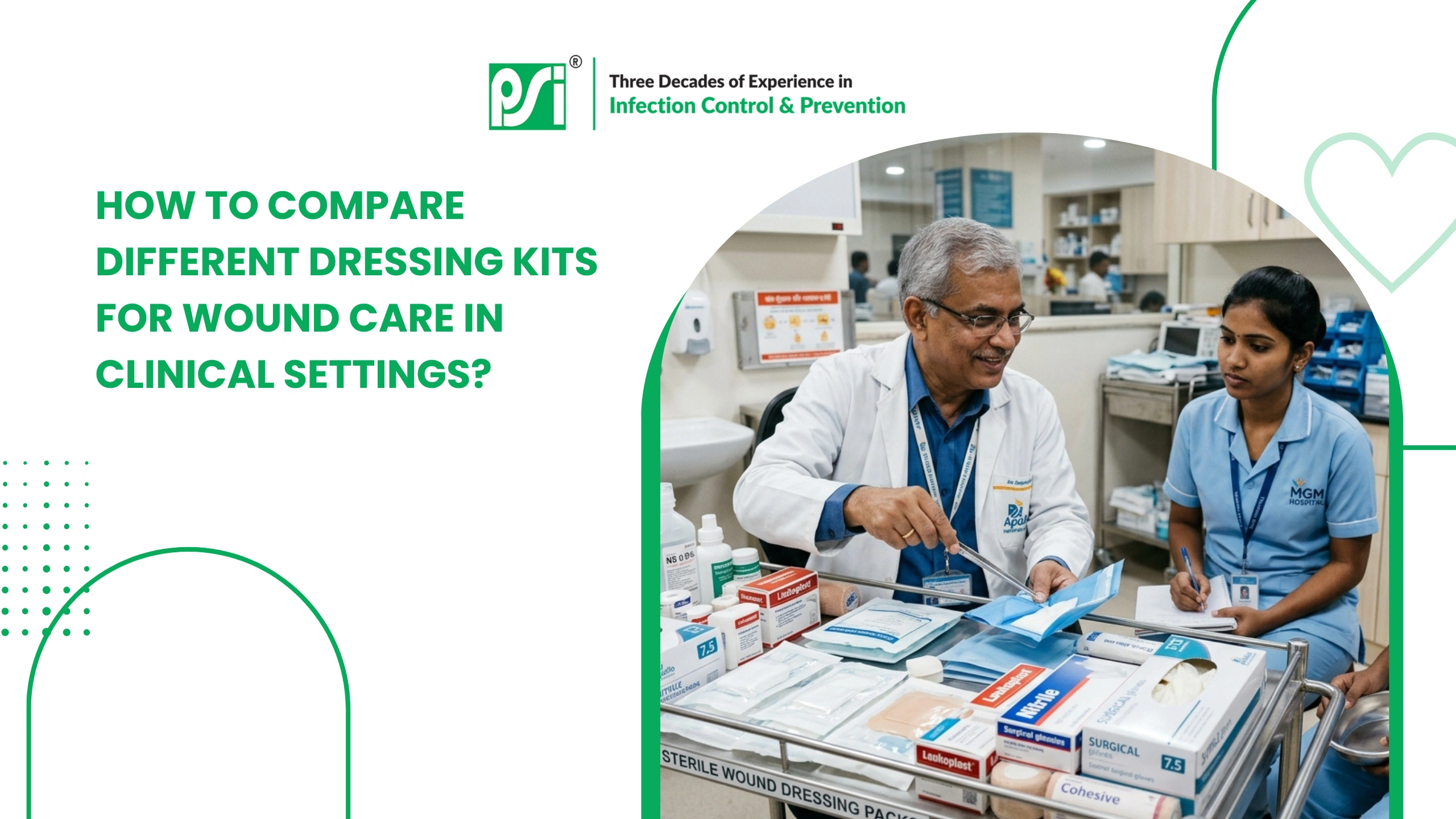
Dressing kits merge essential wound-care products into a convenient, ready-to-use pack.
Contents vary according to the kit and intended procedure.
Depending on the configuration, a kit may contain items such as:
- Gauze swabs
- Dressing pads
- Forceps
- Gloves
- Cotton products
- Trays
- Drapes
- Waste bags
- Other dressing accessories
The asset is convenience.
Instead of collecting multiple products individually, healthcare professionals can access necessary components from one prepared kit.
Why Does Dressing Kit Selection Matter?
Wound management requires careful attention to infection prevention.
Healthcare-associated infections remain an important challenge for healthcare facilities globally.
Correct dressing procedures support clean wound management while reducing unnecessary exposure and contamination risks.
However, the kit must match the wound and clinical procedure.
Buying the largest available pack is not always the best solution.

7 Factors to Compare Between Dressing Kits
1. Intended Clinical Application
Start by asking where the kit is used.
Different Dressing Kits can assist different applications, including:
- Routine wound dressing
- Surgical wound care
- Dialysis procedures
- Outpatient care
- Emergency departments
- Minor procedures
- Post-operative care
Procedure-specific requirements should guide kit selection.
2. Kit Contents
Never compare kits only by package size.
Collate what is actually inside.
One kit may contain additional swabs but lack another accessory your clinical team regularly requires.
Create a component checklist before contacting suppliers.
This makes comparisons much simpler.
3. Sterility Requirements
Sterility is particularly important when a procedure requires sterile technique.
Check whether the kit and relevant components meet the required sterility specifications.
Healthcare teams should also scrutinize:
- Packaging integrity
- Expiry information
- Sterilisation documentation
- Storage requirements
- Applicable certifications
The right level of aseptic technique depends on the patient, wound, environment, and procedure.
4. Absorbency Requirements
Not every wound produces the same amount of fluid.
Some wounds remain relatively dry.
Others produce considerably more exudation.
Compare dressing materials according to the wound types your facility commonly manages.
Good absorption can boost support for appropriate wound management.
5. Size and Configuration
A small kit can work well for straightforward dressing requirements.
Larger or specialised Surgical Dressing Kits can provide more components for demanding procedures.
PSI Dispo, for example, lists:
- Dressing Kit : Small
- Dressing Kit : Large
- Dialysis Dressing Kit
This illustrates why buyers should select configurations around clinical needs rather than purchasing one standard kit everywhere.
6. Disposable Versus Individually Assembled Supplies
Disposable Dressing Kits can simplify preparation because necessary components arrive together.
This can help clinical groups:
- Reduce preparation steps
- Standardise supplies
- Simplify inventory
- Reduce handling
- Improve convenience
- Identify usage more easily
However, hospitals should also consider waste volumes and disposal requirements.
The best choice balances efficiency with responsible resource management.
7. Supplier Reliability
A dressing kit is only as dependable as the supply chain behind it.
When evaluating a Dressing Kits Supplier, examine:
- Manufacturing experience
- Quality-control processes
- Certifications
- Product consistency
- Customisation capabilities
- Production capacity
- Packaging quality
- Delivery reliability
- Technical documentation
Price matters, but reliability matters too.
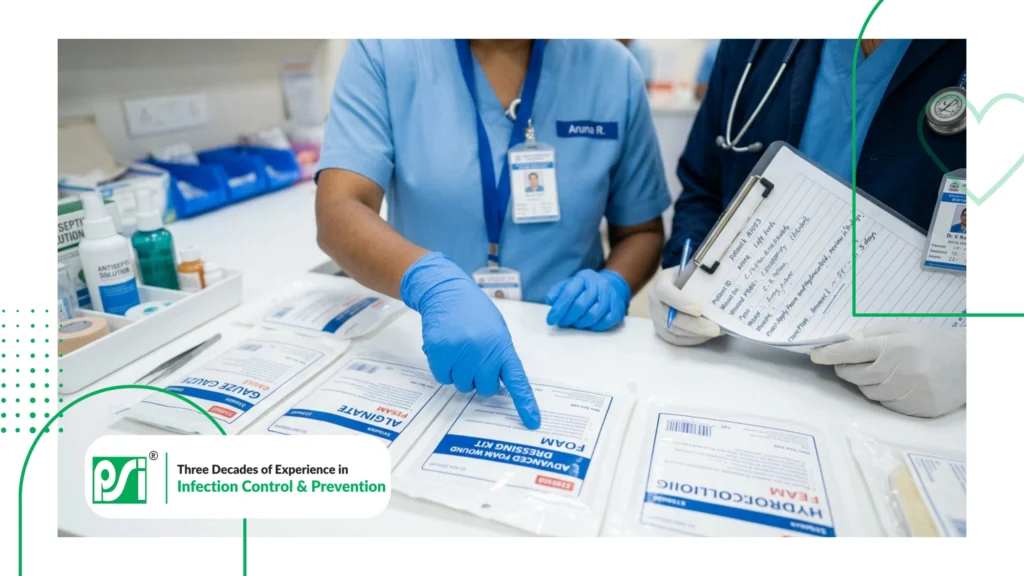
Surgical Dressing Kits vs General Wound Dressing Kits
These terms can overlap, but intended applications may differ.
General Wound Dressing Kits usually support routine wound cleaning and dressing procedures.
Surgical Dressing Kits may require configurations appropriate for surgical or post-surgical wound care.
The exact contents depend on the manufacturer and clinical requirement.
Hospitals should therefore compare specifications rather than relying only on product names.
A Simple Dressing Kit Comparison Checklist
Before requesting quotations, procurement teams can fabricate a simple comparison sheet.
Score each supplier against these factors:
- Intended application
- Number of components
- Component specifications
- Sterility requirements
- Packaging
- Ease of opening
- Clinical usability
- Customisation options
- Certifications and documentation
- Price per usable procedure
The finishing point is particularly important.
A cheaper kit can become expensive when clinicians regularly need additional separately packaged components.
Example: Standardising Kits Across a Hospital
View a hospital using individually selected supplies for every dressing procedure.
Nurses collect gauze, gloves, forceps, trays, pads, and other items separately.
Preparation requires multiple steps.
The hospital then introduces standardised kits for frequently performed procedures.
Routine dressing receives one configuration.
Dialysis receives another.
More complex wound care receives an appropriate larger configuration.
The outcome is a simpler and more predictable workflow.
This example shows why kit configuration matters as much as individual component cost.
How Custom Dressing Kits Can Improve Efficiency
Standard kits do not always match every healthcare organisation.
High-volume hospitals may have very distinct requirements.
Customisation allows buyers to discuss the required components with their manufacturer.
A customised kit can potentially remove unnecessary products while adding items frequently opened separately.
This supports a simple principle:
Put the right products together for the right procedure.
What Does Good Wound-Care Practice Require?
Clinical teams should follow their organisation’s wound-care and infection-control protocols.
WHO-associated clinical guidance highlights hand hygiene, checking sterility and expiry, preparing required items, and avoiding contamination during dressing procedures.
Modern wound-care guidance also recommends assessing the individual patient, wound, and clinical environment when choosing an aseptic approach.
This means no dressing kit replaces clinical judgement.
The kit supports the procedure.
The healthcare professional determines the appropriate wound-care approach.
What Should Buyers Ask a Dressing Kits Supplier?
Before placing a large institutional order, ask these questions:
- What exactly does each kit contain?
- Are sterile configurations available?
- What sterilisation method applies?
- What certifications are available?
- Can kit contents be customised?
- Are different kit sizes available?
- What are minimum order quantities?
- What is the shelf life?
- How is packaging integrity maintained?
- Can the supplier support recurring institutional volumes?
Clear answers make supplier comparison considerably easier.
Conclusion
Comparing Dressing Kits requires more than checking the number of items inside each package.
Hospitals need to consider clinical application, sterility, components, absorbency, packaging, usability, documentation, and total procedural cost.
The best Wound Dressing Kits aid clinical teams without creating unnecessary complexity or waste.
Procedure-specific configurations can also make procurement and inventory management more efficient.
Plasti Surge Industries provides dressing kit solutions including small, large, and dialysis dressing kits alongside customised healthcare products.
Healthcare organisations can discuss their specific requirements directly with PSI before choosing a standard or customised configuration.
For institutional requirements, bulk enquiries, or product information, contact PSI Dispo to discuss the dressing kit configuration suitable for your facility.