How Hospitals Can Reduce Waste With Compostables
Hospitals save lives every day.
Unfortunately, they also generate enormous amounts of waste.
From operating theatres to patient wards, disposable products amass quickly.
Many healthcare facilities struggle with rising waste management costs.
Environmental concerns add another layer of complexity.
Today, hospitals worldwide are under pressure to become more sustainable.
Patients, healthcare providers, and regulators increasingly expect environmentally responsible practices.
This is where compostable healthcare products proffer a practical solution.
These products help reduce waste while supporting infection control and patient safety.
Unlike traditional materials, compostable alternatives break down more naturally under appropriate conditions.
Many hospitals are now exploring compostable medical products as part of their sustainability initiatives.
Integrated with other sustainable hospital supplies, they help facilities reduce environmental impact without compromising care quality.
Manufacturers like Plasti Surge Industries support healthcare providers with innovative healthcare solutions designed for modern sustainability goals.
In this blog, you’ll learn:
- What compostable healthcare products are
- Why hospitals are adopting them
- How they support waste reduction
- Their operational benefits
- Steps for successful implementation
What Are Compostable Healthcare Products?
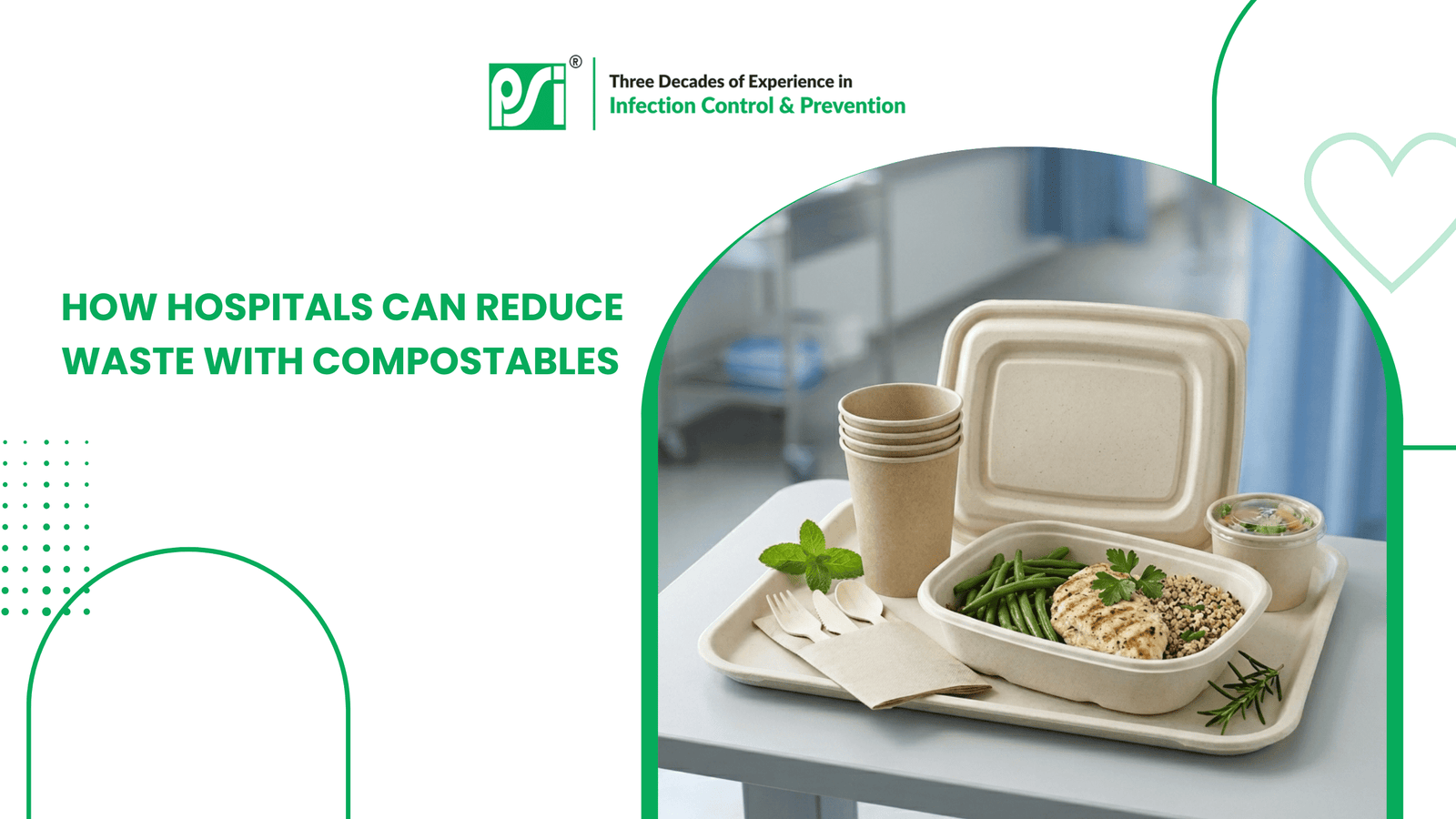
Compostable healthcare products are medical supplies designed to break down into natural elements after disposal.
They decompose under specific composting conditions.
These products help lessen long-term environmental impact.
Examples include:
- Procedure kit components
- Sustainable packaging
- Disposable accessories
- Selected healthcare consumables
Many are designed to meet healthcare performance requirements while reducing waste.
Why Hospital Waste Is a Growing Challenge

Healthcare facilities generate waste every day.
A significant portion comes from single-use products.
Common challenges are:
- Landfill pressure
- Rising disposal costs
- Sustainability targets
- Environmental regulations
Hospitals increasingly seek alternatives that reduce waste without affecting patient care.
Interesting fact:
Healthcare facilities are among the largest institutional waste generators globally.
Even small improvements can bring about significant environmental benefits.
Why Compostable Medical Products Matter
Support Environmental Sustainability
Conventional materials can remain in landfills for decades.
Compostable alternatives reduce long-term environmental burden.
Benefits include:
- Lower environmental impact
- Reduced landfill accumulation
- Improved sustainability performance
Help Reduce Medical Waste
Waste reduction takes precedence for modern healthcare systems.
Compostable products support responsible disposal practices.
Benefits include:
- Reduced waste volumes
- Improved waste management strategies
- Better environmental outcomes
Support Sustainable Hospital Goals
Many healthcare organizations now establish sustainability targets.
Eco-friendly procurement supports these drives.
Benefits include:
- ESG alignment
- Regulatory readiness
- Improved sustainability reporting
Enhance Community Perception
Patients increasingly value environmentally responsible organizations.
Sustainability efforts strengthen public trust.
Benefits include:
- Positive reputation
- Refined stakeholder confidence
- Stronger community engagement
How Sustainable Hospital Supplies Improve Operations
Sustainability is not only about environmental responsibility.
It can also improve operational efficiency.
Benefits include:
- Better resource utilization
- Reduced waste management pressure
- Improved procurement planning
- Upgraded organizational performance
Modern healthcare increasingly integrates sustainability into everyday operations.
How Hospitals Can Reduce Waste With Compostables

Step 1: Assess Current Waste Streams
Identify departments generating the highest disposable waste.
Focus on high-impact areas first.
Step 2: Evaluate Compostable Alternatives
Review products that meet both sustainability and clinical requirements.
Safety remains crucial.
Step 3: Start With Pilot Programs
Introduce compostable products in chosen departments.
Gather feedback and performance data.
Step 4: Educate Staff
Explain proper use and disposal procedures.
Staff engagement improves implementation success.
Step 5: Scale Across Departments
Expand successful initiatives gradually.
This minimizes disruption and ameliorates adoption rates.
Real-World Example
A healthcare facility in Greater Noida introduced compostable packaging and selected disposable products.
The initiative targeted waste reduction.
Results included:
- Lower waste volumes
- Improved sustainability reporting
- Positive employee engagement
Small operational changes created measurable improvements.
The Role of Biodegradable Disposables
Many hospitals combine compostable products with biodegradable disposables.
Together, these solutions support broader sustainability strategies.
Benefits include:
- Waste reduction
- Improved environmental performance
- Greater flexibility in procurement decisions
This amalgamation helps hospitals move toward greener operations.
Why Healthcare Providers Choose Plasti Surge Industries
Plasti Surge Industries manufactures high-quality healthcare products and medical disposables.
The company’s main focus is on:
- Product safety
- Operational efficiency
- Sustainable innovation
- Reliable manufacturing standards
Their solutions help healthcare providers pursue sustainability goals without compromising patient care.
Conclusion
Healthcare sustainability is becoming an operational priority.
Hospitals progressively seek practical ways to reduce waste.
Compostable healthcare products offer a meaningful solution.
They help reduce environmental impact while maintaining healthcare standards.
Merged with compostable medical products, sustainable hospital supplies, and biodegradable disposables, hospitals can move toward more responsible operations.
The future of healthcare includes both clinical excellence and environmental responsibility.
Looking to support your sustainability goals?