How to Choose PPE Kits for Hospitals
Is every PPE kit suitable for every hospital department?
The simple answer is no.
An operating theatre, isolation ward, emergency department, and laboratory can expose healthcare workers to very varied hazards.
That means hospitals need PPE kits for hospitals that match the task, exposure level, and infection-control requirements.
A kit containing more items is not automatically safer.
The right protection depends on opting for suitable components, ensuring correct fit, and training healthcare workers to use them properly.
For procurement teams, this makes PPE purchasing more complex than comparing prices.
Quality, material, barrier performance, comfort, certification, sizing, packaging, and supplier reliability all deserve attention.
Products such as sterile protective suits may suit specific controlled environments, while other departments need different healthcare safety apparel.
This blog explains how hospitals can evaluate PPE systematically.
You will learn what a hospital PPE kit contains, which factors matter most, common purchasing mistakes, and how to select a dependable healthcare supplier.
What Are Hospital PPE Kits?
Personal Protective Equipment helps reduce occupational exposure to biological and other workplace hazards.
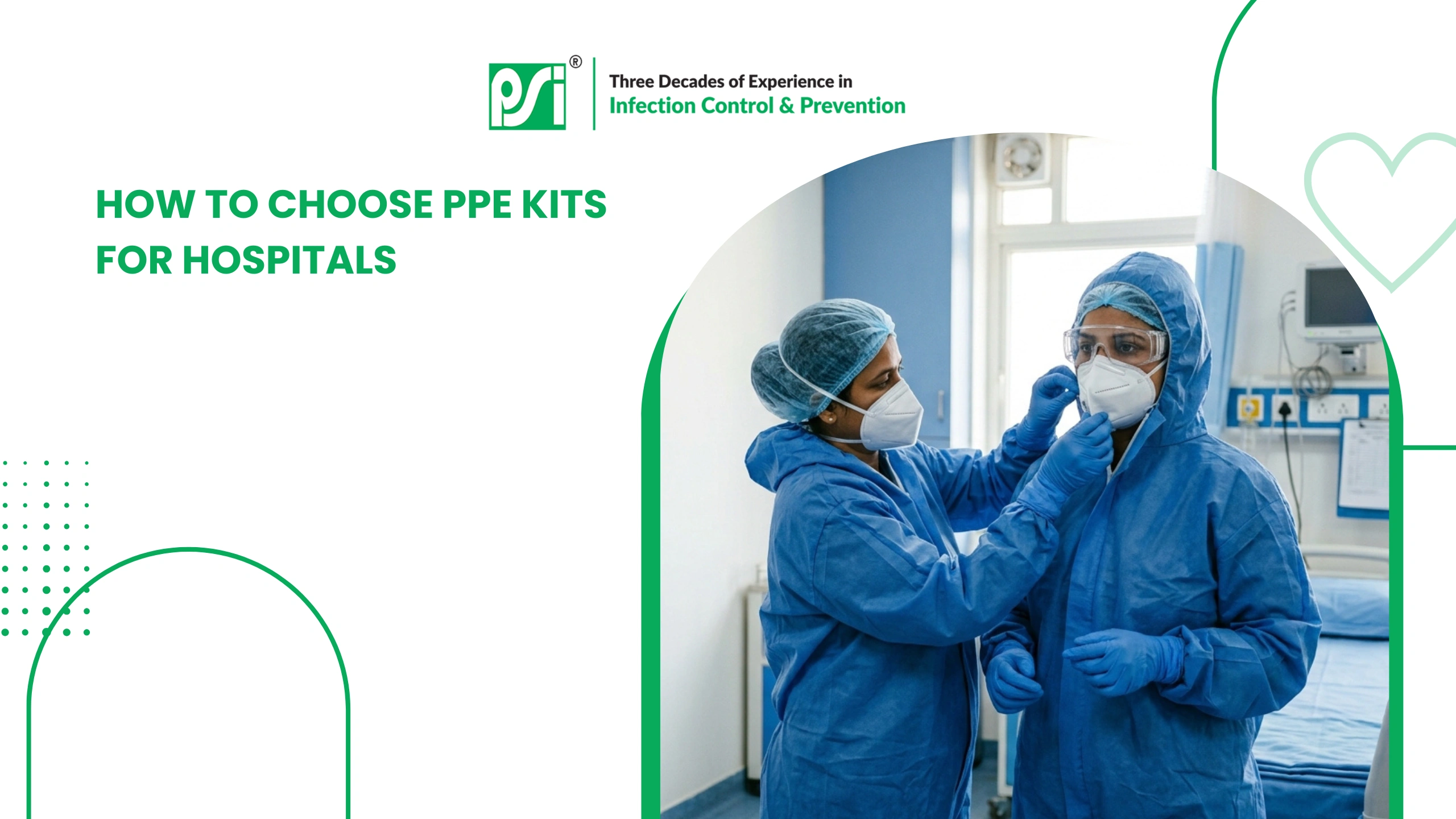
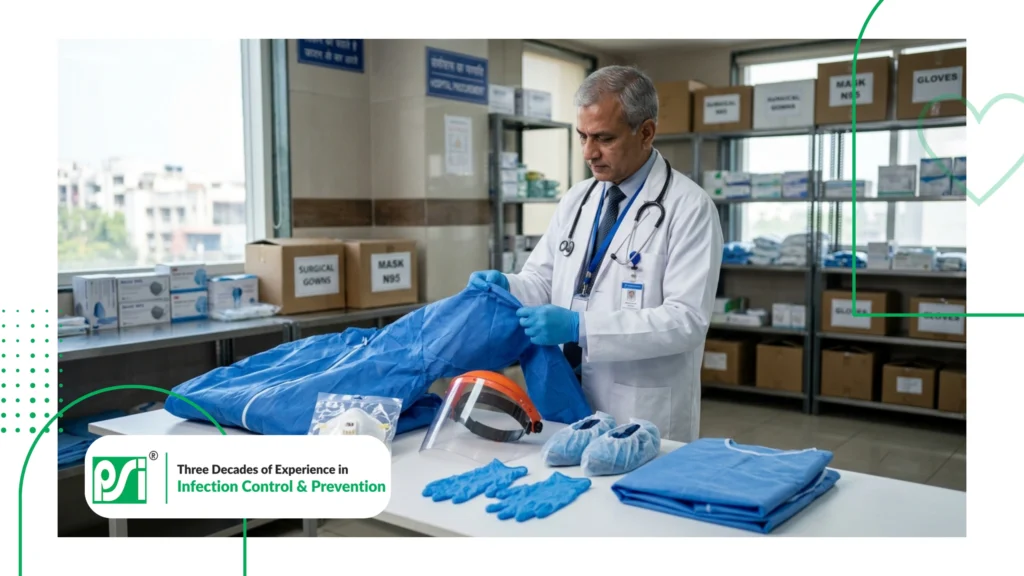
A typical hospital PPE combination can be:
- Protective gown or coverall
- Gloves
- Medical mask or respirator
- Goggles
- Face shield
- Head covering
- Shoe covers
- Protective apron
The exact amalgamation depends on the clinical situation.
Hospitals should therefore avoid treating PPE as a one-size-fits-all product.
Why Choosing the Correct PPE Matters
Healthcare professionals work close to patients, fluids, surfaces, and potentially infectious materials.
Correct PPE creates an important protective barrier.
However, PPE works best as part of a wider infection-control system.
Hand hygiene, ventilation, environmental controls, safe working practices, and correct disposal remain uniformly important.
7 Factors to Consider When Choosing PPE Kits
1. Start With the Clinical Risk
Do not begin with a product catalogue.
Begin with the procedure.
Ask:
- What task does the healthcare worker perform?
- Is contact with blood possible?
- Are splashes likely?
- Is respiratory protection required?
- Is the environment sterile?
The answers regulate appropriate PPE.
2. Check the Kit Components
Review every component before ordering hospital PPE kits.
Avoid paying for unnecessary items.
At the same time, never remove essential protection simply to lessen costs.
A procedure-specific approach provides better value.
3. Evaluate Barrier Protection
Different gowns and coveralls provide different levels of protection.
Consider anticipated exposure to:
- Blood
- Body fluids
- Droplets
- Contaminated surfaces
- Airborne particles
Material selection should match the identified hazard.
4. Select Respiratory Protection Carefully
A surgical mask and respirator perform different functions.
Respirators such as N95 models provide filtration against airborne particulates when correctly selected and fitted.
Healthcare facilities should match respiratory protection to the identified risk and applicable clinical guidance.
5. Consider Fit and Comfort
PPE only works properly when staff can wear it correctly.
Poor-fitting products can create gaps or hinder movement.
Evaluate:
- Available sizes
- Sleeve length
- Closures
- Breathability
- Visibility
- Mobility
- Respirator fit
Comfort becomes especially important during long shifts.
6. Verify Standards and Documentation
Never rely entirely on packaging claims.
Request relevant product specifications, testing information, certifications, and regulatory documentation from the supplier.
Requirements vary between countries and product categories.
International buyers should verify compliance with regulations applicable in their own market.
7. Evaluate the Manufacturer
Authentic PPE procurement extends beyond the product itself.
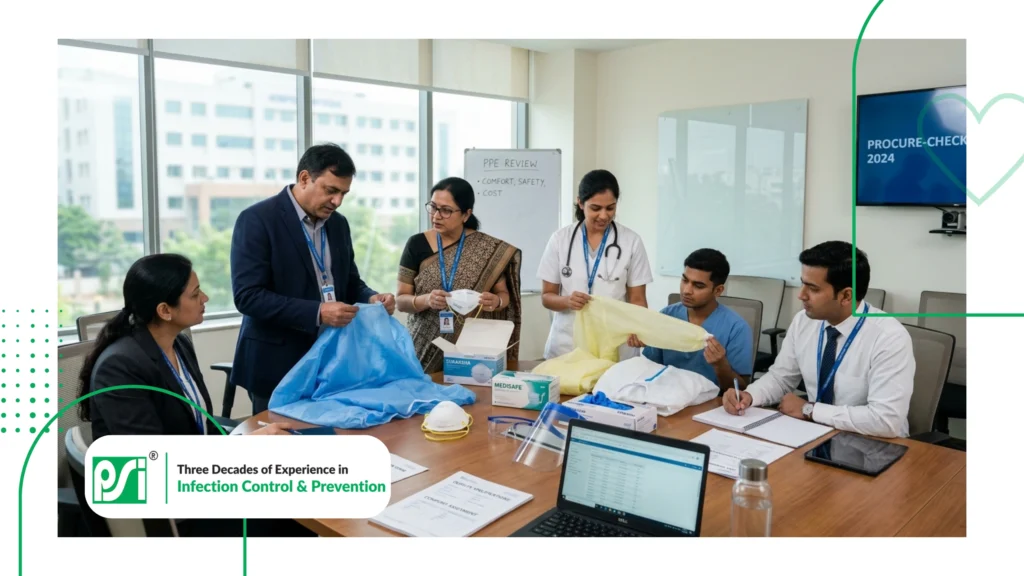
Evaluate whether the manufacturer provides:
- Consistent quality
- Production capacity
- Product documentation
- Customization
- Reliable packaging
- Supply continuity
- Responsive support
A strong manufacturer becomes a long-term procurement partner.
When Are Sterile Protective Suits Needed?
Not every protective garment needs to be sterile.
Sterility depends on the clinical application and infection-control protocol.
Healthcare facilities should evaluate whether a particular procedure needs sterile or non-sterile protection.
Choosing unnecessarily high specifications can increase costs without adding meaningful clinical value.
The goal is appropriate protection, not simply maximum protection.
PPE for Different Hospital Environments
Different departments can be vital to different configurations.
Operating Theatres
Requirements may include:
- Surgical gowns
- Gloves
- Masks or respirators
- Eye protection
- Head covers
- Shoe covers
Sterility requirements depend on the procedure and product.
Isolation Areas
Protection depends on transmission risk and facility protocols.
Gowns, gloves, eye protection, and appropriate masks or respirators may be required.
Laboratories
Laboratory groups need protection based on the materials and biological hazards they handle.
Emergency Departments
Emergency teams face uncertain situations.
Easy access to correctly configured PPE becomes especially important.
Donning and Doffing Matter Too
Even high-quality PPE can provide inadequate protection when used incorrectly.
Hospitals need clear donning and doffing procedures.
A commonly used sequence for putting on PPE includes:
- Gown
- Mask or respirator
- Goggles or face shield
- Gloves
Training is hence part of effective PPE management.
A Simple Hospital Buying Scenario
Consider a hospital purchasing one universal PPE kit for every department.
Some teams receive components they hardly use.
Other teams may require additional protection.
Then, the hospital moves toward department-specific kits.
Each configuration matches anticipated procedures and exposure risks.
This approach can:
- Simplify stock management
- Reduce unnecessary components
- Improve staff preparedness
- Support better standardization
- Control procurement costs
The lesson is simple.
Better specification often creates more value than simply buying more PPE.
How Healthcare Safety Apparel Supports Staff
Healthcare safety apparel includes more than full PPE kits.
Hospitals may require individual protective products for different tasks.
These can include:
- Surgical gowns
- Protective coveralls
- Masks
- Head covers
- Shoe covers
- Aprons
- Other protective clothing
Selecting products individually also allows facilities to create combinations based on departmental requirements.
Common PPE Procurement Mistakes
Hospitals should avoid:
- Buying solely on price
- Using one kit specification everywhere
- Ignoring sizing
- Overlooking certification
- Assuming every gown offers equal protection
- Purchasing without assessing staff comfort
- Ignoring supply reliability
- Neglecting donning and doffing training
Good procurement balances safety, usability, compliance, and cost.
Why Consider PSI Dispo?
Plasti Surge Industries supports healthcare providers with medical disposables, protective apparel, procedure-centred products, and customized healthcare solutions.
For institutional buyers, customization can be particularly useful.
Instead of purchasing unnecessary components, hospitals can discuss requirements based on procedures, departments, quantities, and protection needs.
This creates a more concentrated procurement approach.
Conclusion
Choosing PPE kits for hospitals requires more than comparing product lists and quotations.
Hospitals need protection that matches clinical risks, procedures, staff requirements, and applicable safety standards.
The best procurement strategy reviews barrier performance, fit, comfort, documentation, respiratory protection, as well as supplier reliability together.
Correct training and usage remain equally important.
Plasti Surge Industries supports healthcare organizations with healthcare safety apparel, medical disposables, protective products, and customized healthcare solutions.
Rather than accepting a generic configuration, hospitals can discuss their specific requirements with PSI Dispo
Contact Plasti Surge Industries to explore PPE and healthcare solutions suited to your facility’s departments, procedures, quantities, and protection requirements.