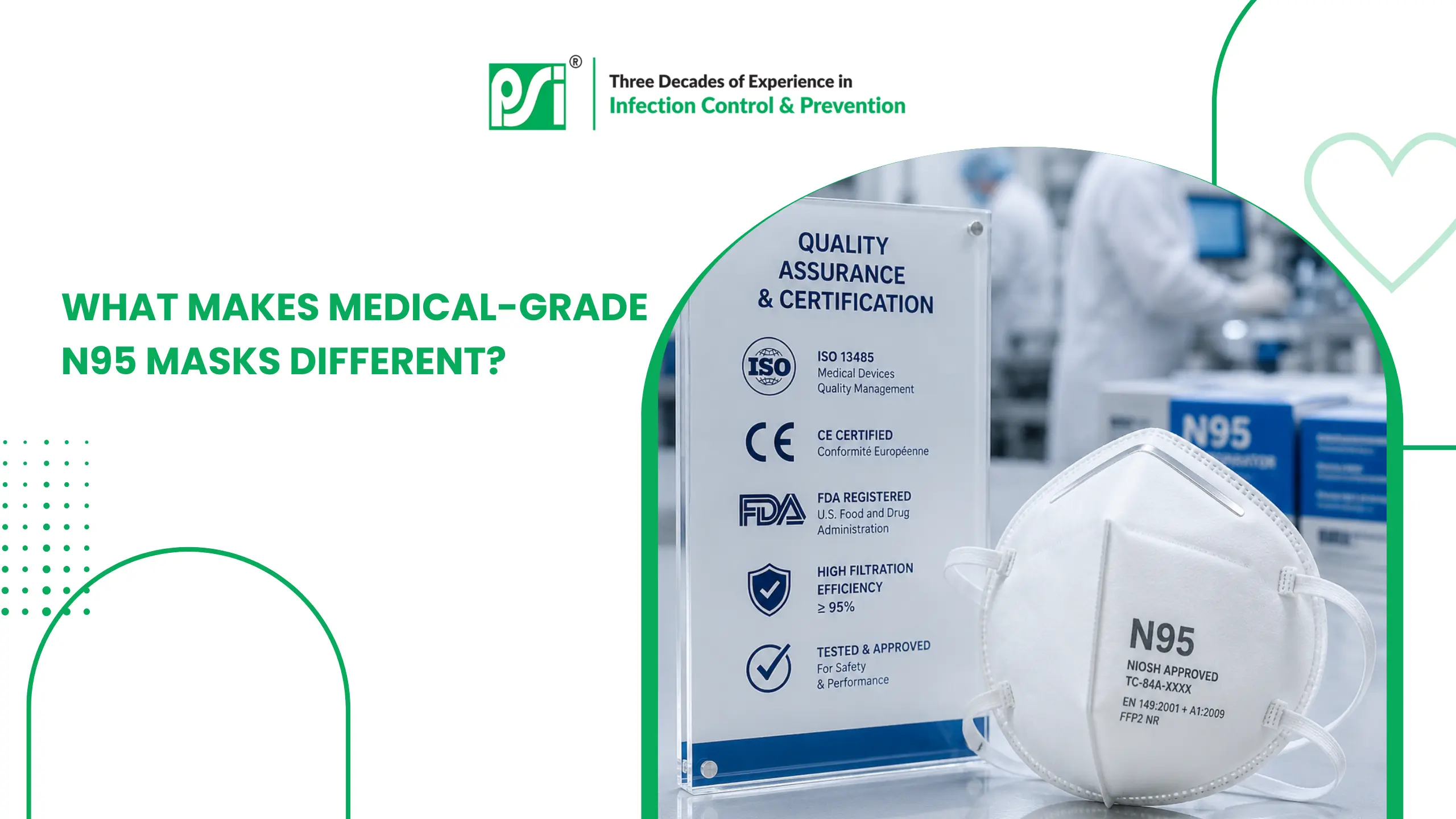
What Makes Medical-Grade N95 Masks Different?
Not all N95 masks offer the same level of protection.
But many people assume every N95 mask performs identically.
That assumption can be dangerous in healthcare environments.
Doctors, nurses, and healthcare workers face exposure hazards every day.
They need respiratory protection designed specifically for medical settings.
This is where medical-grade N95 masks make a critical difference.
These masks are engineered to meet strict healthcare requirements.
They help protect both healthcare professionals and patients.
Healthcare facilities worldwide rely on N95 respirators during high-risk procedures.
They remain one of the most trusted forms of respiratory protection.
However, many buyers struggle to figure out what separates a medical-grade N95 from a standard respirator.
The differences go beyond filtration alone.
Features such as fluid resistance, certification standards, fit, and performance all matter.
Companies like Plasti Surge Industries manufacture healthcare protection products designed for demanding clinical environments.
Their solutions aid infection control and healthcare worker safety.
In this blog, you’ll learn:
- What medical-grade N95 masks are
- How they differ from standard N95 masks
- Why healthcare providers prefer them
- Key features to look for
- How to choose the right respirator
What Are Medical-Grade N95 Masks?
Medical-grade N95 masks are respirators designed specifically for healthcare environments.
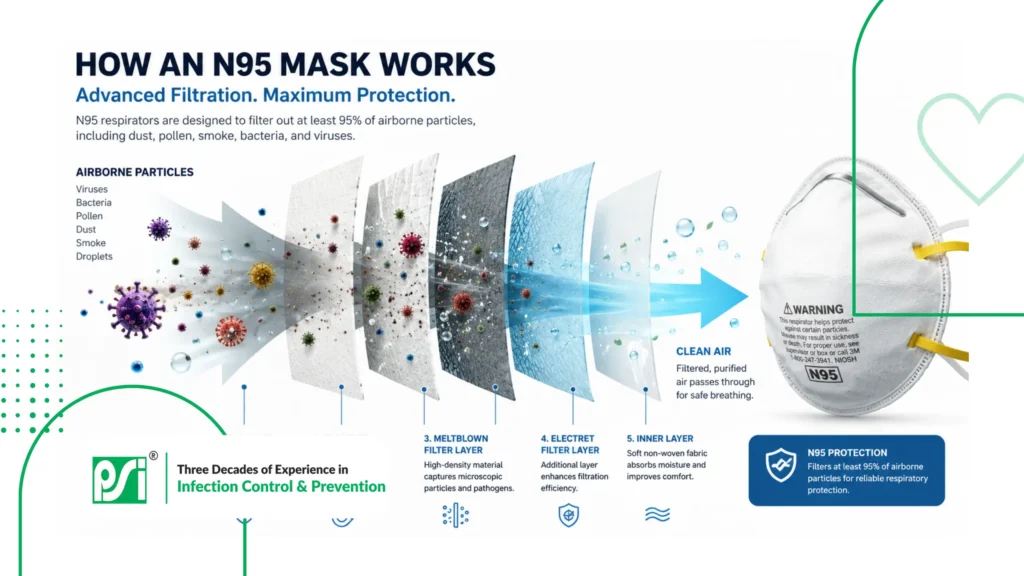
They filter at least 95% of airborne particles.
Unlike standard industrial N95 respirators, they also meet healthcare-specific directives.
These masks are commonly used by:
- Doctors
- Nurses
- Surgeons
- Emergency responders
- Healthcare support staff
They provide reliable respiratory protection during patient care.
Why Healthcare Settings Need Specialized Protection
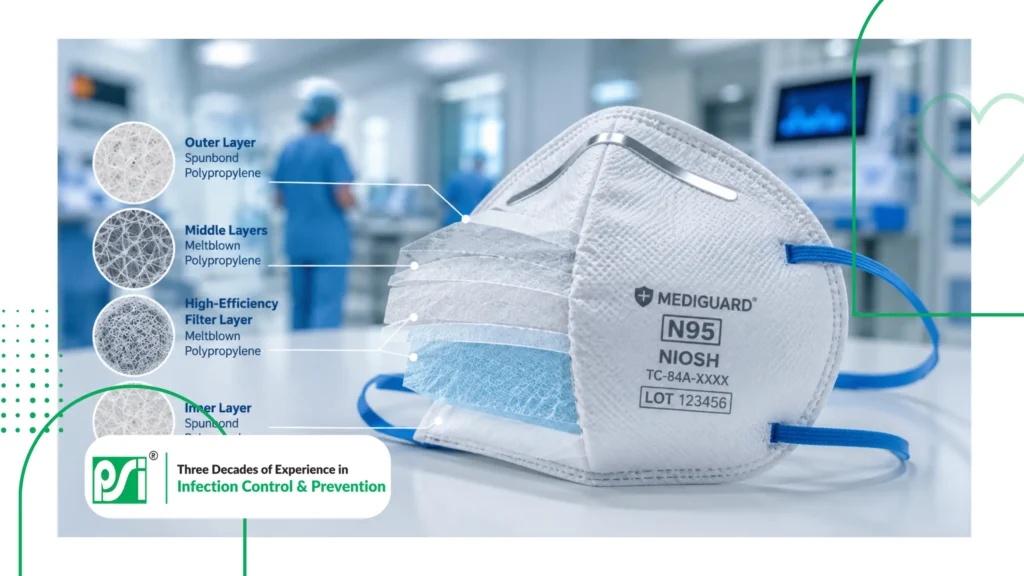
Healthcare environments expose staff to multiple risks.
These include:
- Airborne pathogens
- Respiratory droplets
- Bodily fluids
- Aerosol-generating procedures
Standard masks may not provide adequate protection in every situation.
Healthcare-grade respirators address these obstacles more effectively.
Interesting fact:
The N95 designation means the mask filters at least 95% of airborne particles under testing conditions.
However, healthcare-grade models often undergo additional evaluations.
What Makes Medical-Grade N95 Masks Different?
Superior Filtration Performance
The chief feature remains high filtration efficiency.
Benefits include:
- Protection from airborne particles
- Reduced exposure risks
- Improved respiratory safety
This makes them ideal for patient-facing environments.
Fluid Resistance
Healthcare settings often comprise exposure to fluids.
Medical-grade masks provide additional fluid protection.
Benefits include:
- Enhanced safety
- Improved barrier protection
- Better performance during procedures
This feature is especially important during surgeries and emergency care.
Better Facial Seal
Protection depends heavily on fit.
A proper seal minimizes air leakage.
Benefits include:
- Improved filtration performance
- Better user safeguarding
- Increased confidence during patient care
Compliance with Healthcare Standards
Medical-grade respirators must meet strict regulatory requirements.
These standards verify performance and safety.
Benefits include:
- Dependable quality
- Consistent protection
- Regulatory compliance
Why Healthcare Providers Prefer N95 Respirators
Better Protection During High-Peril Procedures
Healthcare workers frequently encounter aerosol-generating activities.
Examples include:
- Intubation
- Respiratory treatments
- Emergency interventions
A quality N95 respirator for patient care provides stronger protection.
Enhanced Confidence for Healthcare Teams
Protective equipment impacts staff confidence.
Reliable respirators help teams focus on patient care.
Benefits include:
- Reduced anxiety
- Better compliance
- Enhanced workplace safety
Strong Infection-Control Support
Healthcare N95 masks support broader infection-control strategies.
They help lessen exposure risks across facilities.
How to Opt For the Right N95 Mask
Step 1: Verify Certification
Choose products that meet recognized standards.
Certification confirms inspected performance.
Step 2: Evaluate Fit
Even the best filter performs poorly without a proper seal.
Fit testing stays important.
Step 3: Check Fluid Resistance
Healthcare environments often need fluid protection.
Medical-grade models provide this additional feature.
Step 4: Review Manufacturer Reputation
Dependable manufacturers maintain quality consistency.
Product reliability matters in healthcare settings.
Step 5: Consider User Comfort
Comfort improves compliance.
Healthcare workers often wear respirators for extended periods.
Real-World Example
A hospital in New Delhi upgraded from basic respiratory protection to certified medical-grade N95 masks.
Results included:
- Improved staff confidence
- Better infection-control compliance
- Enhanced protection during high-risk procedures
Small equipment upgrades created meaningful benefits.
Healthcare N95 Masks vs Standard N95 Masks
| FEATURE | MEDICAL-GRADE N95 MASKS | STANDARD N95 MASKS |
| Filtration | 95%+ | 95%+ |
| Fluid Resistance | Yes | Not always |
| Healthcare Testing | Yes | Limited |
| Patient Care Use | Designed for it | Not always intended |
| Infection Control Support | High | Moderate |
This comparison underlines why healthcare facilities choose specialized respirators.
Why Healthcare Providers Choose Plasti Surge Industries
Plasti Surge Industries manufactures healthcare protection products designed for demanding clinical environments.
The company centres on:
- Product quality
- Healthcare safety
- Infection control
- Reliable manufacturing standards
Their healthcare solutions support hospitals, clinics, and healthcare professionals worldwide.
Conclusion
Respiratory protection plays an essential role in modern-age healthcare.
Not all N95 masks offer the same protection level.
Medical-grade N95 masks provide specialized features designed for patient-care environments.
Fluid resistance, regulatory compliance, and reliable fit make them different from standard respirators.
A good quality N95 mask for medical protection supports both healthcare worker safety and infection control goals.
As healthcare environments continue evolving, opting for the right respirator becomes increasingly important.
Looking for trusted healthcare respiratory protection solutions?