From Manual Setup to Ready-to-Use: How Procedure Packs Are Transforming Operating Rooms
Visualize a surgical team preparing for an operation while searching through multiple cabinets for gowns, drapes, and sterile accessories.
Every item needs identification, inspection, opening, and placement before the procedure begins.
Now imagine receiving the crucial consumables together in one organised, procedure-specific pack.
That is the advantage of ready-to-use surgical procedure packs.
Hospitals constantly look for ways to improve operating theatre efficiency without compromising patient safety.
Traditional manual preparation can involve several individually packaged products, multiple storage locations, and repetitive handling.
Custom Procedure Packs simplify this process by merging selected surgical consumables into a single, preconfigured package.
These packs can support standardised preparation, inventory planning, and more efficient use of clinical staff time.
They also create opportunities to reduce unnecessary packaging and unused supplies.
However, their effectiveness depends on selecting the right components and maintaining appropriate quality controls.
A well-designed pack supports clinical workflows rather than simply placing more products inside one package.
This article explores how procedure packs transform operating room preparation, their benefits, and how hospitals can choose suitable solutions.
What Are Ready-to-Use Surgical Procedure Packs?
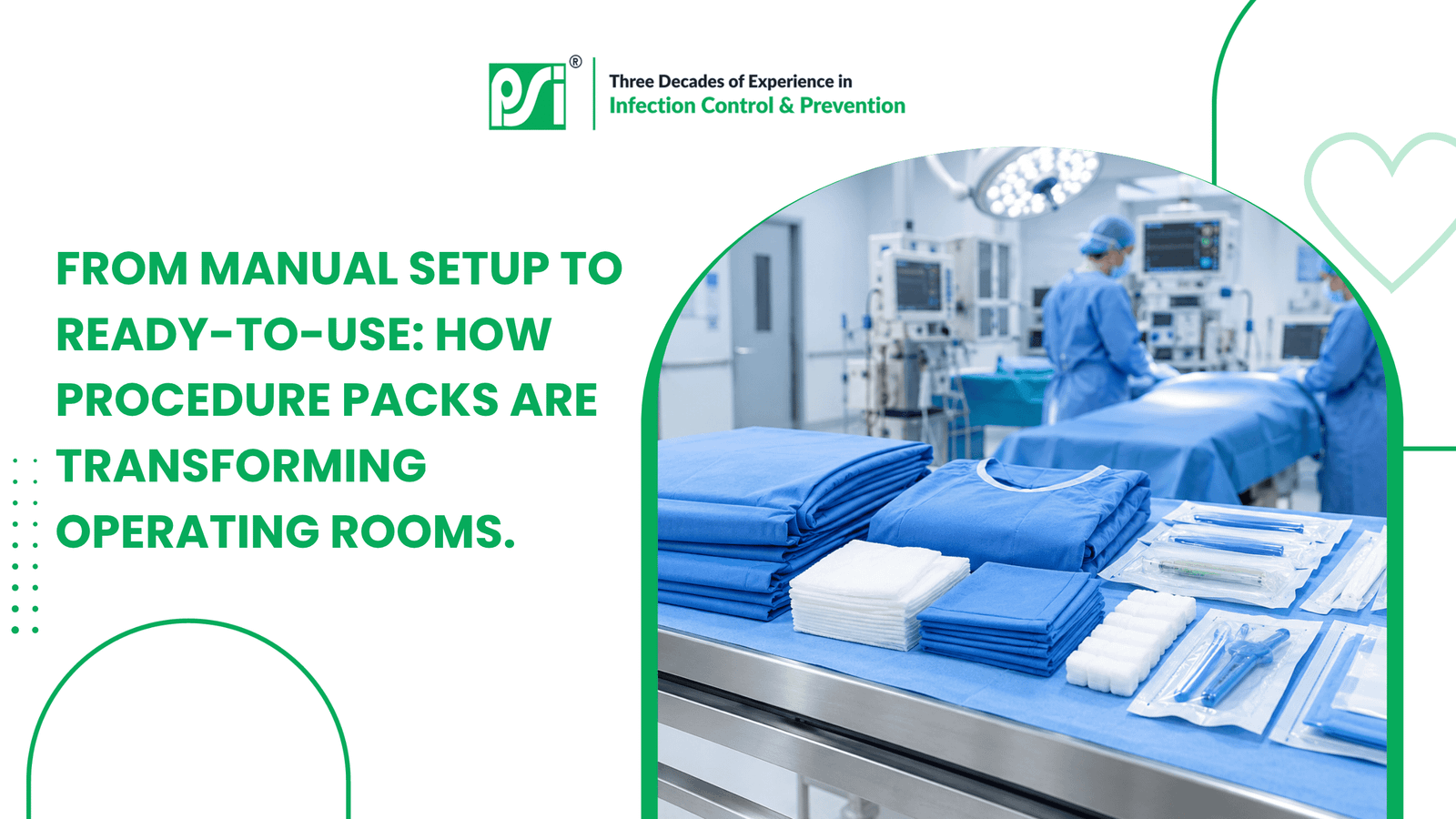
Surgical procedure packs are collections of consumables organised for a specific surgical procedure.
The contents depend on the operation and the hospital’s clinical requirements.
A typical pack may include:
- Surgical gowns
- Surgical drapes
- Sterile towels
- Swabs
- Equipment covers
- Dressing materials
- Procedure-specific accessories
Manufacturers can configure these packs for different surgical specialities.
These include orthopaedics, ophthalmology, gynaecology, cardiology, and general surgery.
When supplied sterile, packs require appropriate sterilisation validation and protective packaging.
Ready-to-use means lesser preparation steps, not the elimination of clinical safety checks.
How Conventional Operating Room Preparation Works
Manual surgical preparation often involves collecting individual products from different storage locations.
Staff need to check the surgical schedule and identify the required consumables.
The process typically includes:
- Reviewing the procedure requirements
- Identifying the required products
- Collecting supplies from storage
- Checking product specifications
- Inspecting sterile packaging
- Opening products using aseptic technique
- Arranging the surgical field
- Confirming that essential supplies are available
Every additional product creates another handling step.
For high-volume hospitals, these activities can consume valuable preparation time.
How Custom Procedure Packs Change the Process
Custom Procedure Packs merge selected consumables into one defined configuration.
Instead of collecting every product separately, staff access a pack designed for the procedure.
This simplifies several preparation activities.
| Manual Preparation | Procedure Pack Preparation |
| Multiple products collected separately | Selected products supplied together |
| Several individual packages opened | Fewer separate packages may be needed |
| Individual stock quantities monitored | Kit-level inventory can simplify planning |
| Setup varies between teams | Standardised starting configuration |
| More separate handling steps | Potentially fewer handling steps |
Additional equipment, instruments, and clinical checks remain necessary.
The objective is simpler preparation, not replacing surgical protocols.
6 Benefits of Ready-to-Use Procedure Packs
1. Lessened Operating Room Preparation Time
Surgical teams spend considerable time preparing consumables.
A customised pack reduces the need to collect and open multiple individual items.
This can free staff time for other clinical responsibilities.
The benefit becomes especially relevant in hospitals performing several procedures daily.
2. Better Standardisation
Hospitals often perform the same procedures repeatedly.
However, preparation can vary between teams.
Procedure-specific packs establish a consistent collection of consumables.
This assists departments create predictable supply requirements.
Standardisation also supports clearer procurement and inventory planning.
3. Fewer Handling Steps
Each individually packaged product requires handling.
Reducing unnecessary handling can simplify preparation.
Preconfigured packs consolidate selected supplies into a more organised format.
However, staff must still inspect packaging and maintain appropriate aseptic technique.
4. Improved Inventory Planning
Operating theatres utilise large quantities of disposable supplies.
Managing every product separately creates additional inventory work.
Procedure packs allow hospitals to plan consumption around surgical volumes.
For example, procurement teams can monitor:
- Procedures scheduled
- Packs consumed
- Remaining inventory
- Reorder levels
- Supplier lead times
- Additional consumable requirements
This creates a clearer connection between surgical schedules and purchasing decisions.
5. Opportunities to Reduce Waste
Unused consumables can create unnecessary hospital waste.
This becomes particularly important when products are opened but never used.
Customised packs let hospitals to review frequently used components.
Unnecessary items can be removed from future configurations.
However, overfilled packs can increase waste.
The most effective approach is to include the products clinicians actually need.
6. More Efficient Procurement
Hospitals frequently purchase surgical consumables from multiple product categories.
Procedure packs consolidate selected items into one purchasing unit.
This may simplify:
- Ordering
- Inventory tracking
- Product handling
- Supplier coordination
- Replenishment planning
Hospitals should still collate complete pack costs against individually sourced products.
What Does Research Say About Procedure Packs?
Research provides practical evidence of the operational benefits of customised surgical packs.
A 2021 Lean Six Sigma pilot study examines operating room preparation for laparoscopic hernia surgery.
Following the introduction of a customised pack, researchers report:
- 55% reduction in operating room nursing preparation time
- 16 minutes and 45 seconds saved
- 66% fewer storage-location touchpoints
- Packaging waste reduced from 0.3 kg to 0.1 kg per case
These results come from a specific hospital workflow.
They do not represent guaranteed savings for each and every operating theatre.
However, they demonstrate the potential value of reducing unnecessary preparation steps.
Why Surgical Gowns Matter in Procedure Packs
Surgical gowns form an important part of operating theatre protection.
Different procedures require different levels of barrier performance and coverage.
A Disposable wraparound surgical gown provides a wraparound design intended to support appropriate protective coverage.
Hospitals should evaluate gowns based on:
- Intended clinical use
- Barrier performance
- Material
- Sterility
- Fit
- Comfort
- Sleeve design
- Closure system
- Relevant standards
Plasti Surge Industries proffers reinforced wraparound surgical gown configurations within its product portfolio.
Buyers should verify the exact specifications before selecting a gown for a procedure pack.
How Surgical Drapes Support Faster Preparation
Surgical drapes help establish appropriate barriers around the operative field.
Their dimensions and design depend on the procedure.
Common buying considerations include:
- Coverage
- Barrier performance
- Material
- Fluid resistance
- Sterility
- Ease of placement
Including suitable drapes within procedure packs can reduce the need for separate product collection.
The correct drape configuration remains essential for clinical suitability.
Procedure Packs and Infection-Control Practices
Infection prevention requires coordinated clinical practices.
These include:
- Hand hygiene
- Appropriate surgical attire
- Sterile supplies
- Aseptic technique
- Environmental cleaning
- Instrument reprocessing
- Waste management
Ready-to-use packs can simplify sterile consumable preparation.
However, they do not independently prevent surgical-site infections.
Hospitals must continue following applicable infection-control protocols.
Where Does a Spill Management Kit Fit?
Operating room safety extends beyond surgical preparation.
A spill management kit aids appropriate responses to certain biological or chemical spills.
Depending on its intended use, a kit may contain:
- Protective equipment
- Absorbent materials
- Collection supplies
- Waste-disposal materials
- Cleaning or treatment products
- Instructions
Spill-response kits serve a different purpose from sterile surgical procedure packs.
They are not automatically included in surgical packs.
However, hospitals should maintain suitable spill-response supplies as part of broader operating theatre readiness.
PSI Dispo offers biological and chemical spill-management solutions alongside surgical consumables.
How Hospitals Can Move From Manual Setup to Procedure Packs
The transition works best when clinical teams partake in planning.
Step 1: Identify Suitable Procedures
Start with frequently performed procedures that use predictable consumable combinations.
Step 2: Review Current Preparation
Record the products, quantities, and preparation steps currently required.
Step 3: Identify Unnecessary Items
Look for products that teams frequently open but do not use.
Step 4: Create the Pack Configuration
Work with the manufacturer to define suitable components and quantities.
Step 5: Evaluate Samples
Check product quality, packaging, usability, and clinical suitability.
Step 6: Conduct a Trial
Introduce the packs for selected procedures.
Gather feedback from surgeons, nurses, and procurement teams.
Step 7: Measure Performance
Track:
- Preparation time
- Missing items
- Unused products
- Packaging waste
- Inventory requirements
- Total costs
Step 8: Upgrade the Packs
Update configurations based on actual clinical use.
Regular review helps prevent unnecessary components from accumulating.
Example: A Hospital Improves Surgical Preparation
Consider a multi-speciality hospital performing numerous general surgical procedures each week.
The operating theatre team collects gowns, drapes, towels, and accessories from separate storage locations.
Staff notice that some products remain unused after preparation.
The hospital introduces a trial of customised procedure packs.
Each pack contains the most frequently required consumables for the selected procedure.
Clinical teams evaluate the contents and identify any missing or unnecessary items.
Procurement reviews the overall cost and consumption patterns.
The hospital then adjusts the configuration based on feedback.
This illustrative framework demonstrates how procedure packs can support continuous workflow improvement.
What Should Hospitals Look for in a Procedure Pack Manufacturer?
A reliable manufacturer should understand product requirements and customisation.
Hospitals should evaluate:
- Manufacturing capabilities
- Product specifications
- Relevant quality documentation
- Sterilisation requirements
- Packaging integrity
- Batch traceability
- Customisation options
- Production capacity
- Supply reliability
- Bulk-order requirements
The right supplier should support the hospital’s real clinical needs.
How PSI Dispo Supports Ready-to-Use Surgical Solutions
Plasti Surge Industries, known as PSI dispo , manufactures medical disposables and healthcare consumables in India.
Its product portfolio includes surgical gowns, drapes, sterile accessories, and procedure packs.
PSI offers procedure-pack solutions across specialities such as:
- General surgery
- Orthopaedics
- Gynaecology
- Ophthalmology
- Urology
- Cardiology
- Neurology
The company also offers reinforced surgical gowns, including wraparound configurations.
Its broader portfolio includes dressing kits, protective apparel, and spill-management products.
Hospitals can discuss procedure-specific requirements, kit configurations, product specifications, and bulk quantities with PSI Dispo.
Conclusion
Operating room efficiency begins before the surgical procedure starts.
Traditional preparation often involves collecting, inspecting, and opening multiple individual consumables.
Ready-to-use procedure packs simplify these activities by organising selected supplies into procedure-specific configurations.
They can support standardisation, inventory management, reduced handling, and more efficient use of staff time.
However, the best results depend on thoughtful pack design.
Hospitals should evaluate actual product usage, remove unnecessary items, and regularly review configurations.
Suitable surgical gowns, drapes, and accessories remain essential to each procedure.
Broader safety requirements, including spill-response readiness, also deserve attention.
PSI Dispo manufactures surgical procedure packs, gowns, drapes, protective apparel, and other healthcare consumables.
Looking to simplify operating theatre preparation?